Helping you discover the best of Britain’s vineyards

Helping you discover the best of Britain’s vineyards

guide body length: 0

Organic Vineyards in England and Wales

hero_raw=/assets/images/vineyards/sedlescombe-2.jpg | hero_src=/assets/images/vineyards/sedlescombe-2.jpg

Organic Vineyards in England and Wales

h1_used=Organic Vineyards in England and Wales | guide.h1=Organic Vineyards in England and Wales | guide.H1=

Organic wine is still a relatively small part of the UK vineyard scene, but it’s growing quickly. Organic farming avoids synthetic herbicides, pesticides and fertilisers, focusing instead on healthier soils, biodiversity and long-term sustainability. In a cool, wet climate like Britain’s, doing that well takes real commitment, and the vineyards that manage it tend to have a clear philosophy behind what they produce. Some producers will describe organic wine as a “return to traditional farming”, while others see it as the future of English and Welsh viticulture. Either way, these estates are helping prove that organic wine in the UK is possible - and exceptional.

See the vineyards

Organic vineyards in the UK face challenges that producers in warmer regions rarely have to deal with. High rainfall, humidity and unpredictable growing seasons make fungal disease pressure a constant concern, and organic growers have fewer treatment options available. That’s why fully organic vineyards remain relatively rare, and why the estates that succeed tend to be especially thoughtful about site choice, canopy management and working with nature rather than against it.

Visiting organic vineyards in the UK

Return to contents
Organic vineyards can be found across England and Wales, but they’re particularly concentrated in the South East, where conditions are slightly drier and more favourable for organic farming. Many of the best-known estates are based in Kent and East Sussex, including Davenport Vineyards, Oxney Organic Estate, Westwell, and Sedlescombe.

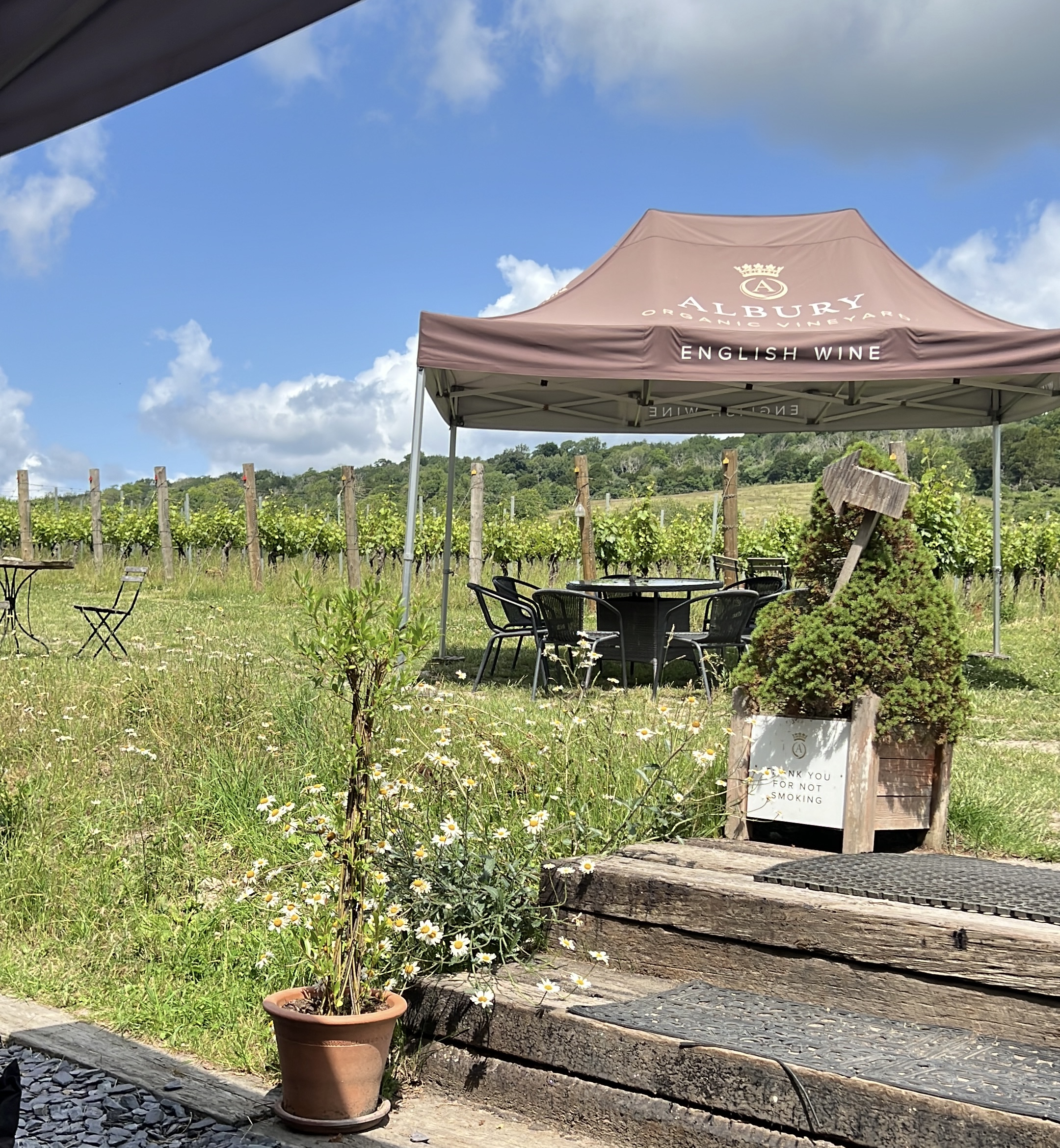
There are also organic producers further inland and west, including Quoins Vineyard in Wiltshire, Sunnyhill near Oxford, Albury Organic Vineyard in the Surrey Hills, and Black Mountain Vineyard close to the Welsh border.

If you’re looking for an organic vineyard that’s easy to reach from London, the strongest cluster is in Kent and Sussex, with several estates accessible as day trips. Albury Organic is also easily accessible from London Waterloo.

What to expect at an organic vineyard

Return to contents
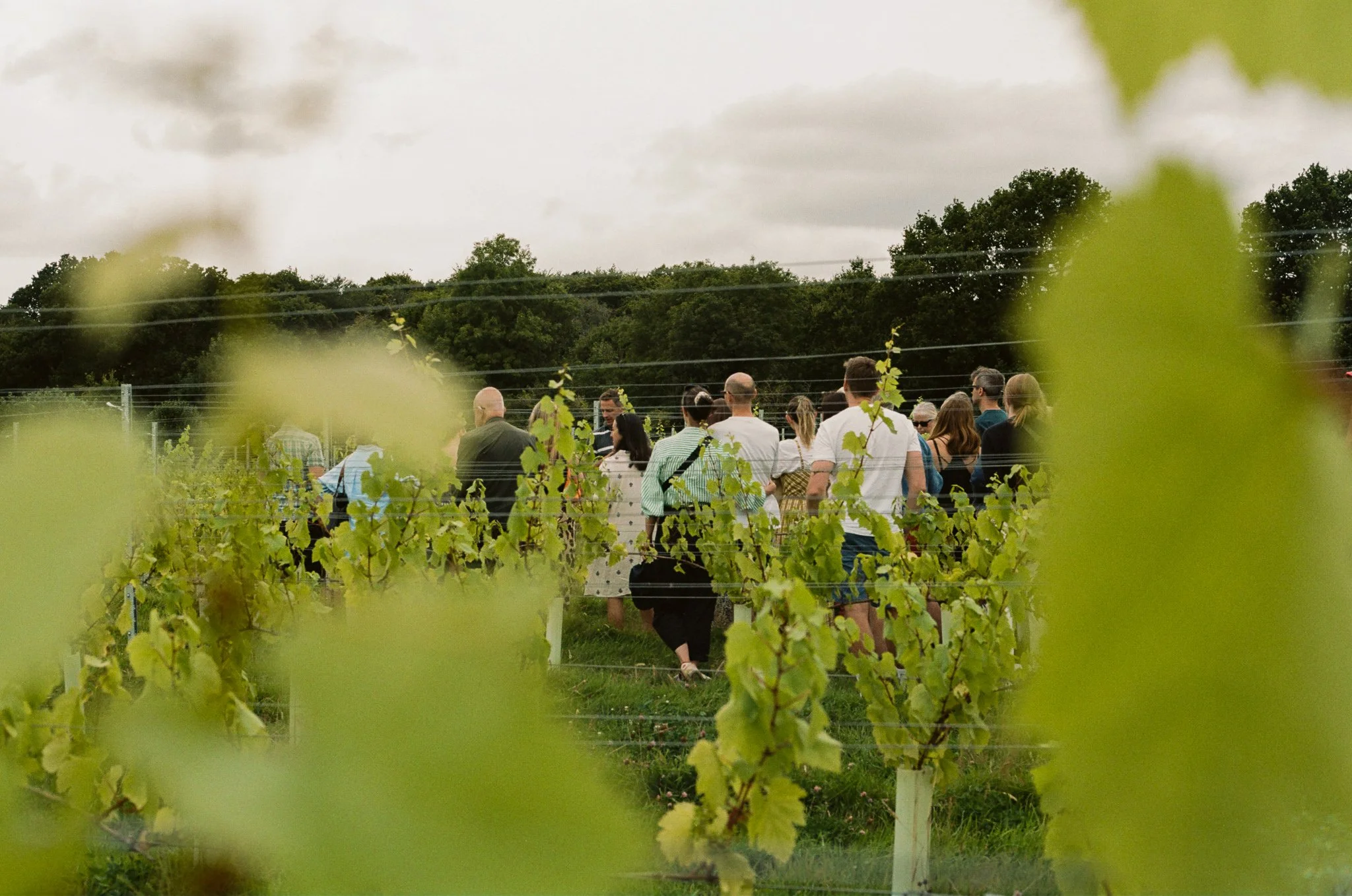
In most ways, visiting an organic vineyard feels much the same as visiting any other. You’ll still find guided tours, tastings, cellar doors, vineyard walks and at some estates restaurants or places to stay. The main difference is that organic producers often take more time to explain what’s happening in the vineyard: how they manage weeds without herbicides, how they protect vines naturally, and why biodiversity matters in a working landscape.

And of course, the wines you taste will reflect that approach. Whether it’s a classic traditional-method English sparkling wine or a small-batch still release, organic vineyards tend to attract winemakers who care deeply about expressing place, balance and purity in the glass.

Choosing the right organic vineyard to visit

Return to contents
Some organic vineyards operate at a large, polished estate scale, while others are small, hands-on projects where tastings feel personal and informal. Before booking, it’s worth checking whether the experience is tour-led, tasting-room based, seasonal, or more focused on wine sales.

Below you’ll find a curated selection of organic vineyards across England and Wales, from pioneers of organic farming to newer estates pushing English organic wine forward.

schemaFeaturedCount=11 | schemaMoreCount=0 | schemaItemCount=11

FAQ

What is an organic vineyard?
An organic vineyard is one that grows grapes without synthetic herbicides, pesticides or chemical fertilisers. Instead, organic producers rely on approved natural treatments, soil health, biodiversity and careful vineyard management. In the UK, organic viticulture is particularly challenging because of the wetter climate and disease pressure, which makes certified organic vineyards relatively rare.
Are organic wines vegan?
Not always. Organic refers to how the grapes are grown, not how the wine is finished. Some wines, whether organic or not, may still use animal-based fining agents such as egg white or milk proteins during production. Many organic producers do make vegan wines, but it’s something you need to check separately on the label or with the vineyard.
Do organic wines contain sulphites?
Yes, most do. Organic wine does not mean sulphite-free. Sulphites occur naturally during fermentation, and many winemakers also add small amounts to help preserve freshness and stability. Organic standards may restrict how much can be added, but if you’re sensitive to sulphites, it’s best to check the label or ask the producer directly.
What's the difference between organic, sustainable and biodynamic vineyards?
Organic vineyards follow strict rules about avoiding synthetic chemicals and must meet certification standards. Sustainable vineyards may still use some conventional treatments but aim to reduce environmental impact overall. Biodynamic vineyards go further, treating the vineyard as a self-contained ecosystem and following additional farming principles, often alongside organic certification.
What does organic wine taste like?
Organic wine doesn’t have a single flavour profile. In most cases, it tastes like any other well-made wine — sparkling, fresh, fruity or complex depending on the style. Some people associate organic wines with a slightly more natural or expressive character, but quality and winemaking choices matter far more than the farming label alone.
Is visiting an organic vineyard more expensive?
Usually not. Tour and tasting prices are typically similar to non-organic vineyards, and the visitor experience is much the same. Organic farming can be more labour-intensive, so bottle prices may sometimes be slightly higher, but most visitors won’t see a major difference in cost just because a vineyard is organic.