
Michelin Guide vineyard restaurants in England
28 Dec 2025
Hambledon Vineyard are celebrating inclusion in the Michelin Guide this month, and they’re in good company, with eight other vineyard restaurants currently included, two of which hold Michelin Stars.
For anyone who enjoys eating well and visiting vineyards, this is a list that’s becoming increasingly useful. These aren’t restaurants that happen to be near vines; they’re places where the food and the wine are part of the same idea, whether that’s a full tasting menu built around estate wines or a more relaxed, produce-led approach designed for long lunches.
Below, you’ll find every vineyard restaurant in England currently featured in the Michelin Guide, grouped by county. And if you’re curious about what else is out there beyond the guide, you can also explore our wider round-up of vineyards with restaurants across the UK: Vineyards with restaurants.
Cornwall
Barnaby’s, Trevibban Mill – St Issey
Barnaby’s is the restaurant at Trevibban Mill, a vineyard just outside Padstow, and has been included in the Michelin Guide for its consistent, produce-led cooking. Michelin describes the food as modern British, with menus shaped by the seasons and a strong emphasis on local Cornish ingredients.
Reviews tend to position it as a place to settle in rather than rush through. It’s better suited to lunch than formal evening dining, and the vineyard setting plays a big role in the overall experience, particularly when paired with Trevibban Mill’s own wines.
You can expect to eat dishes built around Cornish seafood, local meat, and seasonal vegetables, presented in a straightforward style rather than as a tasting menu. Starters and mains are priced in line with good mid-range restaurants in the area, with typical mains in the £22–£30 range.
Devon
Lympstone Manor – Lympstone
Lympstone Manor is the vineyard restaurant at Michael Caines’ country house hotel overlooking the Exe Estuary, and it’s one of only two vineyard restaurants in the UK to hold a Michelin Star. Michelin has recognised the restaurant for the overall quality and consistency of the cooking, as well as the way the food, setting, and estate wines come together as a single experience.
While the restaurant is best known for its tasting menus, it isn’t tasting-menu only. Alongside the Signature tasting menu, there is also an à la carte option, which makes it more accessible for those who want to experience the cooking without committing to a full evening format. Lunch is often the easiest way in, both in terms of time and cost.
You can expect refined, classically rooted cooking that makes the most of high-quality British produce, with dishes changing to reflect the seasons. Prices reflect the restaurant’s status: lunch menus start from around £75, the Signature tasting menu is priced at £255, and wine pairings are available at additional cost.
East Sussex
Tillingham, Tillingham Vineyard – Peasmarsh
Tillingham is one of the more unconventional vineyard restaurants in the Michelin Guide, sitting somewhere between a winery, restaurant, bakery, and farmhouse stay. Michelin has recognised it for food that feels closely tied to the land and the seasons, with menus that reflect what’s available rather than sticking to a fixed format.
The food is served in a loose, sharing format, with dishes changing regularly depending on what’s available from the estate and local producers. Dishes tend to be shared, change frequently, and often lean towards open-fire cooking, fermentation, and bold flavours. The restaurant has built a reputation for doing things its own way, and that extends to how the food is served and how the wine is integrated into the meal.
You can expect to eat seasonal plates designed for sharing, often built around vegetables, bread, and carefully sourced meat, alongside Tillingham’s own wines. Prices vary depending on the menu on the day, but you should expect to spend around £55–£70 per person for food, before drinks. This is less about formality and more about settling in for the evening.
Rathfinny Tasting Room, Rathfinny Wine Estate – Alfriston
The Rathfinny Tasting Room is the more casual of the two dining options at Rathfinny Wine Estate, but it still holds a place in the Michelin Guide for its focus on quality produce and thoughtful execution. It’s designed to complement a vineyard visit rather than stand alone as a destination restaurant, making it a natural stop during a tour or tasting.
The menu is modern British in style, with a strong emphasis on Sussex produce and dishes that work well alongside Rathfinny’s sparkling wines. The setting is relaxed, with views across the vines, and the food is pitched to be approachable without feeling like an afterthought.
You can expect to eat well-made, seasonal dishes suited to lunch, with mains typically priced in the £20–£30 range. It’s an easy option if you want to combine a vineyard visit with a good meal, without committing to a long or formal dining experience.
Hampshire
Hambledon Vineyard – Hambledon
Hambledon Vineyard’s restaurant was added to the Michelin Guide in December 2025, making it the newest vineyard restaurant in England to receive recognition. The estate is often described as the birthplace of English wine, with vines first planted here in the early 1950s, and the restaurant sits alongside a substantial recent redevelopment of the site.
I ate here earlier this year, and the restaurant feels designed to work equally well for a proper meal or a more informal visit. The menu is modern British in style, with an emphasis on seasonal produce and dishes that are structured enough to stand alone, rather than simply acting as a backdrop to a tasting. The space itself is contemporary but warm, with plenty of natural light and views across the surrounding countryside.
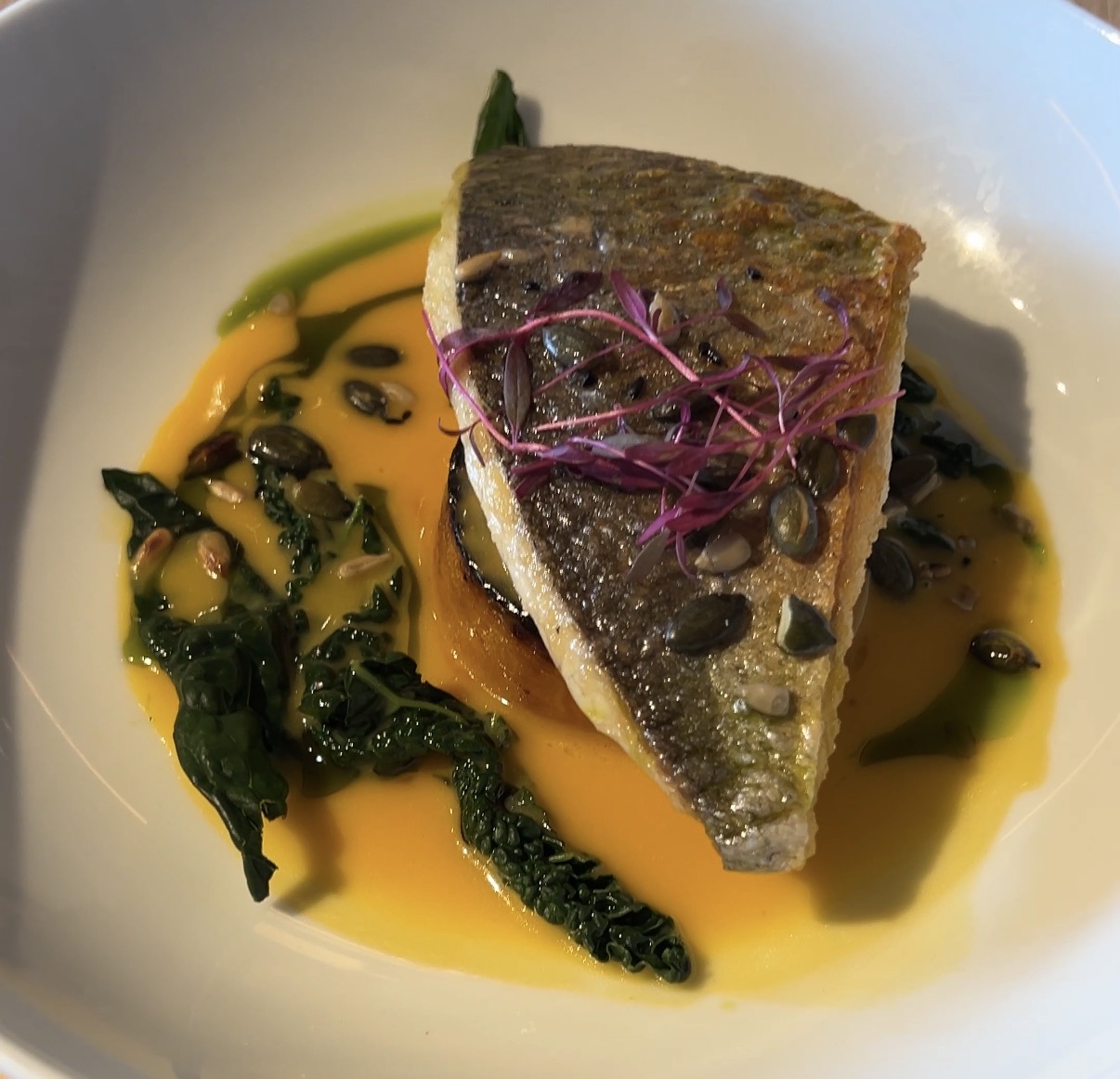
You can expect to eat seasonal modern British dishes designed for straightforward lunch and dinner service, rather than tasting menus. The focus is on familiar flavours, solid technique, and plates that work just as well for a relaxed weekday visit as they do for a longer meal paired with Hambledon’s wines. Prices are relatively approachable for a Michelin-listed restaurant, with three-course dinner options typically priced from around £60, before drinks and service.
Kent
Swan Wine Kitchen, Chapel Down – Tenterden
Set beside Chapel Down’s flagship winery in Tenterden, Swan Wine Kitchen is one of the longest-established vineyard restaurants in the UK, and its inclusion in the Michelin Guide reflects that track record. The kitchen focuses on modern British cooking shaped by the seasons, with menus built around Kent produce and dishes that change regularly.
Michelin highlights the restaurant for delivering food that is straightforward, well made, and consistent. The menu leans towards recognisable dishes rather than formal tasting menus, with an emphasis on good ingredients and clear flavours rather than technical flourishes.
Chapel Down wines are naturally central to the experience, with a list that makes it easy to explore the range by the glass or bottle alongside the food. Their weekday menu will currently set you back £48 for 3 courses, or £40 for 2 courses, before drinks and service.
Suffolk
Leaping Hare, Wyken Vineyards – Stanton
Leaping Hare is England’s first vineyard restaurant, opening in the mid-1990s. It held a Michelin Bib Gourmand prior to being included in the Michelin Guide in March 2023.
The restaurant is known for a classical approach to cooking, with menus built around seasonal ingredients from the Wyken estate and the surrounding Suffolk area. Dishes are traditional in style, with an emphasis on balance.
The connection to the vineyard is clear with much of the produce coming directly from Wyken’s gardens and farms, and the wine list naturally focuses on Wyken’s own wines, supported by a small, well-chosen selection from elsewhere in Europe.
Breakfast, lunch and dinner are offered, with mains generally in the mid-£30s.
West Sussex
Interlude, Leonardslee Family Vineyards – Lower Beeding
Interlude is the most overtly fine-dining entry on this list, holding a Michelin star and featuring in the guide since 2018. It sits within the Leonardslee estate, surrounded by restored gardens, lakes and woodland, and operates as a destination restaurant rather than a casual vineyard stop.
The restaurant serves tasting menus only, with cooking that draws heavily on foraged ingredients from the estate and wider Sussex landscape. Menus change frequently and are shaped around what is available at the time, with an emphasis on seasonality and local sourcing, with a modern and precise style.
While Leonardslee is also a vineyard, Interlude is first and foremost a restaurant experience. Wine pairings include bottles from Leonardslee Family Vineyards alongside a broader international list, chosen to complement the structure of the menus rather than showcase the estate alone.
Interlude’s dinner tasting menu is £195, while the lunch tasting menu is £120.
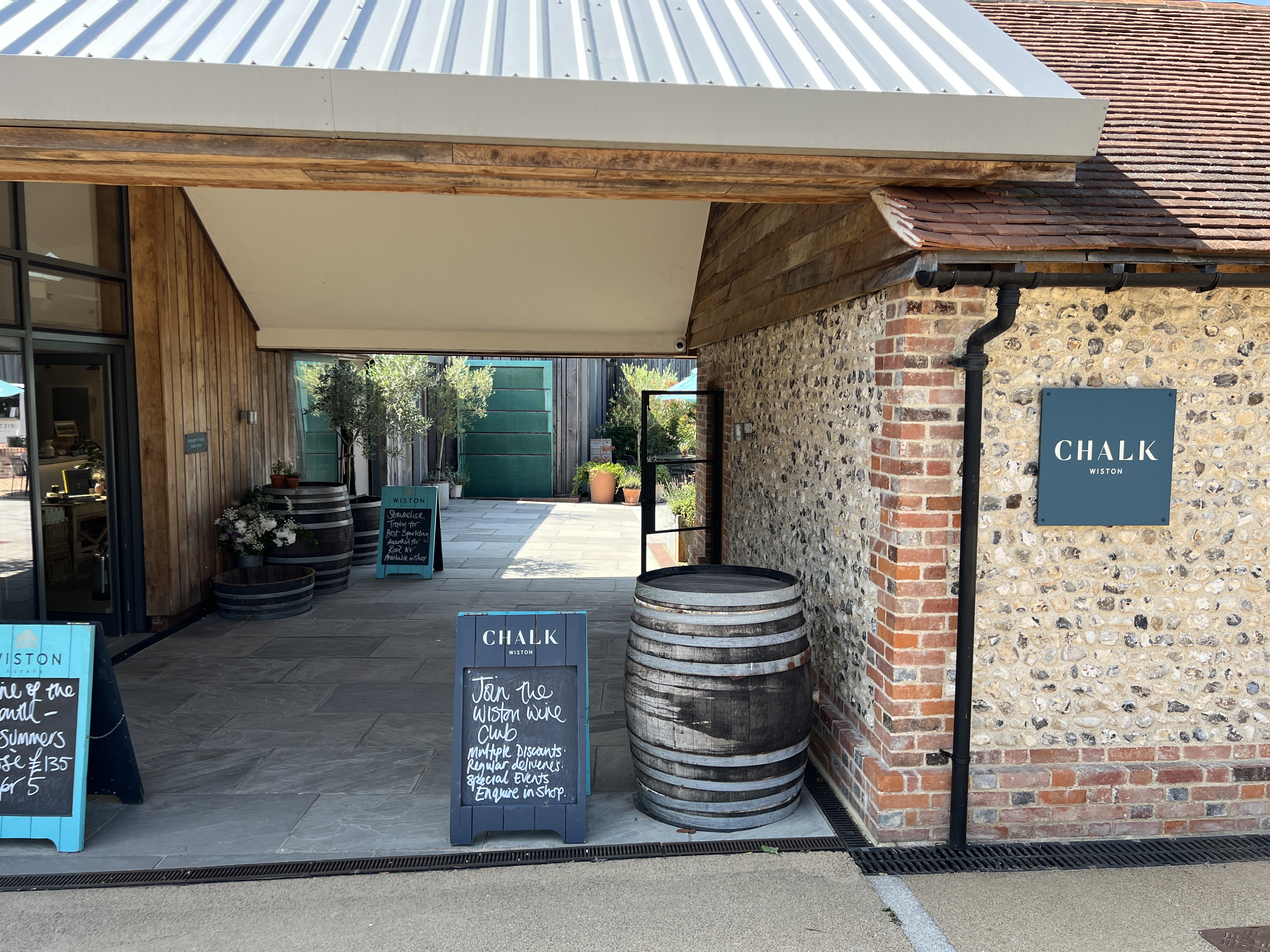
Chalk, Wiston Estate – Pulborough
Chalk is the restaurant at Wiston Estate and was added to the Michelin Guide in 2023. In 2025, Michelin also named it one of the best vineyard restaurants in the world, placing it firmly on the map as a destination in its own right, as well as a natural companion to a visit to the estate.
I visited Wiston for a tour and tasting rather than a meal and was left feeling envious of the diners arriving as I headed for the car park. I’ll be making a point to visit in 2026!
The wine list is built around Wiston’s own sparkling wines, with pairings and bottle choices designed to work comfortably with the food rather than dominate it.
You can expect to eat seasonal modern British dishes, at around £50 for two courses before drink and services.