Visiting East Sussex's Best Vineyards
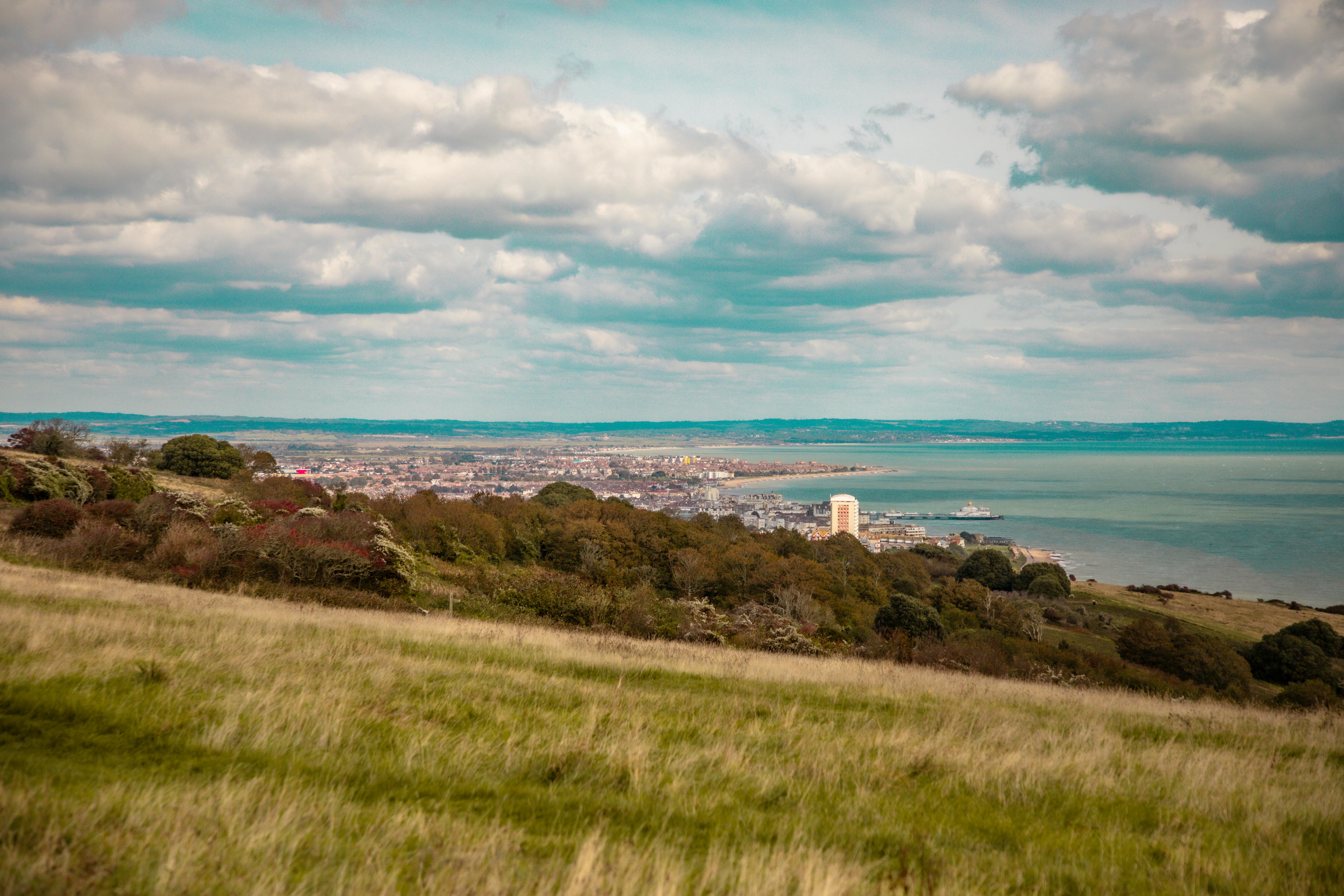
East Sussex is where English wine's past meets its future. From Ridgeview at Ditchling - one of the country's pioneering producers since 1995 - to the vast modern operation at Rathfinny with its Michelin-recommended restaurant, this stretch of the South Downs encompasses both heritage estates and ambitious newcomers. The county boasts England's highest concentration of vineyards, producing everything from award-winning sparkling wines that rival Champagne to natural and biodynamic still wines from organic producers like Sedlescombe and Oxney.
Overview Return to contents
Located 50-80 miles from London (1-1.5 hours by train or car), East Sussex vineyards cluster along the South Downs National Park and High Weald, offering stunning countryside, diverse wine experiences, and excellent access from Brighton, Lewes, and London. The region's combination of chalk terroir, maritime climate, and established wine tourism infrastructure makes it England's most accessible and varied wine destination for both serious enthusiasts and casual visitors.
Why Visit East Sussex Vineyards Return to contents
The Terroir: Like its western neighbor, East Sussex sits on the chalk belt that runs from Champagne through the South Downs, providing ideal conditions for sparkling wine production. However, the county's diverse geology also includes Wealden clay and sandstone, allowing for a wider range of wine styles - from classic sparkling to experimental natural wines. The maritime influence from the English Channel moderates temperatures while providing crucial acidity.
The Diversity: East Sussex has England's most varied wine scene. You'll find everything from large-scale operations like Rathfinny (600 acres planted) to tiny family vineyards like Breaky Bottom. The county leads in organic and biodynamic production with estates like Sedlescombe (since 1979), Oxney, and Davenport. Some vineyards focus exclusively on traditional method sparkling (Ridgeview, Bluebell), while others experiment with low-intervention and natural wines (Tillingham, Davenport).
The Experience: East Sussex offers the UK's most developed wine tourism infrastructure. Many vineyards feature full restaurants (Rathfinny, Tillingham, Ridgeview), luxury accommodation (Rathfinny Flint Barns, Tinwood lodges, Oxney shepherd's huts), and sophisticated visitor experiences. The proximity to Brighton and excellent train connections make it particularly accessible for car-free visits, with several vineyards within taxi or walking distance of stations.
Vineyards in East Sussex Return to contents
Vineyards to visit in East Sussex





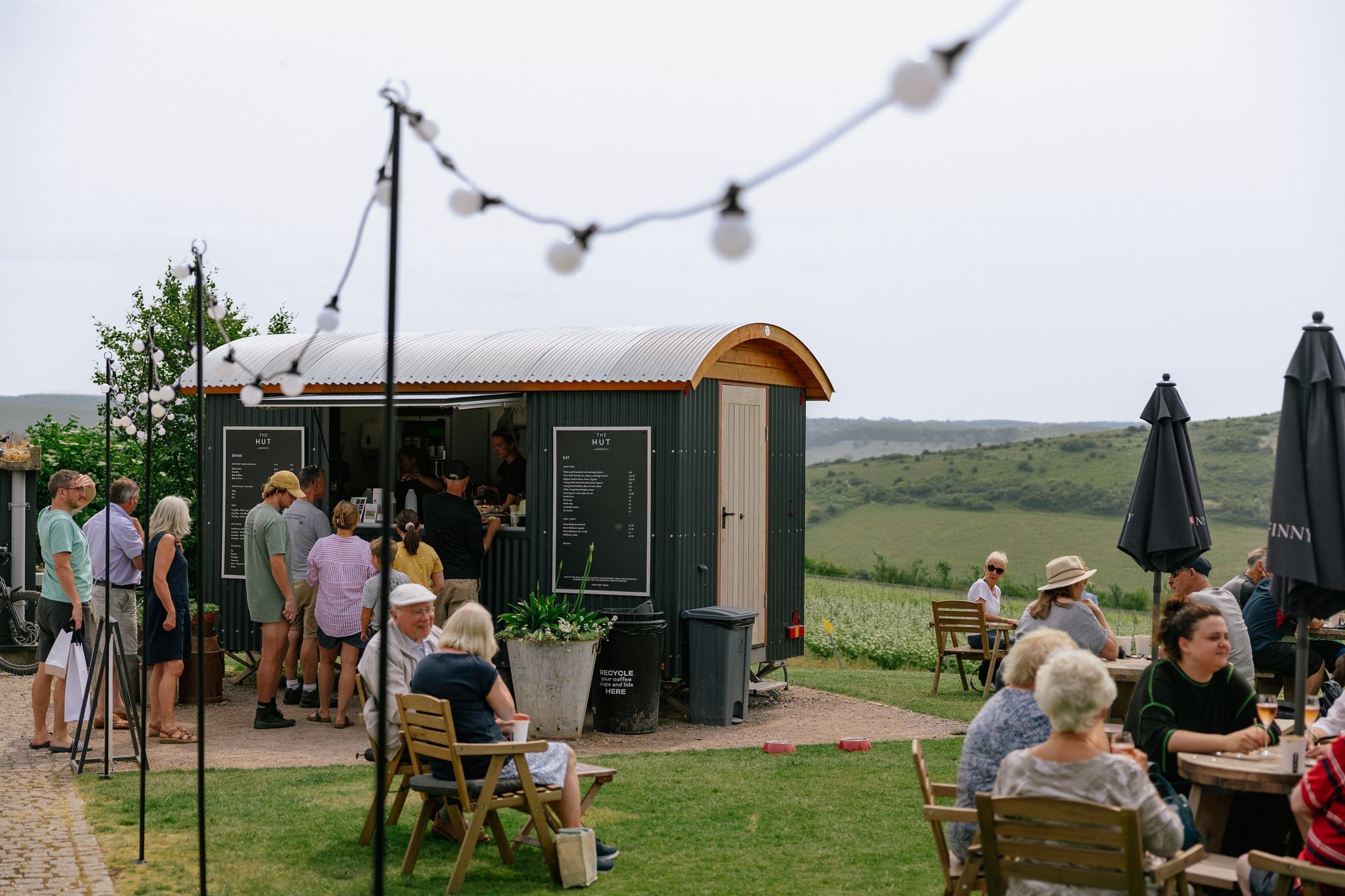
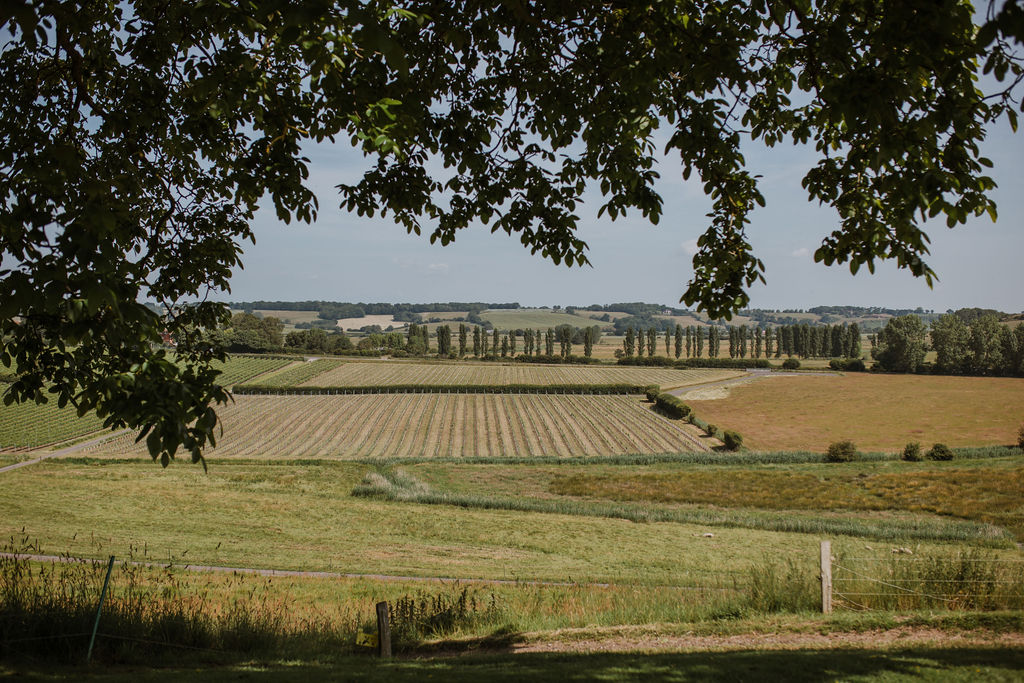
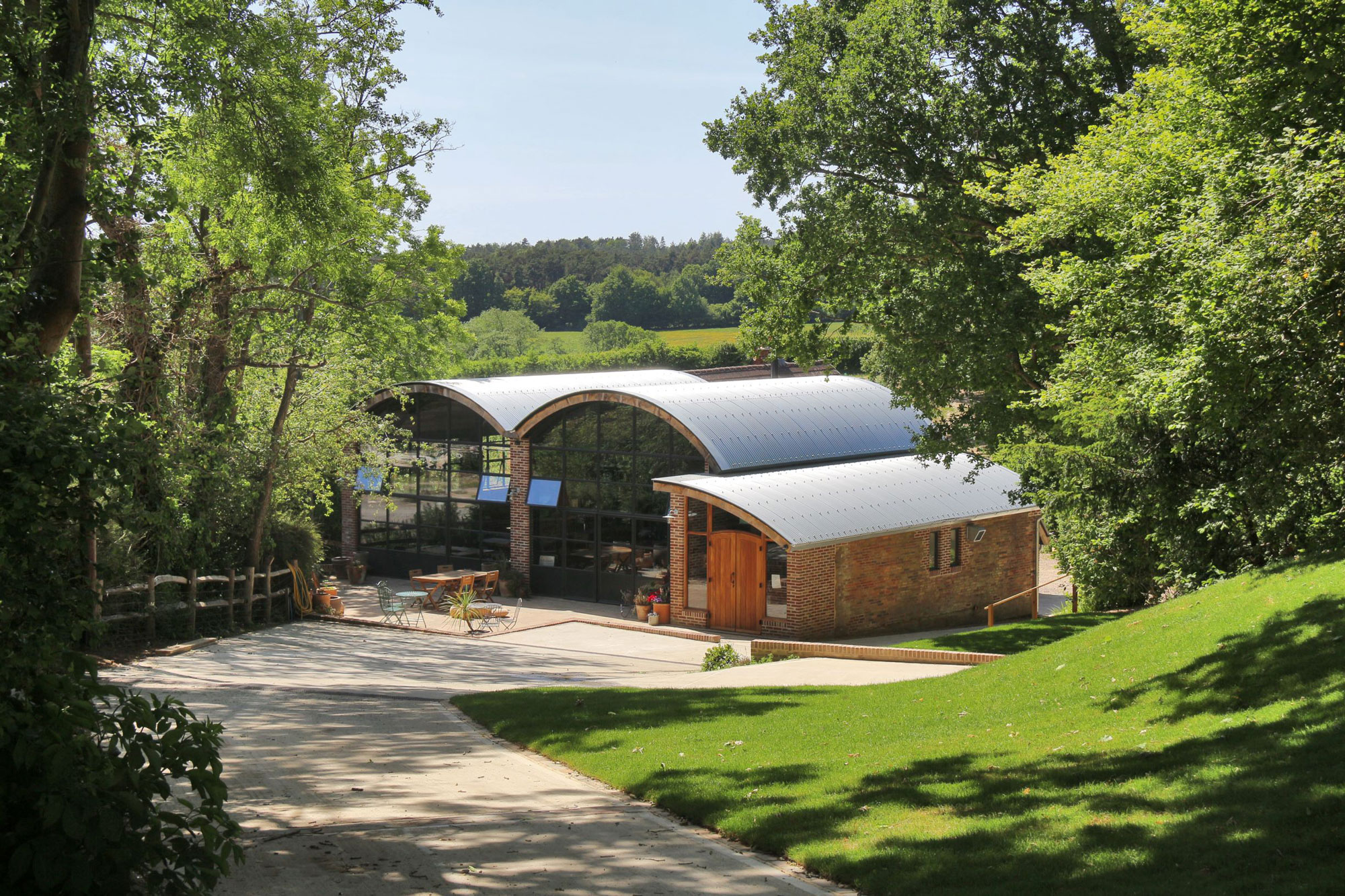
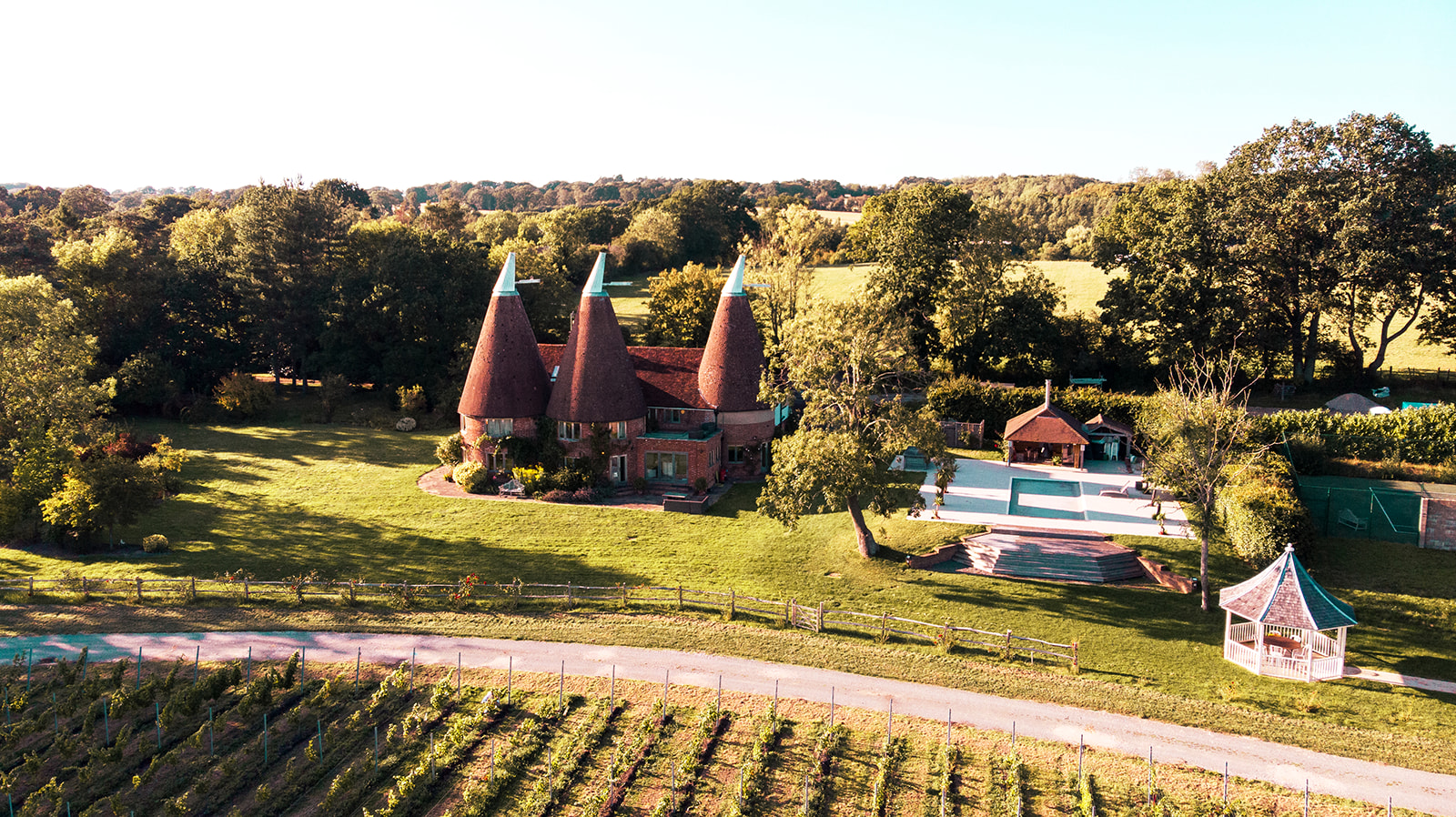
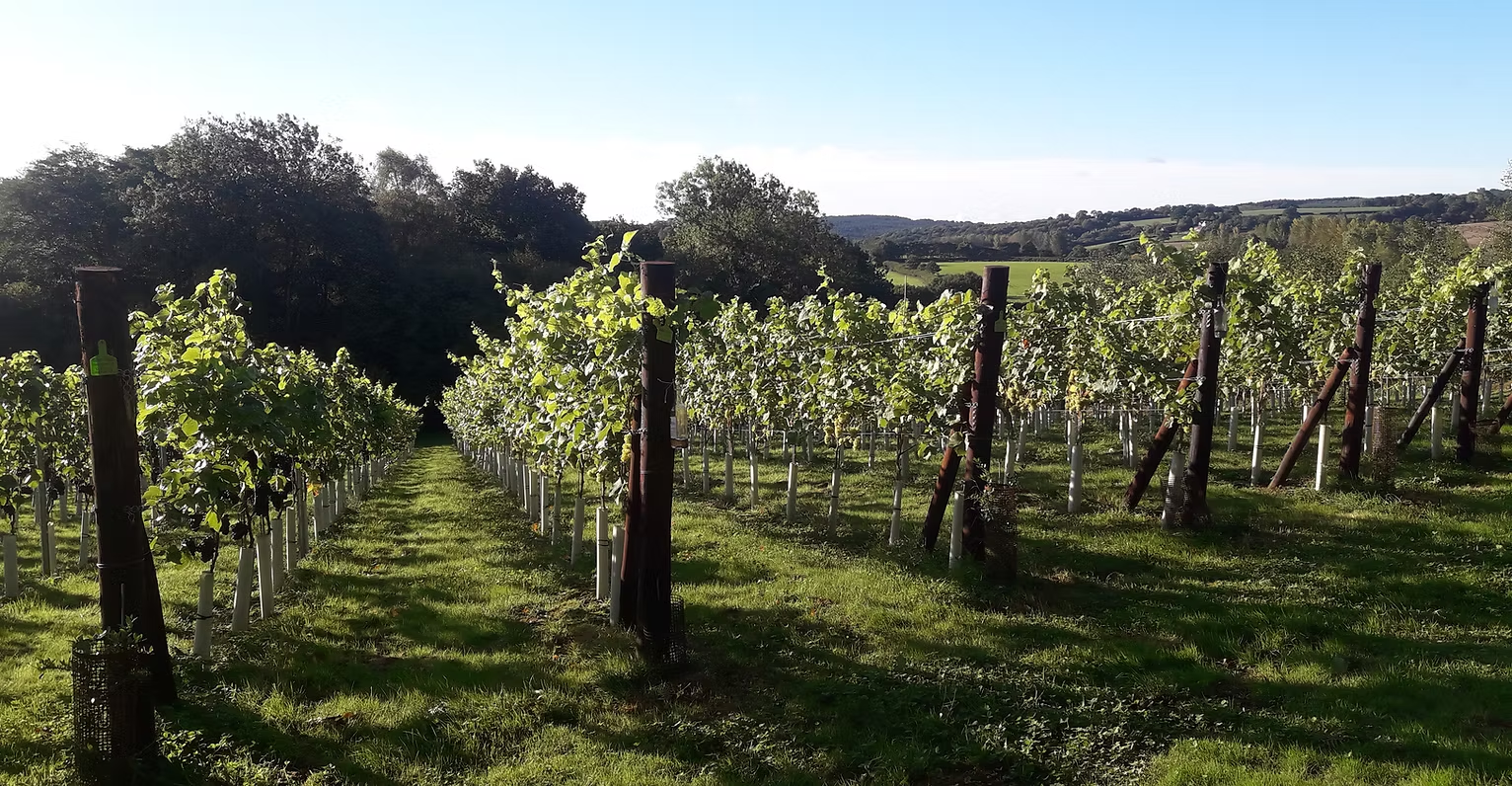
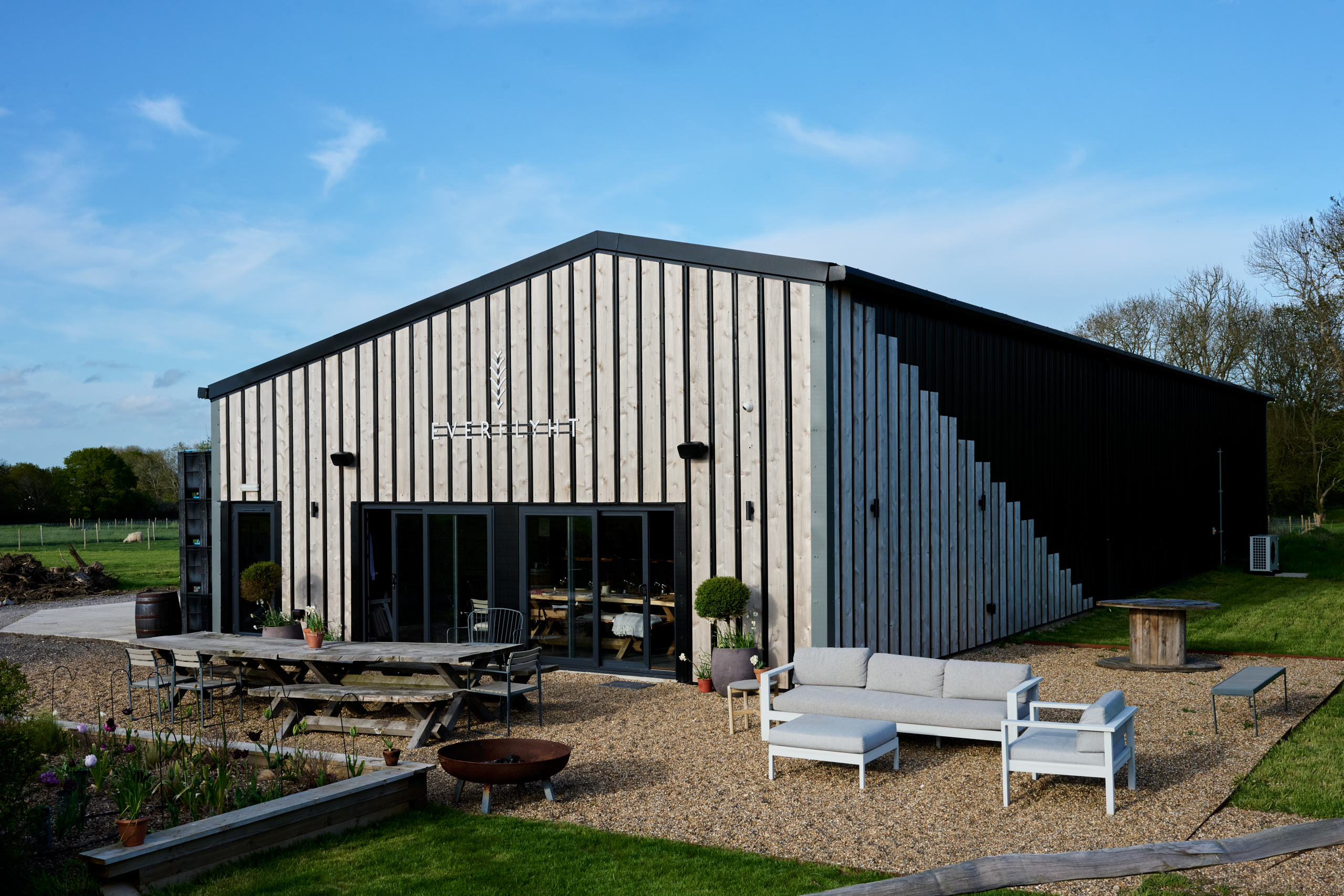
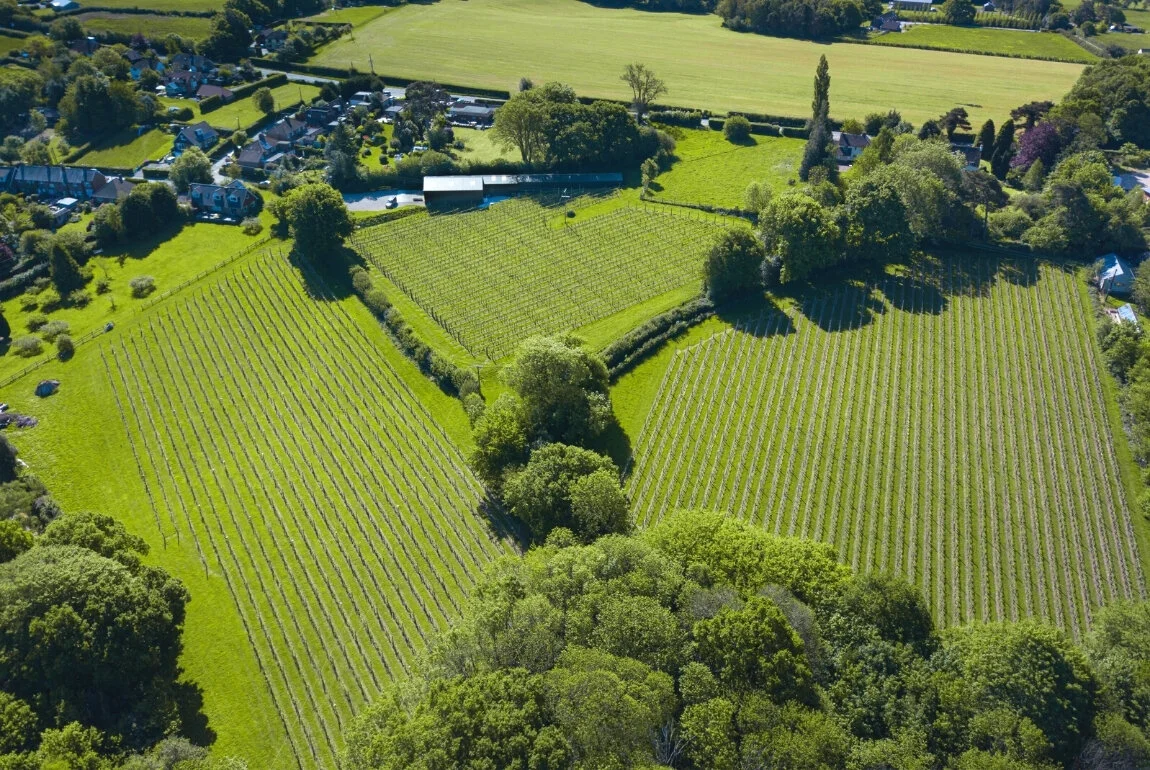
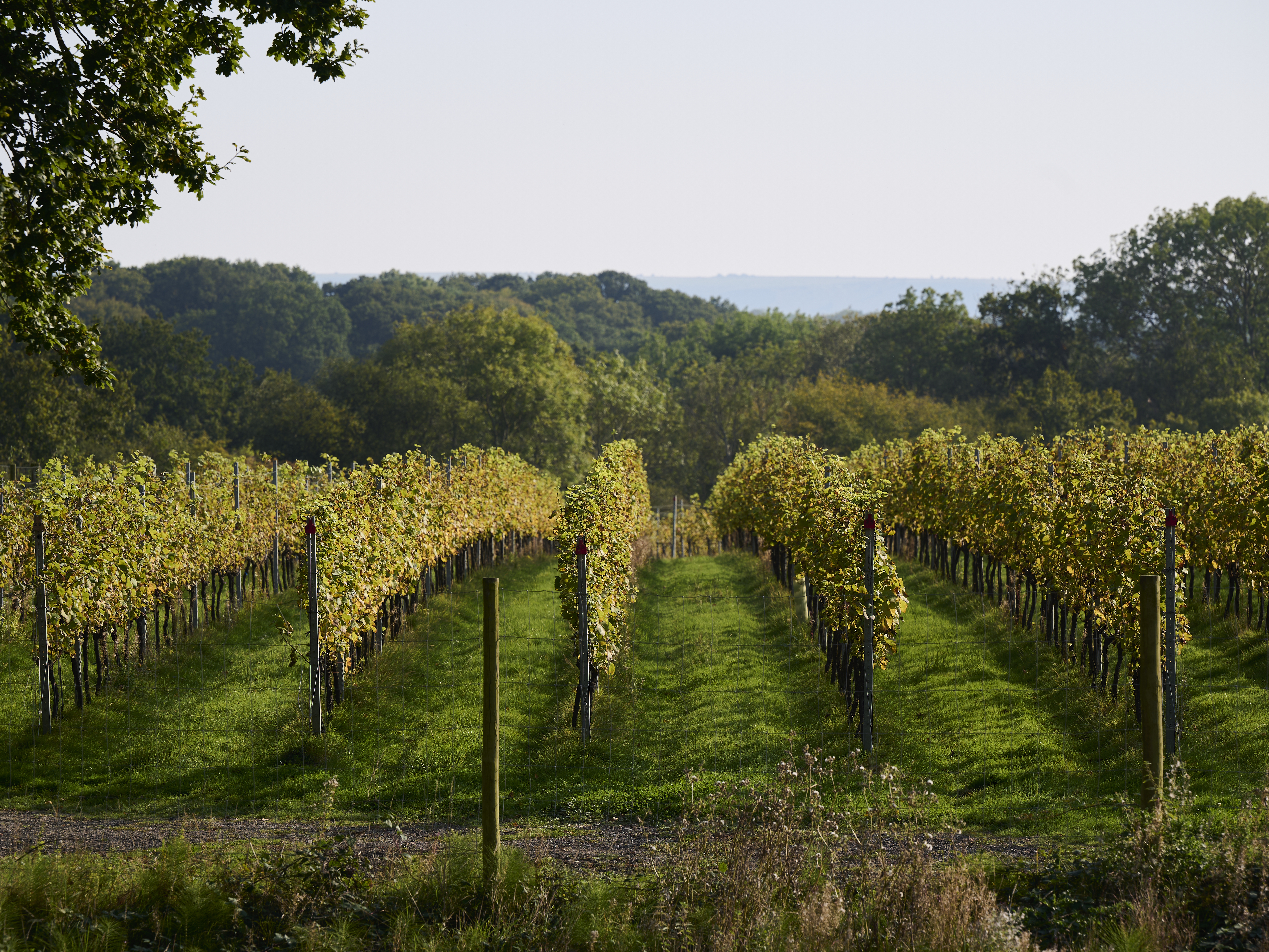


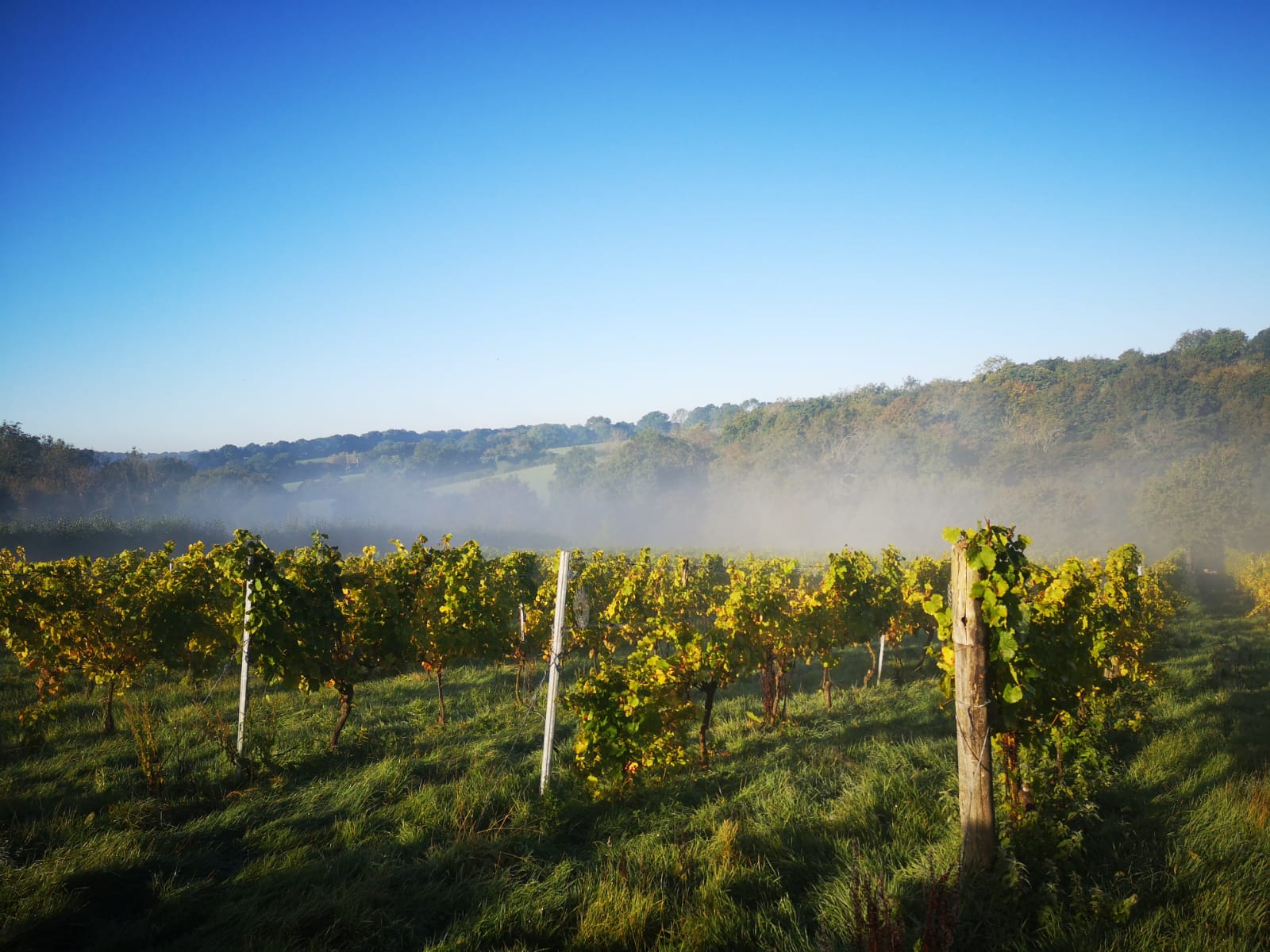
Rathfinny Wine Estate (near Alfriston)
One of England's largest and most ambitious vineyards with 600 acres planted. Features Michelin-recommended Tasting Room restaurant, Flint Barns Dining Room, and luxury B&B accommodation. Tours run daily, shop open daily 10am-5pm. Summer events include al fresco dining and sunset wine experiences. Nearest station: Berwick or Polegate (approximately 15-minute taxi).
Ridgeview Wine Estate (Ditchling Common)
Award-winning pioneer since 1995, now with The Rows & Vine restaurant. Open daily for tours, tastings, and dining. Free self-guided audio tour and woodland walk available. Wines served at royal events and Downing Street. Certified B Corporation. Nearest station: Burgess Hill or Haywards Heath (approximately 15-minute taxi), or Plumpton (30-minute walk across fields).
Bluebell Vineyard Estates (Sheffield Green)
Named for spring bluebells in surrounding woodlands. Open daily 10am-4pm for drop-in tastings, plus bookable tours. Three self-guided trails through vines, woodlands, and ponds (30-60 minutes). Award-winning sparkling and still wines. Nearest station: Haywards Heath or Uckfield (approximately 20-minute taxi).
Sedlescombe Organic Vineyard (Sedlescombe)
One of England's oldest organic vineyards (since 1979), using biodynamic principles. Tours run throughout the year - check website for schedule. Wide selection of organic and biodynamic wines. On-site accommodation available (The Nest - 3-bedroom house). Nearest station: Battle (approximately 8 miles, taxi recommended).
Oxney Organic Estate (near Rye)
UK's largest single-estate organic vineyard (21 acres). Regular tours and tastings with optional cheese and charcuterie platters. Quirky-yet-stylish shepherd's huts available for overnight stays in the vineyard. Nearest station: Rye (approximately 15-minute taxi).
Tillingham (near Rye)
Progressive biodynamic vineyard on a hilltop with sweeping views. Two restaurants on-site, natural wine bar, and stylish rooms. Focus on low-intervention winemaking and sustainability. Known for relaxed, fun atmosphere. Nearest station: Rye (approximately 20-minute taxi).
Breaky Bottom Vineyard (Lewes)
Small, characterful family-run estate in a secluded valley. Award-winning sparkling wines with impressive track record. One of East Sussex's most atmospheric vineyards. Tours by appointment. Nearest station: Lewes (approximately 15-minute taxi).
Davenport Vineyards (Rotherfield)
Organic and biodynamic producer known for minimal intervention wines. Tours and tastings available - check website for current schedule. Focus on sustainable, natural winemaking. Nearest station: Eridge or Crowborough (taxi recommended).
Hidden Spring Vineyard (East Sussex)
Boutique vineyard offering captivating wine experiences. Tours and tastings available by appointment. Nearest station: varies by exact location - check when booking.
Other notable producers: Artelium Wine Estate (Plumpton - 30-minute walk from station), Henners Vineyard, Court Garden Vineyard, Charles Palmer Vineyards, Winklestone Vineyard, and numerous smaller estates contributing to the region's diversity.
What can you expect from wine tasting in East Susex?
Tastings differ between vineyards and tasting flights can change, though in East Sussex you’re most likely to taste polished sparkling wines made from Chardonnay, Pinot Noir and Pinot Meunier.
Planning Your Visit Return to contents
How many vineyards in a day? Realistically, 2-3 vineyards if doing just tastings, or 1-2 if including tours and meals. East Sussex vineyards are more spread out than West Sussex, so factor in 20-45 minute drives between estates depending on location.
Vineyard clusters:
- Northern cluster: Ridgeview, Bluebell, Artelium (within 20-30 minutes of each other near Burgess Hill/Haywards Heath)
- Central/Lewes area: Breaky Bottom, plus vineyards accessible from Lewes
- Southern cluster: Rathfinny (near Alfriston/Berwick)
- Eastern cluster: Sedlescombe, Oxney, Tillingham (near Rye/Battle area, 20-30 minutes apart)
Booking: Most vineyards require advance booking for tours, especially on weekends and during summer (May-September). Some accept walk-ins for tastings and shops. Restaurants typically need booking ahead. Always check individual vineyard websites for current policies.
Best times to visit:
- Spring (April-May): Vineyards reopen after winter, bluebells bloom at Bluebell Vineyard, countryside comes alive, fewer crowds
- Summer (June-August): Peak season with extended hours, outdoor terraces, warm weather, special events. Book well ahead.
- Autumn (September-October): Harvest time - you may see grape picking. Some vineyards offer harvest experiences. Beautiful autumn colors across the Downs and Weald.
- Winter (November-March): Quieter with some vineyards on reduced hours or weekends only. Cozy tasting rooms and winter walks. Always check opening times before visiting.
Where to Stay Return to contents
Towns and villages in East Sussex
Vineyard Stays:
- Rathfinny Flint Barns - 10-room B&B with dining room, plus self-catering cottage (from approximately £130/night)
- Oxney Organic Estate - Shepherd's huts in the vineyard
- Sedlescombe Organic Vineyard - The Nest (3-bedroom house)
- Tillingham - Stylish rooms above the restaurant
Market Towns:
- Lewes - Historic county town with castle, independent shops, and excellent food scene. Direct trains from London Victoria (approximately 1 hour 15 minutes). Central location for exploring various vineyards. Hotels and B&Bs from budget to boutique.
- Brighton - Vibrant seaside city with extensive accommodation, restaurants, nightlife, and culture. Direct trains from London (approximately 1 hour). Good base for northern vineyards (Ridgeview, Bluebell, Artelium). Hotels from budget chains to luxury.
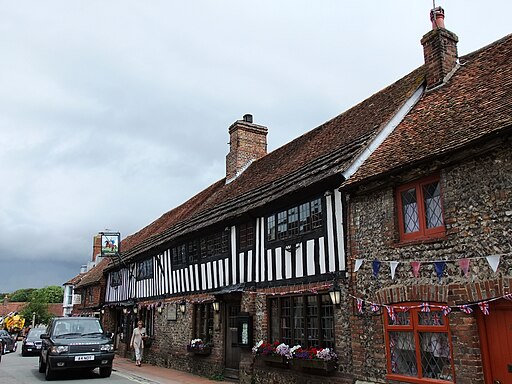
- Alfriston - Picturesque medieval village near Rathfinny. Limited accommodation but charming. No train station - nearest is Berwick or Seaford (taxi required).
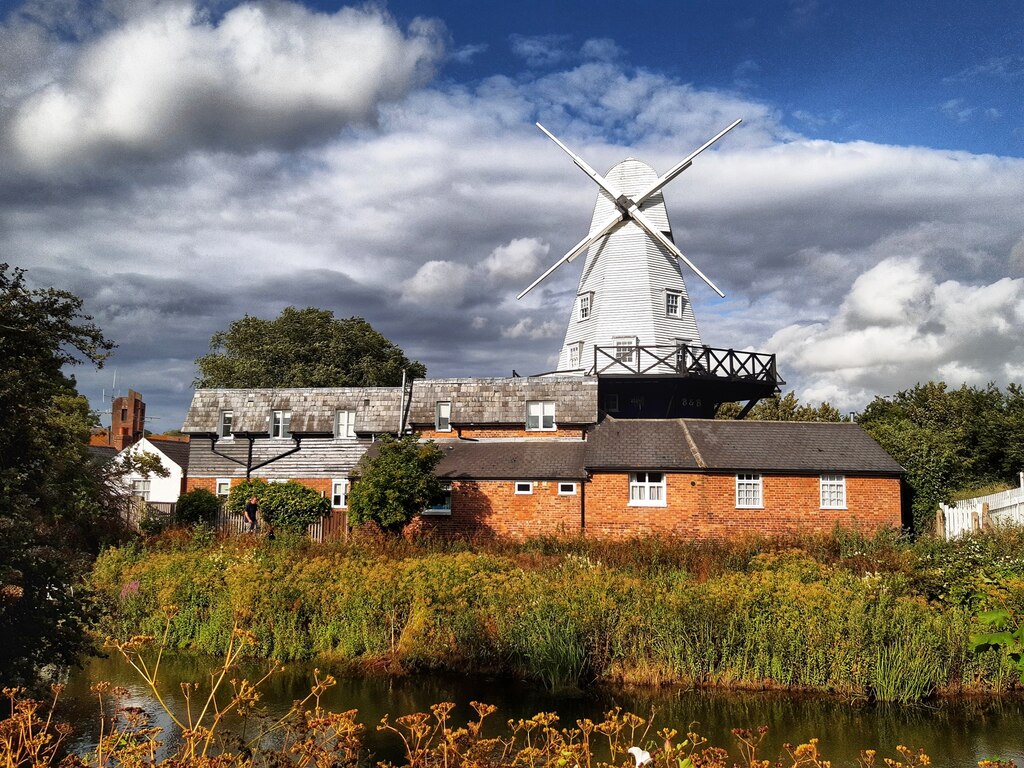
- Rye - Medieval hilltop town with cobbled streets. Good base for eastern vineyards (Oxney, Tillingham, Sedlescombe). Train connections from London via Ashford. Hotels and B&Bs available.
Getting There & Around Return to contents
By Train from London:
- London Victoria to Lewes: Direct trains, approximately 1 hour 15 minutes
- London Victoria/London Bridge to Brighton: Direct trains, approximately 1 hour
- London Victoria to Haywards Heath: Direct trains, approximately 45 minutes
- London Victoria to Eastbourne: Direct trains, approximately 1 hour 30 minutes
- To Rye: Usually requires change at Ashford International, approximately 1 hour 30-45 minutes total
By Car from London:
Approximately 1-2 hours (50-80 miles depending on destination). A23 south to Brighton, then A27 east, or M25 to A22/A21 for eastern vineyards. Car strongly recommended for visiting multiple vineyards as public transport between estates is very limited.
Getting Between Vineyards:
Car or taxi essential for most vineyard visits - they're spread across the county with minimal public transport connections. Exceptions: Artelium (30-minute walk from Plumpton station), Ridgeview (30-minute walk from Plumpton or short taxi from Burgess Hill). Plan routes in advance - factor in 20-45 minute drives between estates. Car hire available at Gatwick Airport (approximately 30-45 minutes to most East Sussex vineyards) or Brighton.
Train-Friendly Options:
Several vineyards are within reasonable taxi distance of train stations, making car-free visits possible:
- From Burgess Hill/Haywards Heath: Ridgeview, Bluebell, Artelium (all approximately 15-20 minutes by taxi)
- From Berwick/Polegate: Rathfinny (approximately 15 minutes by taxi)
- From Lewes: Various vineyards (15-20 minutes by taxi)
- From Rye: Oxney, Tillingham (approximately 15-20 minutes by taxi)
Beyond the Vineyards Return to contents
Historic Sites:
- Lewes Castle - Norman castle with panoramic views
- Battle Abbey - Site of the Battle of Hastings (1066)
- Bodiam Castle - Stunning moated medieval castle
- Charleston - Bloomsbury Group artists' home near Rathfinny
- Alfriston Clergy House - First National Trust property
Outdoor Activities:
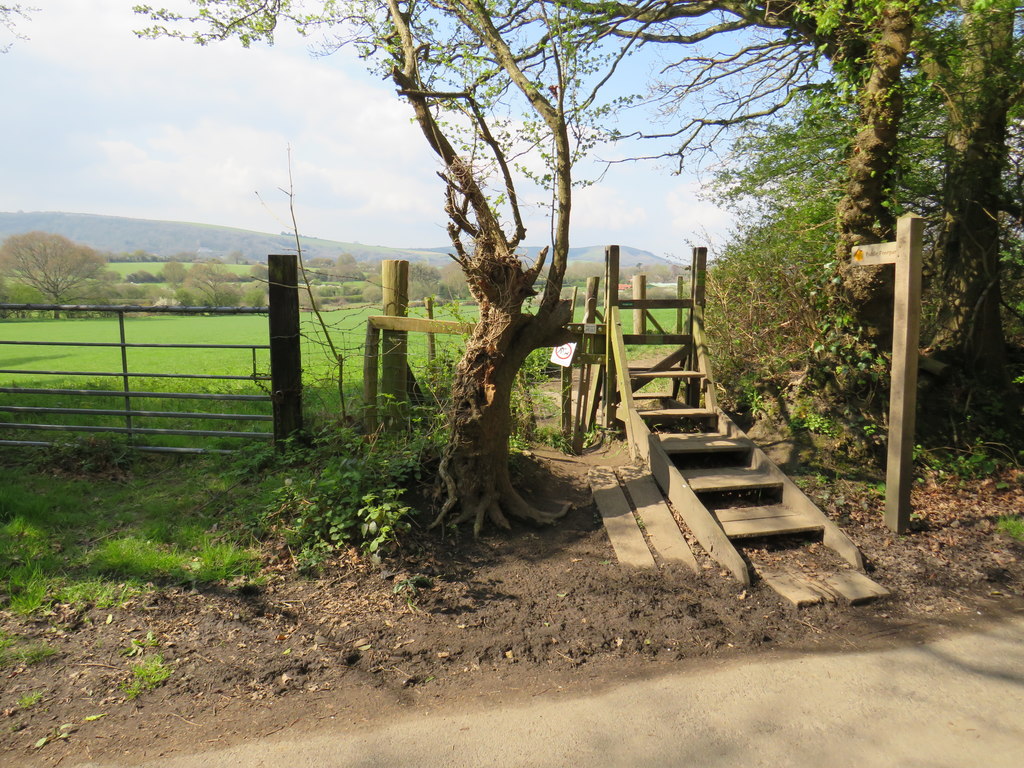
- South Downs Way - National Trail running through the county
- Seven Sisters and Beachy Head - Iconic white chalk cliffs
- Ashdown Forest - Inspiration for Winnie-the-Pooh, ancient woodland
- Cuckmere Haven - River valley meeting the sea
- Numerous walking trails through vineyards and countryside
Seaside Towns:
- Brighton - Vibrant pier, Royal Pavilion, The Lanes shopping, nightlife
- Eastbourne - Traditional seaside resort, carpet gardens
- Hastings - Old Town, fishing quarter, pier, contemporary art scene
Culture:
- Glyndebourne Opera House - World-famous opera in countryside setting (near Lewes)
- Charleston and Monk's House - Bloomsbury Group connections
- Ditchling Museum of Art + Craft - Arts and crafts heritage
- Numerous galleries and independent shops in market towns
FAQs Return to contents
How far is East Sussex from London?
Approximately 50-80 miles depending on destination, taking 1-2 hours by car or train. Brighton and Lewes are both under 90 minutes by train from London Victoria.
Do I need a car to visit East Sussex vineyards?
While major towns are accessible by train, a car is strongly recommended for visiting multiple vineyards as they're spread across the countryside. However, several vineyards (Ridgeview, Bluebell, Artelium, Rathfinny) are within taxi distance of train stations, making car-free visits possible with planning.
Can I walk to any vineyards from train stations?
Yes - Artelium and Ridgeview are both approximately 30 minutes' walk from Plumpton station across fields (don't use Google Maps - check vineyard websites for walking directions). Most others require taxis.
Which vineyards can I visit without booking?
Some vineyards accept walk-ins for shops and tastings (Bluebell is open daily 10am-4pm, Rathfinny Cellar Door is open daily 10am-5pm, Ridgeview cellar door accepts walk-ins), but tours and restaurants typically require advance booking. Always check current policies before visiting.
Are East Sussex vineyards open year-round?
Most major vineyards are open year-round, though some have reduced hours in winter (November-March) or may close certain days. Some smaller vineyards operate tours by appointment only. Always check individual vineyard websites for current opening times.
What makes East Sussex different from West Sussex for wine?
East Sussex has greater diversity - more organic/biodynamic producers, more variety in wine styles (natural wines, still wines, experimental approaches), a wider range of vineyard sizes and atmospheres. West Sussex is more focused on premium sparkling wine production with established luxury experiences.
Can I visit East Sussex vineyards with dogs?
Policies vary significantly by vineyard. Many welcome dogs in outdoor areas (vineyard walks, terraces) but not in tasting rooms, restaurants, or on tours. Rathfinny welcomes dogs at outdoor Cellar Door and on vineyard trails but not in restaurants or tours. Always check specific vineyard policies before visiting.
Are East Sussex vineyards suitable for children?
Some vineyards are more family-friendly than others. Bluebell offers self-guided trails suitable for families. Most restaurants and outdoor spaces welcome children, but many tours and tastings are adults-only. Check individual policies - some vineyards actively discourage children on tours due to the alcoholic nature of tastings.
Which is the best base for visiting East Sussex vineyards?
Lewes offers the best combination of central location, charm, train access from London, and accommodation options. Brighton provides more accommodation choice, nightlife, and is excellent for northern vineyards. Rye is perfect for eastern vineyards. A car makes any town a viable base.
How much do East Sussex vineyard tours cost?
Typically £20-50 per person depending on the experience. Basic tours with tastings start around £20-30, while premium experiences with food pairings or extended tours cost £40-50. Some vineyards offer free drop-in tastings at their shops.
What's unique about East Sussex wine?
East Sussex leads England in organic and biodynamic wine production and has the most diverse range of styles - from traditional method sparkling to natural and orange wines. The county's varied terroir allows for more experimentation than chalk-focused regions.
Can I buy wine at the vineyards?
Yes, all vineyards have shops where you can purchase their wines. Many offer online ordering with delivery. Rathfinny emphasizes being a low-carbon "click and collect" option for local wine shopping.
More South East Counties to explore
East Sussex
Vibes: Downland, Coastal, Art And Culture
Essex
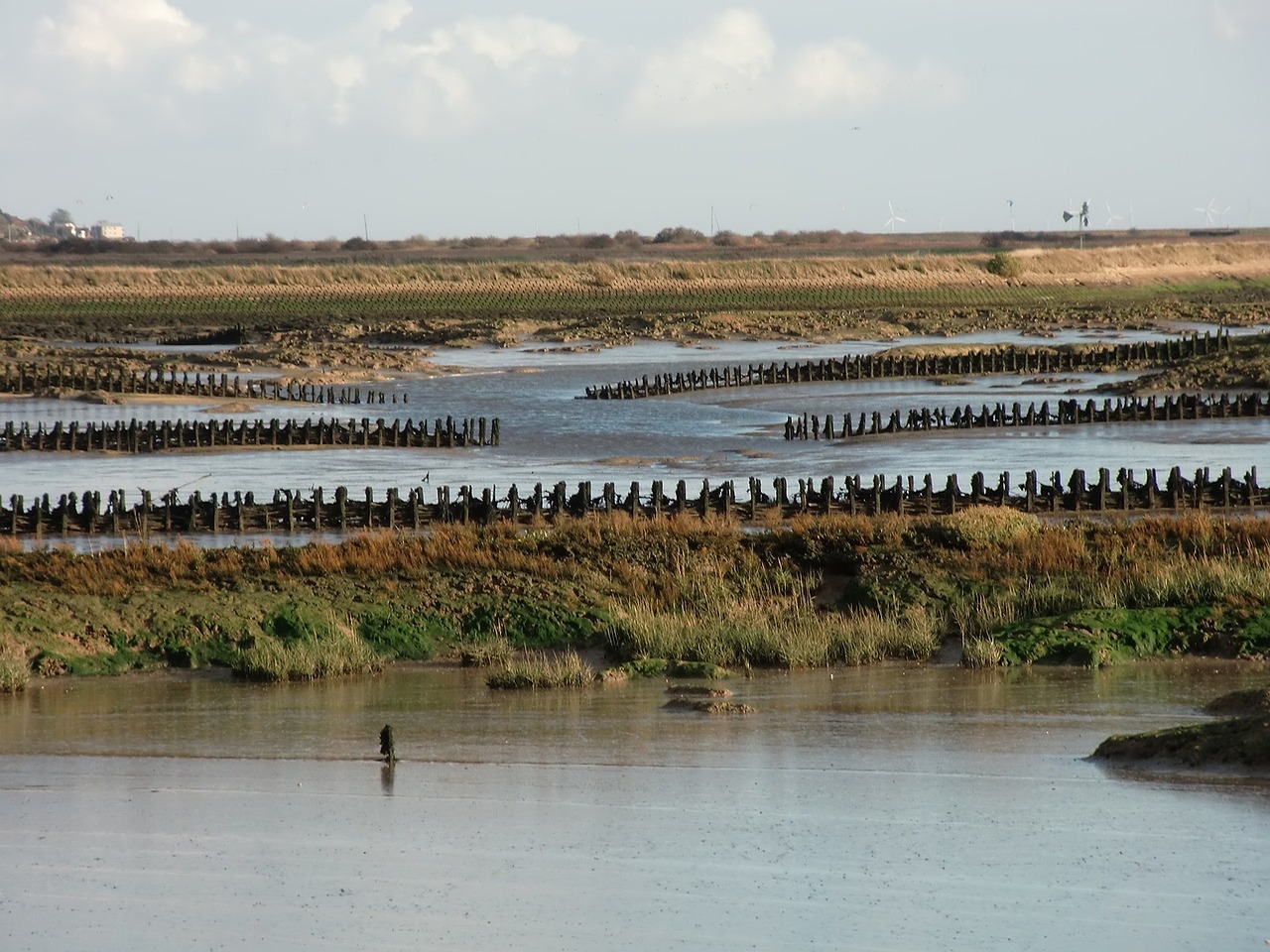
Vibes: Estuaries, Countryside, Sunshine Coast
Oxfordshire
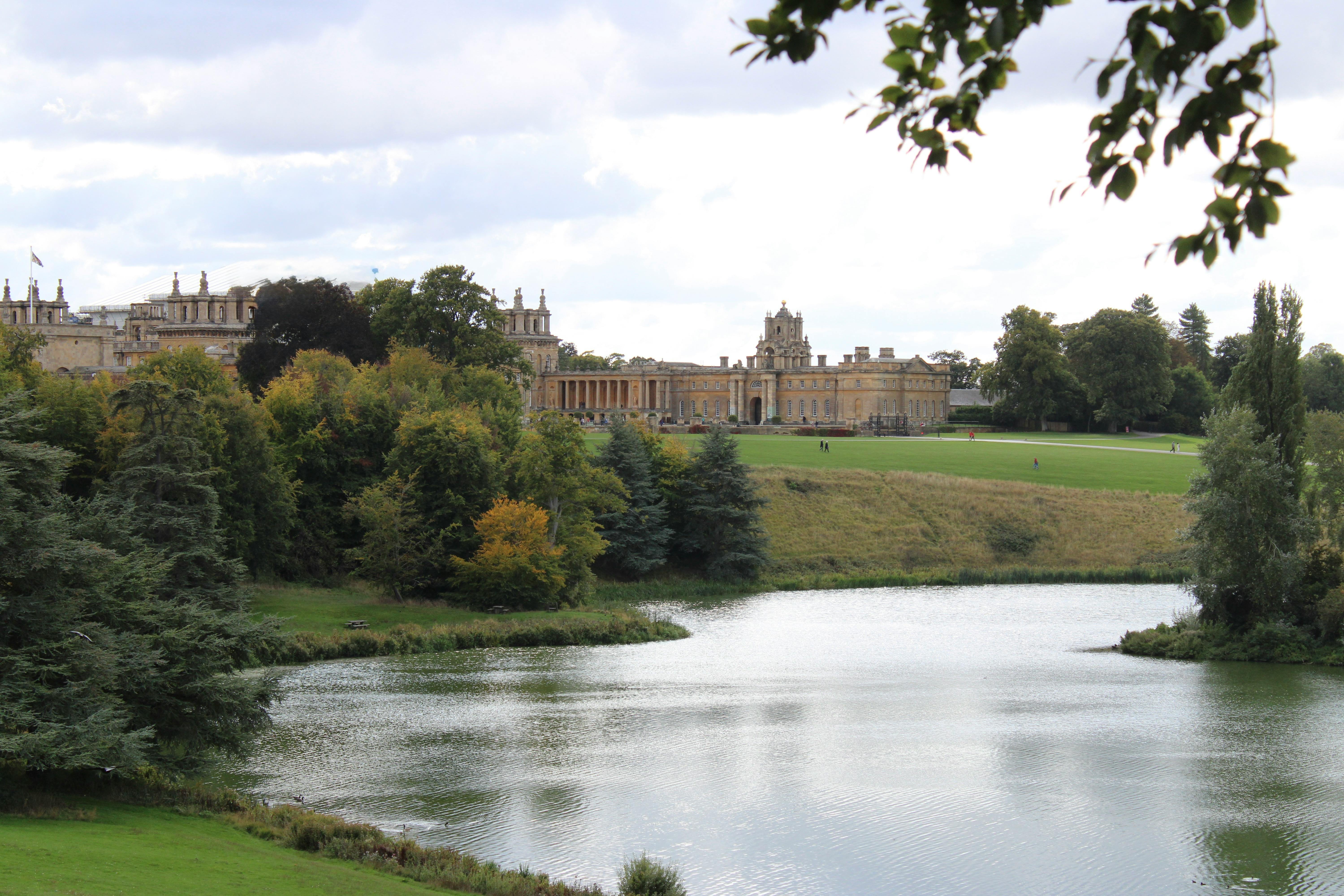
Vibes: Chilterns, Riverside, Market Towns
Surrey
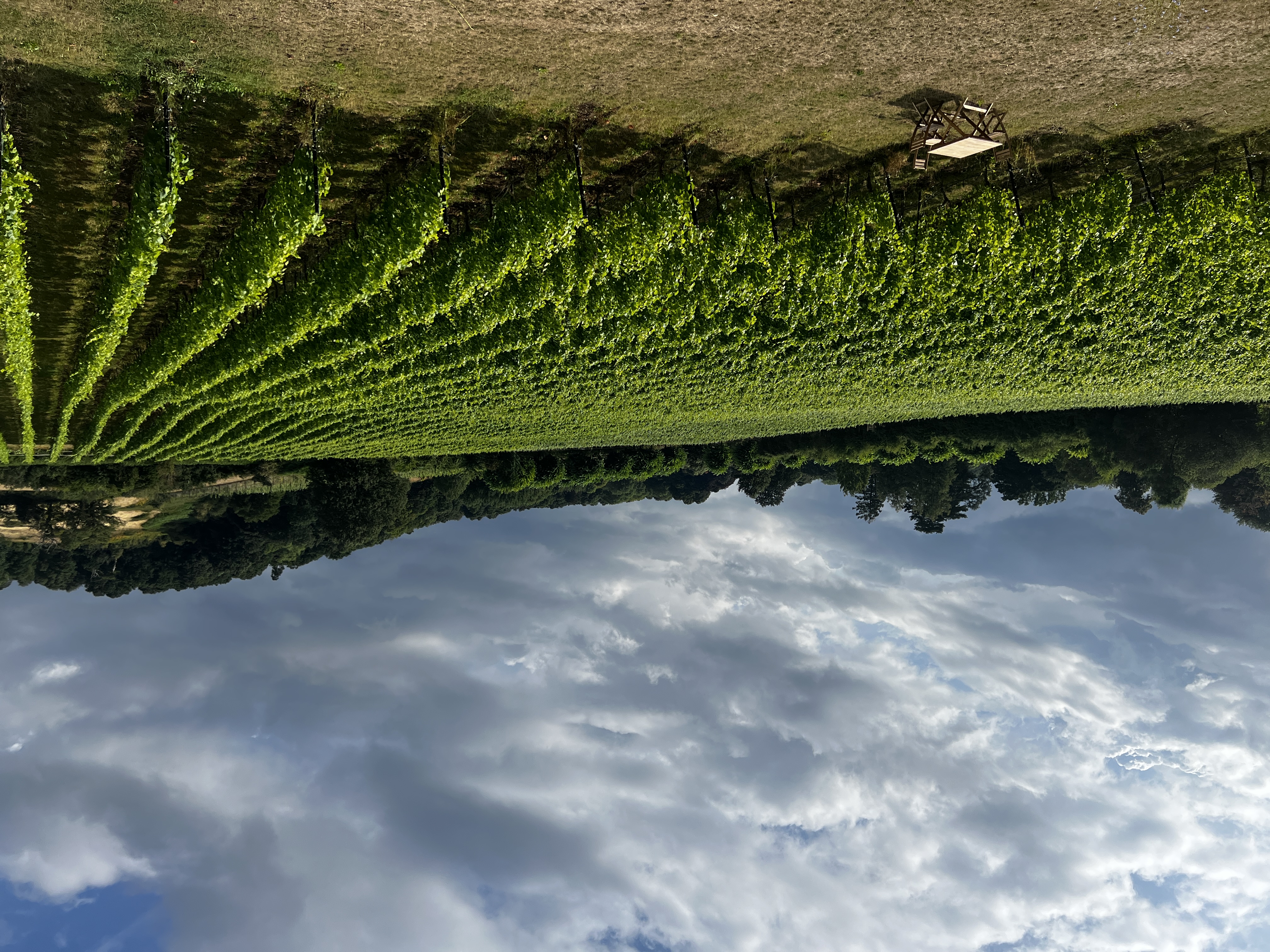
Vibes: Surrey Hills, North Downs, Accessible
West Sussex
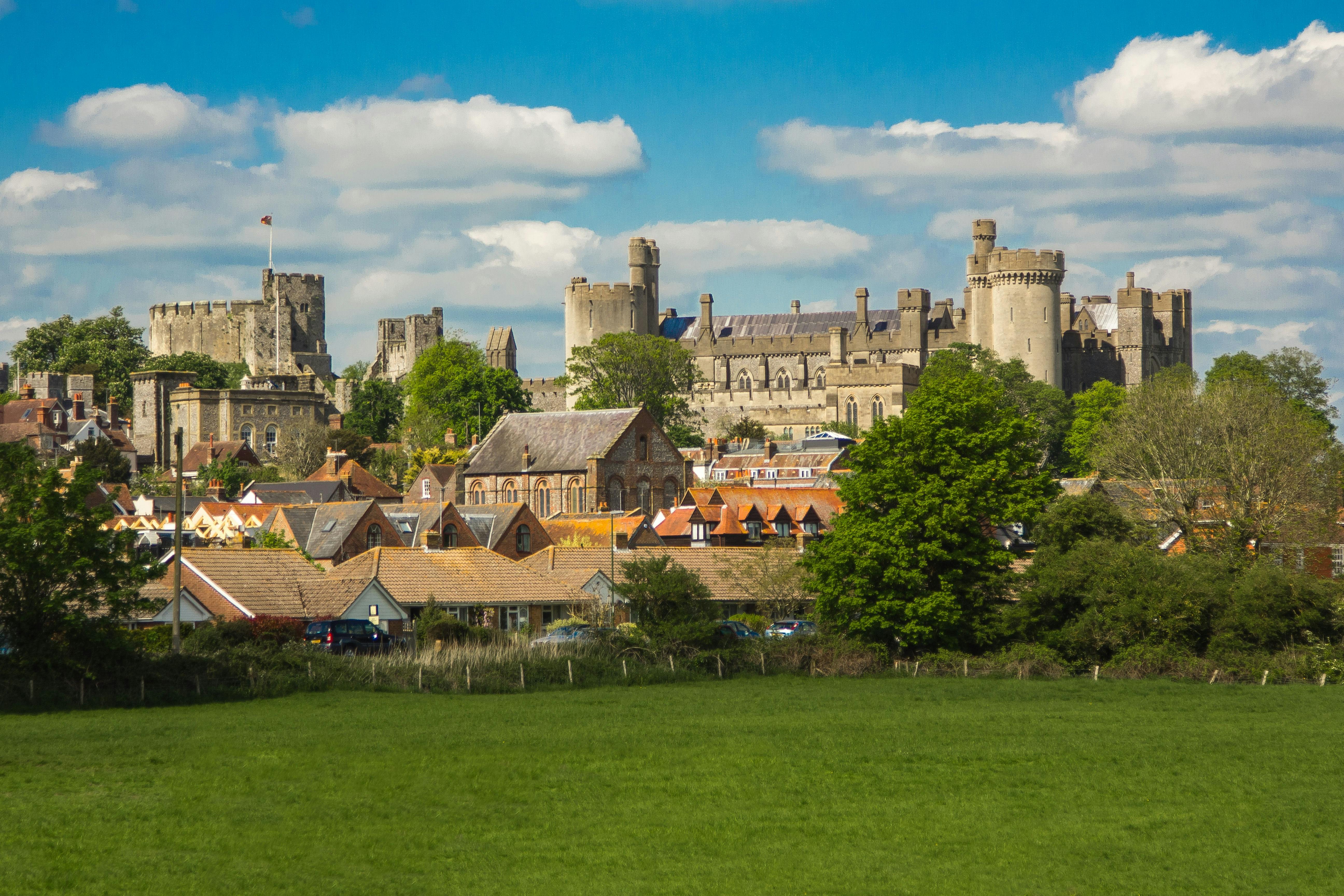
Vibes: South Downs, Country Estates, Visitor Friendly