Planning a Vineyard Day Trip from London
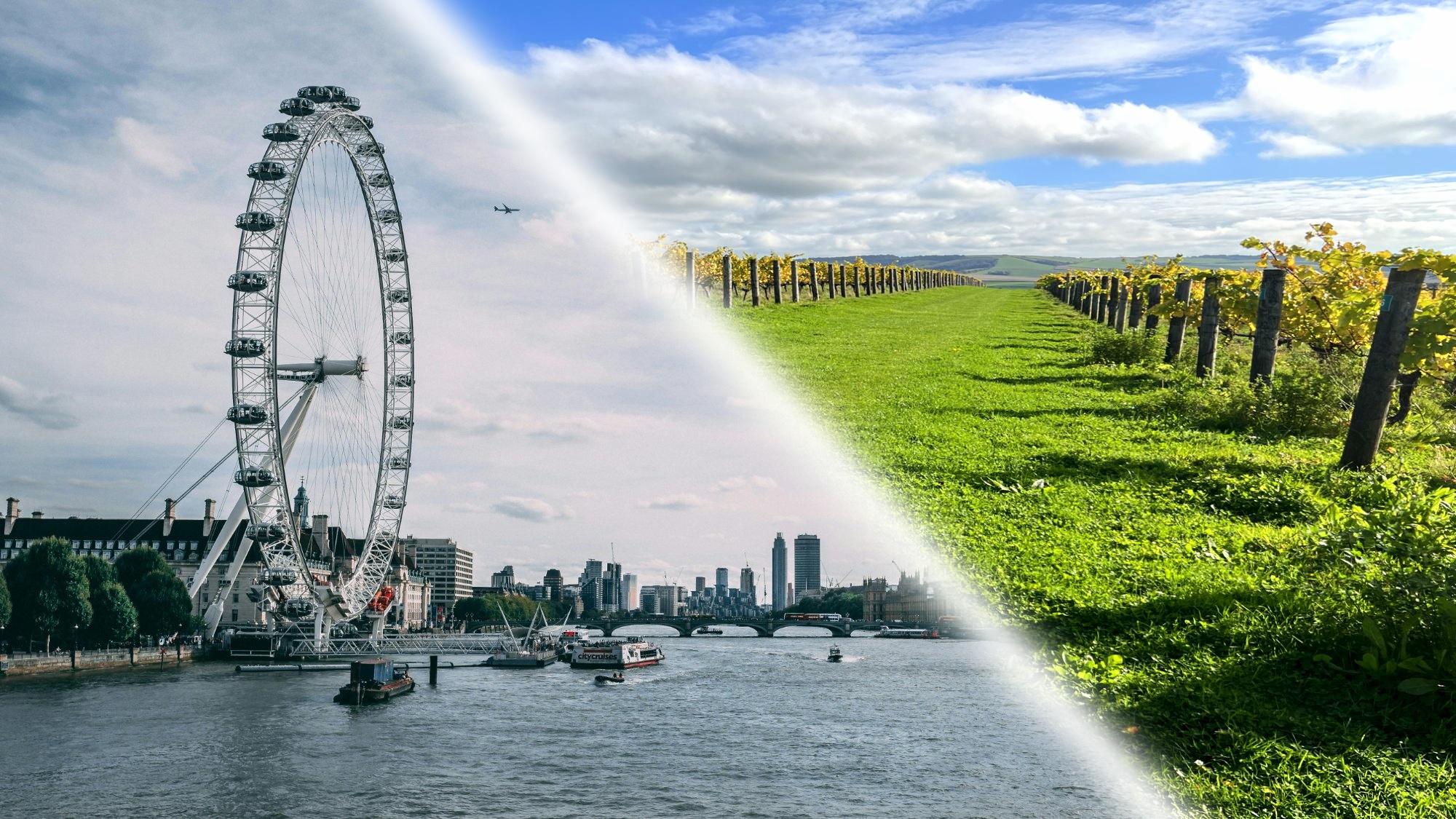
More than 60 vineyards are within 90 minutes of central London - and most Londoners have no idea. Surrey, Kent, Sussex, Hampshire, Berkshire, and beyond: world-class English wine country, reachable on a Saturday morning without a very early start.
This guide explains everything you need to know before you go, from getting there to what to wear. Use the Vinebound London day trip planner to find the right vineyard for you, filtered by your nearest station and what you're looking for on the day.
Which Vineyards Can I Reach from London? Return to contents
England and Wales now have over 1,100 registered vineyards. Here's a guide by region - what each area offers and what to look out for. For exact door-to-door travel times from your London station, use the planner.
London
Forty Hall Vineyard in Enfield is something genuinely unusual: a community-run vineyard on a historic estate inside Greater London, making it the first commercial-scale vineyard in the city since the Middle Ages. Reachable from Liverpool Street without leaving the city. Tours and tastings run on the second Sunday of each month from April to September, and self-guided walks are available when the farm shop is open. The experience is different from a traditional vineyard visit - this is a community and social enterprise project, run largely by volunteers - but that's exactly what makes it worth knowing about.
Surrey
Surrey has more vineyards within easy reach of London than any other county. Denbies Wine Estate near Dorking is one of England's largest vineyards and one of the best-equipped for a full day out, with a restaurant, wine bar, and walking trails on a 265-acre estate. Albury Organic Vineyard sits in the Surrey Hills and is one of England's only organic producers, with a boutique tasting room and a genuine sense of place. Greyfriars Vineyard on the Hog's Back and Chilworth Manor Vineyard round out a region that rewards repeat visits. Some options are walkable from the station; others need a short taxi. The planner shows you exactly what's involved from your nearest terminus.
Kent
Kent has more vineyard coverage than any other English county, and some of the most famous names in English wine. Chapel Down, Gusbourne, Biddenden Vineyards, and Simpsons Wine Estate are all established visitor destinations with tours, tastings, and restaurants. Kent vineyards tend to need a taxi from the nearest station, so the planner's door-to-door times are especially useful here. The Canterbury Wine Festival in May is a great excuse to visit if you want to taste from multiple producers in one go.
Sussex
Sussex - particularly the South Downs - produces some of England's most celebrated sparkling wines, thanks to chalk soils not unlike those of Champagne. Ridgeview Wine Estate, Bolney Wine Estate, and Oastbrook Estate are all well set up for visitors, with tours and tastings available most weekends. Bolney has a full restaurant and is open daily; Ridgeview is a short taxi from Burgess Hill station. For exact journey times from your London terminus, the planner has you covered.
Hampshire
Hampshire is home to some of England's most ambitious wine estates. Hattingley Valley, Hambledon Wine Estate (the self-styled birthplace of modern English wine), and the Vineyards of Hampshire collective all offer excellent visitor experiences. Raimes English Sparkling is a newer name worth knowing. Hampshire vineyards are generally a taxi ride from stations on the Waterloo mainline - the planner will show you the full picture from your starting point.
Berkshire
Often overlooked, Berkshire has a handful of excellent vineyards within striking distance of Paddington on the GWR mainline. Stanlake Park Wine Estate is one of England's oldest continuously producing vineyards and has a well-regarded wine bar and cellar door. All Angels Vineyard is a premium sparkling producer well worth the journey. Check the planner for door-to-door times from Paddington.
Oxfordshire
Fairmile Vineyard sits on chalk and flint slopes on the edge of Henley-on-Thames, in the foothills of the Chilterns Area of Outstanding Natural Beauty - and unusually for an English vineyard, it's within walking distance of both the town centre and Henley's GWR station, around 90 minutes from Paddington via Twyford. Tours run by appointment year-round, the views from the top of the vineyard are spectacular, and the town itself - with its riverside walks, pubs, and restaurants - makes for a very easy full day out. JoJo's vineyard will require a taxi if you're travelling by train, but is a nother fantastic option from Henley-on-Thames.
Getting to a Vineyard from London: Train, Car, or Tour Return to contents
By train
Train is the most popular choice for vineyard day trips from London, and for good reason - you can enjoy the wines without worrying about driving. Most major vineyards are within 20–30 minutes of a mainline station, though the last mile usually requires a taxi or short walk.
Many stations near popular vineyards have taxi ranks, and some vineyards will call a local cab for you if you ask in advance. Uber is generally available near larger towns - Guildford, Canterbury, Winchester, Brighton - but in more rural locations, don't rely on it. Search for local taxi firms before you travel. The Vinebound day trip planner shows the nearest station to each vineyard alongside estimated taxi times.
By car
Driving gives you complete flexibility - you can visit more remote vineyards, linger as long as you like, and bring home as much wine as you can fit in the boot. Almost all vineyards have free on-site parking. The obvious caveat: if you're driving, you're not tasting. Most visiting parties solve this with a nominated driver, or by buying bottles to take home rather than drinking on the day.
Organised tours
If you'd rather leave the logistics to someone else, there are operators running guided vineyard day trips from London - typically including transport, a guided tour, tastings, and sometimes lunch. Particularly good for group outings or special occasions.
Why You Should Book a Vineyard Visit in Advance Return to contents
Some vineyards allow drop-ins at the cellar door or wine bar, and a few are genuinely casual about unannounced visitors. But the majority require advance booking for tours and tastings - and if you've travelled from London, arriving to find nothing available is a miserable experience.
As a rule: always check before you go. This is especially true:
- On summer weekends and bank holidays, when popular vineyards book up weeks in advance
- During English Wine Week (late June) and harvest season (September–October)
- At smaller boutique vineyards, which may only run tours on specific days or with a minimum group size
- If visiting mid-week, when some vineyards reduce or suspend their visitor programmes
Vinebound listings link directly to each vineyard's booking page where available.
What to Expect on the Day Return to contents
Do I need to buy wine?
No - there's no obligation to purchase anything. That said, most people who visit a vineyard, taste the wines, and meet the team behind them do end up buying a bottle or two. Think of it like visiting a farm shop: nobody expects you to buy everything, but it would feel odd to leave empty-handed if you've enjoyed it.
Taking wine home on the train
Absolutely fine - and one of the great joys of a vineyard day trip. Most vineyard shops sell wine carriers or will wrap bottles carefully for travel. If you're planning to buy several bottles, ask when you arrive whether they have a box or bag you can use. Most are well used to the request.
What to wear
Smart casual is the norm. More practically: wear flat, comfortable shoes. Vineyard tours take you out among the vines, which means gravel paths, uneven ground, and muddy grass depending on the season. A light jacket is sensible even in summer - tastings are often held partly outdoors.
What if it rains?
Tastings and tours are almost always held indoors or in covered spaces, so a bit of rain rarely spoils the experience. The outdoor parts - a vineyard walk, a garden terrace, a picnic - will be weather-dependent, so it's worth having a backup plan if you were hoping to eat outside.
How long does a visit take?
A guided tour and tasting typically lasts 90 minutes to two hours. Add lunch, time at the wine bar, or a walk around the estate, and a full vineyard day out can comfortably fill four to five hours.
Should I eat before I go?
If you're doing a proper tasting, it's sensible to have eaten something first. Tastings on an empty stomach hit harder and make it harder to appreciate the wines. If the vineyard has a restaurant or café, check whether you need to book that separately - many do.
Practical Points: Dogs, Children, Food, and Staying Over Return to contents
Can I bring my dog?
Many English vineyards are dog-friendly, particularly in outdoor areas. Some welcome well-behaved dogs in the tasting room and wine bar; others ask that dogs are kept outside or on leads in specific areas. Always check in advance. Use the dog-friendly filter in the Vinebound day trip planner to narrow your search.
Is it suitable for children?
Some vineyards are excellent family destinations - on-site walks, outdoor space, café food, and a relaxed atmosphere. Others are more adult-oriented, particularly those focused on tutored tastings or fine dining. Vinebound listings include family-friendly information where we have it.
Can I eat there?
The range is wide. Some vineyards have full restaurants serving proper lunches and dinners - Denbies, The Mount Vineyard, and several Hampshire estates are genuinely destination dining. Others offer a café, light bites, or a cheese and charcuterie platter. Some have nothing beyond the wines themselves. Food availability is one of the first things to check. Restaurant tables at popular vineyards can book up quickly, particularly on summer weekends.
What if I want to turn it into a weekend away?
More and more vineyards now offer accommodation - shepherd's huts, cottages, glamping pods, and in some cases boutique rooms on the estate. Oastbrook Estate in Sussex and The Mount Vineyard are good examples of vineyards that have developed into proper short-break destinations. Vinebound listings note where on-site accommodation exists.
Big Estates or Boutique Vineyards? Return to contents
This is one of the most genuinely useful things to think about before you book.
The case for large, well-known estates
Vineyards like Denbies in Surrey, Chapel Down in Kent, and Hattingley Valley in Hampshire have invested heavily in their visitor experience. You'll typically get a polished, well-organised tour, a proper restaurant or café, a well-stocked shop, and reliable booking systems. For a first vineyard visit, or if you're taking people who aren't sure they're wine enthusiasts yet, bigger estates often work well.
The case for smaller, family-run vineyards
The experience at a boutique vineyard is fundamentally different. You're more likely to be shown around by the winemaker themselves. The wines you taste often aren't available in any shop. The group sizes are smaller. Vineyards like Albury Organic and Fairmile offer this kind of intimacy. The trade-off is fewer facilities and fewer tour slots - but for wine lovers, a small estate visit is often the one they remember most.
Neither is better - they're different things. The Vinebound day trip planner lets you filter by facilities, so you can find the right fit for what you want on the day.
When Is the Best Time to Visit to Visit Vineyards from London? Return to contents
Almost any time - but each season offers something different. One important caveat: many vineyards are not open year-round, and some operate reduced hours outside summer. Our listings try to keep opening information accurate, but always check the vineyard's website before setting off, especially in winter and early spring.
Spring (April–June)
New growth on the vines, countryside at its best. English Wine Week in late June is one of the best times to visit - many vineyards put on special events and open days. Visitor season is running at full capacity.
Summer (July–August)
Peak season. Outdoor dining, vineyard picnics, evening events. The vines are in full leaf and the estates look their best. Book well in advance - popular vineyards fill up weeks ahead on sunny summer weekends.
Harvest (September–October)
For atmosphere, harvest season is hard to beat. The grapes are being picked; there's a palpable energy to a working vineyard in autumn. Some estates run harvest open days - check individual listings on Vinebound for what's on.
Winter (November–March)
Quieter, and intentionally so. Many vineyards close or run reduced hours, though plenty remain open on weekends and for Christmas events. A winter visit has its own appeal - smaller groups, more unhurried tastings, the chance to chat properly with the people making the wines.
How to Make a Full Day Out of a Vineyard Trip Return to contents
A vineyard tour and tasting is typically two hours. How you fill the rest of the day depends on where you're going.
Some vineyards have on-site walking trails - Denbies has trails through its 265-acre hillside estate with views over the North Downs; Albury Organic has a wildlife walk through the Surrey Hills. Others are within easy reach of a village, a country pub, or local attractions. Fairmile Vineyard in Henley pairs naturally with the riverside town, the Thames Path, and a long lunch.
Some vineyards are genuinely remote - that's part of the charm. Our listings and the day trip planner flag walking trails, nearby villages, and local attractions where we know them. If you're planning a full day, it's worth reading the full listing before you go.
Ready to Plan Your Trip? Return to contents
The Vinebound London day trip planner is built specifically for this: search by your nearest London station, set your maximum travel time, and filter by the things that matter - dog-friendly, restaurant on site, family-run, walking trails, and more.
Save the vineyards that interest you to your shortlist, share it with whoever you're going with, check the listing, book ahead, and go.