h1_used=Best Dog Friendly Vineyards | guide.h1=Best Dog Friendly Vineyards | guide.H1=
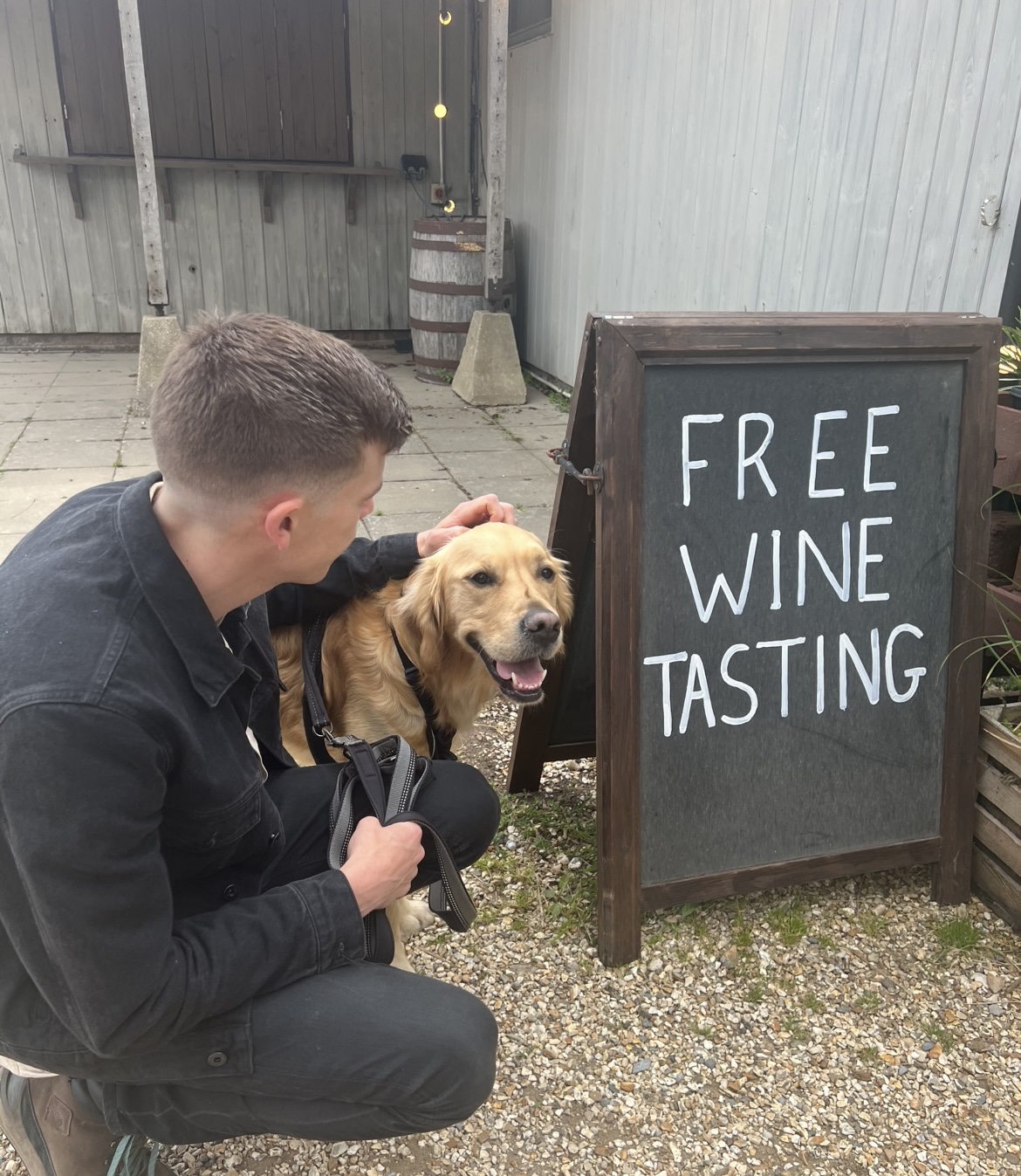
What could be better than a vineyard tour and a wine tasting? Bringing your dog along for the ride of course. Across England and Wales, plenty of estates welcome four-legged companions on leads, with bowls of water, shady corners and vineyard trails that double as great dog walks. These are some of the best spots where a day out with wine can also be a day out with your dog.
Some vineyard visits are better with a dog in tow. A dog friendly vineyard can turn a tasting into a proper day out: a stroll among the vines, a quiet table outside, and a drive home with a boot full of bottles (and a tired, happy dog).
That said, “dog-friendly” can mean very different things. Some estates welcome dogs on tours and in tasting rooms. Others are happy for dogs outdoors, but not in the winery or indoor spaces - which is completely normal given food safety and production rules. This guide helps you plan a dog friendly wine tasting without awkward surprises on arrival.
A vineyard might be dog-friendly in one of three common ways:
Outdoor-only: Dogs are welcome on leads in outdoor areas (courtyards, terraces, vineyard trails), but not inside buildings.
Tour-friendly: Dogs are allowed on tours (usually on a short lead), but may still be restricted from indoor tastings or dining spaces.
Fully dog-friendly: Dogs are welcomed both outdoors and in certain indoor guest areas (tasting rooms, shops, sometimes restaurants) - usually with clear house rules.
It’s also worth separating “vineyard” from “winery”. A vineyard is the outdoor growing space; the winery is the production area. Plenty of places are happy to host dogs outside, but few will actually allow them in the winery due to health, safety and hygiene rules.
A dog friendly wine tasting is usually easiest when you:
Book ahead and mention you’re bringing a dog (some places cap the number of dogs per timeslot).
Aim for calmer times (midweek, earlier tastings) if your dog is easily overstimulated.
Pick the right format: seated flights or outdoor “by the glass” tastings tend to be easier than long indoor guided sessions.
Plan for settling: a 10–15 minute walk first makes a huge difference.
Some vineyards may welcome dogs when the weather is good and tastings are held in outdoor areas, but be unable to accommodate dogs if the weather turns bad and tastings need to be held indoors. If this might be a concern speak to the vineyard in question and see if they can be more flexible with changing dates in the case of bad weather.
Vineyards vs wineries: where dogs are (and aren’t) allowedReturn to contents
This is where most confusion happens. You’ll often see “dogs welcome” on a website, then discover it means “outdoors only”.
A quick rule of thumb:
Tasting room / shop: sometimes allowed, often not - depends on layout and food service.
Restaurant: commonly outdoor-only; indoor rules are usually stricter.
Winery / production areas: frequently no dogs, even if the estate is otherwise dog-friendly.
If you specifically want a winery that allows dogs, check wording like “dogs welcome on the winery tour” or “dogs allowed in the tasting room”, not just “dogs welcome”.
Vineyards can be brilliant places for dogs, but there are a few non-negotiables:
Grapes (and raisins) are toxic. Keep your dog on a short lead and away from fallen fruit, compost, or discarded food.
Machinery and vehicles: tractors, ATVs, and forklifts can be active even during visitor hours.
Wildlife: rabbits, deer, and birds can trigger chasing - especially near hedgerows and woodland edges.
Sprays and treatments: vineyards may use approved sprays or fertilisers at certain times. Follow signage and staff guidance, and don’t let dogs nose around recently treated areas.
Heat and sun: vines don’t create much shade. In warm weather, prioritise early/late visits, bring water, and use shaded outdoor seating.
If your dog is the type to hoover up anything edible, a vineyard is not the place to gamble. Keep them close, watch the ground, and don’t let them forage.
Below you’ll find a curated selection of vineyards across England and Wales that welcome dogs in some capacity - from relaxed outdoor estates to places that can support a full dog friendly wine tasting.
Always double-check the exact policy before you go, especially if you’re travelling a long way or planning a tour. Rules can change by season, staffing, and how busy the estate is.
Ashling Park is one of the more dog friendly vineyards - not only are dogs weclome on tours, in the tasting room, and in the on-site accommodation, they're even allowed in the restaurant. They will need to be kept on leads - to stop them chasing rabbits as much as anything. You may even see the owner's dogs out for a walk, and you will definitely see them illustrated on the estate's vodka, gin and rum bottles!
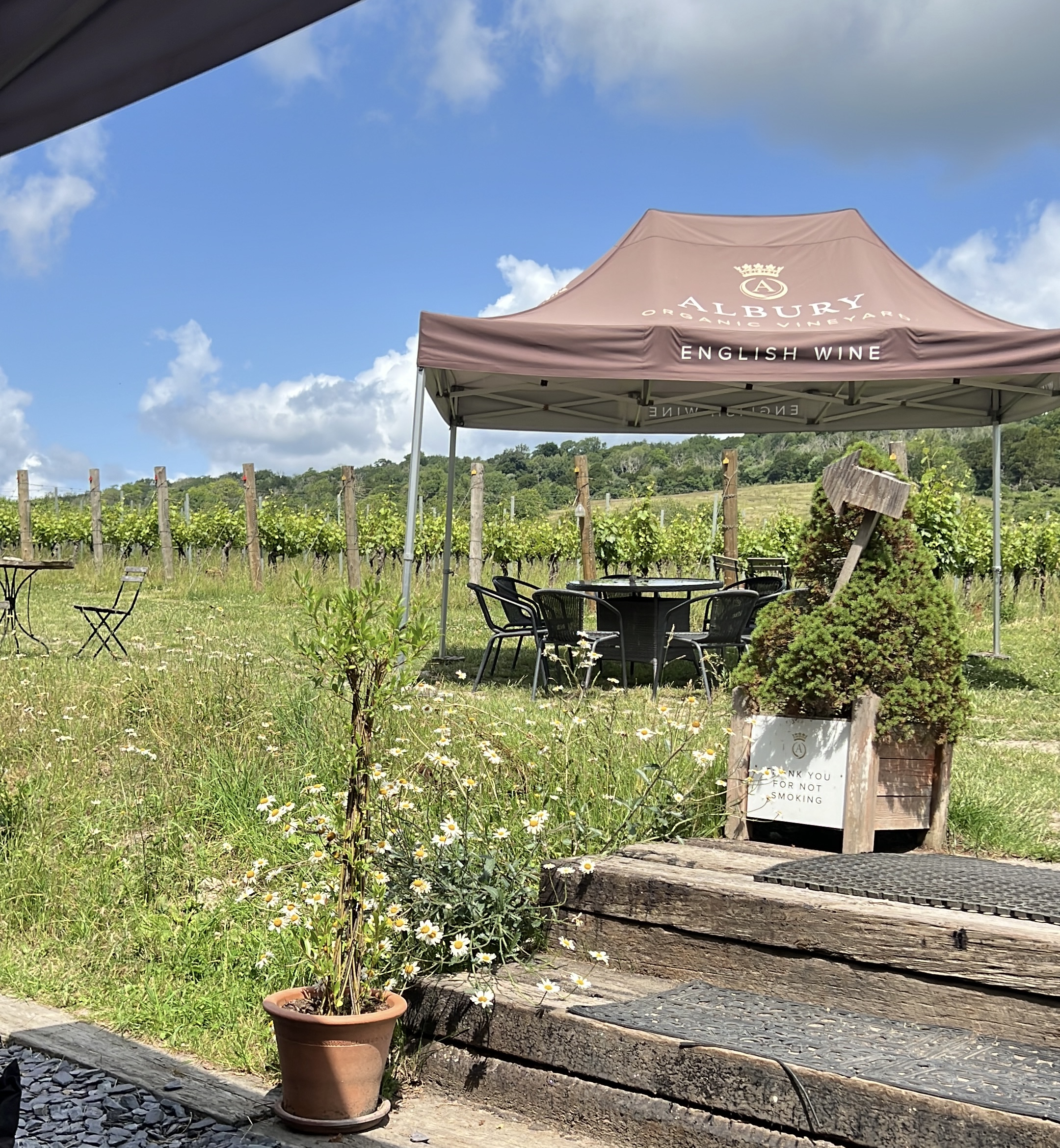
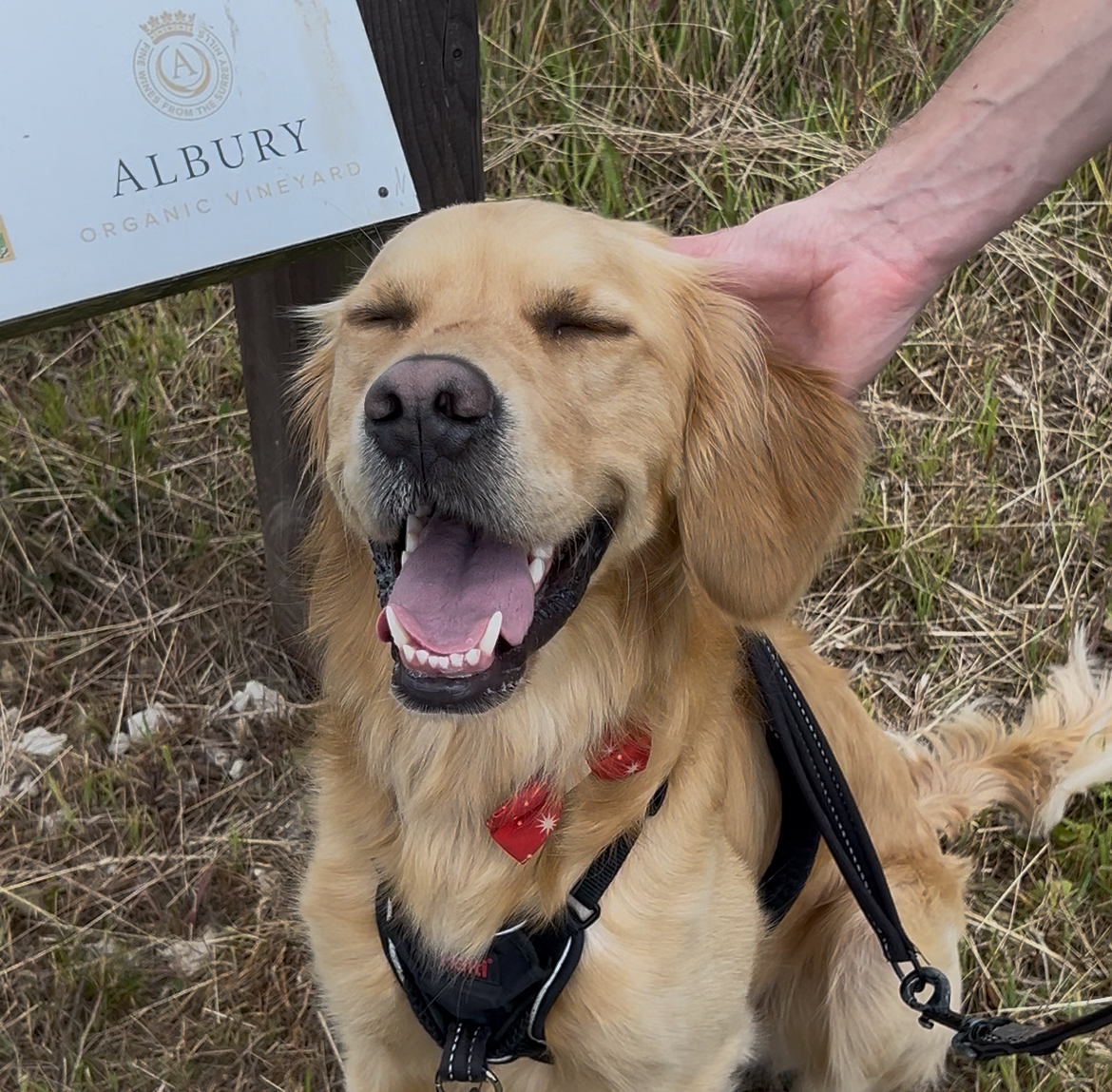
Albury Organic Vineyard welcomes well-behaved dogs on leads in all outdoor areas, including vineyard tours, the self-guided vineyard tour, and the patio where wine tastings are held. There's even a special dog treat menu. Note that when weather is bad wine tastings are held indoors - let staff know if you want to bring a dog, and prepare to take them outside if they begin to make a disturbance!
Tinwood Estate welcomes well-behaved dogs throughout the estate, including their lodges, provided they are kept on a lead at all times. Dogs are also permitted on vineyard tours and in the tasting areas.
Policies vary. The most dog-friendly vineyards allow dogs on tours and inside buildings (tasting rooms, restaurants). Others only permit dogs in outdoor areas, which limits what you can do. Wherever you go, keep your dog on a lead, clean up after them, and be considerate of staff and other guests. Many estates also have trails; a short walk beforehand often helps dogs settle during tastings.
Do vineyards that aren’t usually dog-friendly allow service dogs?
Yes. Assistance dogs must be allowed in public places, including food and drink areas. Let the vineyard know in advance so they can prepare.
Are vineyards safe places for dogs?
They can be, if you follow the rules and keep dogs under control. Grapes are toxic and can be fatal if eaten-keep dogs on a short lead and away from fallen fruit. Vineyards may have tractors, machinery, wildlife, and occasional sprays or fertilisers, so keep dogs close and follow staff guidance.
Are dogs allowed on private tours?
Sometimes. Even if dogs aren’t permitted on public tours, some vineyards will consider well-behaved dogs on private tours. If it’s not stated, ask.
How strict are vineyards about their dog rules?
It varies. Some are relaxed if dogs are calm and on a lead; others strictly enforce no-dogs indoors or on tours, especially at busy times or with large groups. Check ahead to avoid disappointment.
Can dogs drink wine?
No. Do not give dogs wine or any alcoholic drink.
Are wineries safe places for dogs?
Production areas have health and safety constraints. Many vineyards don’t allow dogs inside wineries; where they do, dogs must remain on a short lead and under control. Always follow on-site instructions.
Do dog-friendly vineyards have dog treats and water bowls?
Many provide water bowls and some offer treats, but it’s not guaranteed. Ask staff if bowls need refilling or if you can’t find one. In warm weather, bring your own water and a travel bowl-especially if you’ll be out in the vines for a while.
What should I pack for my dog for a vineyard outing?
Essentials: poo bags, a sturdy short lead, fresh water and a collapsible bowl. Helpful extras: a few treats or a toy, a towel for muddy paws, and in hot weather a cooling mat or shade cover; in cooler months, a blanket if your dog likes to settle by the table.
Do I need to book in advance if bringing a dog?
Often yes. Some vineyards limit dog-friendly tables, areas, or tours-especially at busy times. Book ahead and mention you’re bringing a dog.
Are there size or breed restrictions?
Most vineyards welcome all breeds, but larger or very lively dogs may be asked to stay outdoors or in specific areas. If unsure, check in advance.
Can I leave my dog in the car while I visit a vineyard?
No. Even for a short time, cars can become dangerously hot. If a vineyard can’t accommodate your dog, plan another day or visit without them.
Do vineyards ever charge extra for dogs?
For day visits and tastings, charges are rare. Vineyards with accommodation may add a pet fee-check booking details.
What happens if my dog barks or misbehaves?
Vineyards expect calm, controlled dogs. If your dog becomes restless or noisy, step outside for a short walk or move to a quieter spot until they settle.
Sign in to Vinebound
We’ll email you a secure link to sign in. No password needed.