
Fossebridge Vineyard
A new vineyard high on the Cotswold escarpment, planted from scratch since 2021 by a couple who left careers in Napa and at Amazon to do it. Not yet open to visitors, but one to watch as the first vintages come through.


Producer OnlyNo confirmed tours, tastings, shop, or opening hours found anywhere on their own site (checked home, about, gallery pages) as of Sept 2026 — reads as a very small, newly-planted family vineyard (first harvest planned 2025) with no public-facing visiting operation yet. Revisit if that changes.
Jump to a section
Overview
What's the vibe?
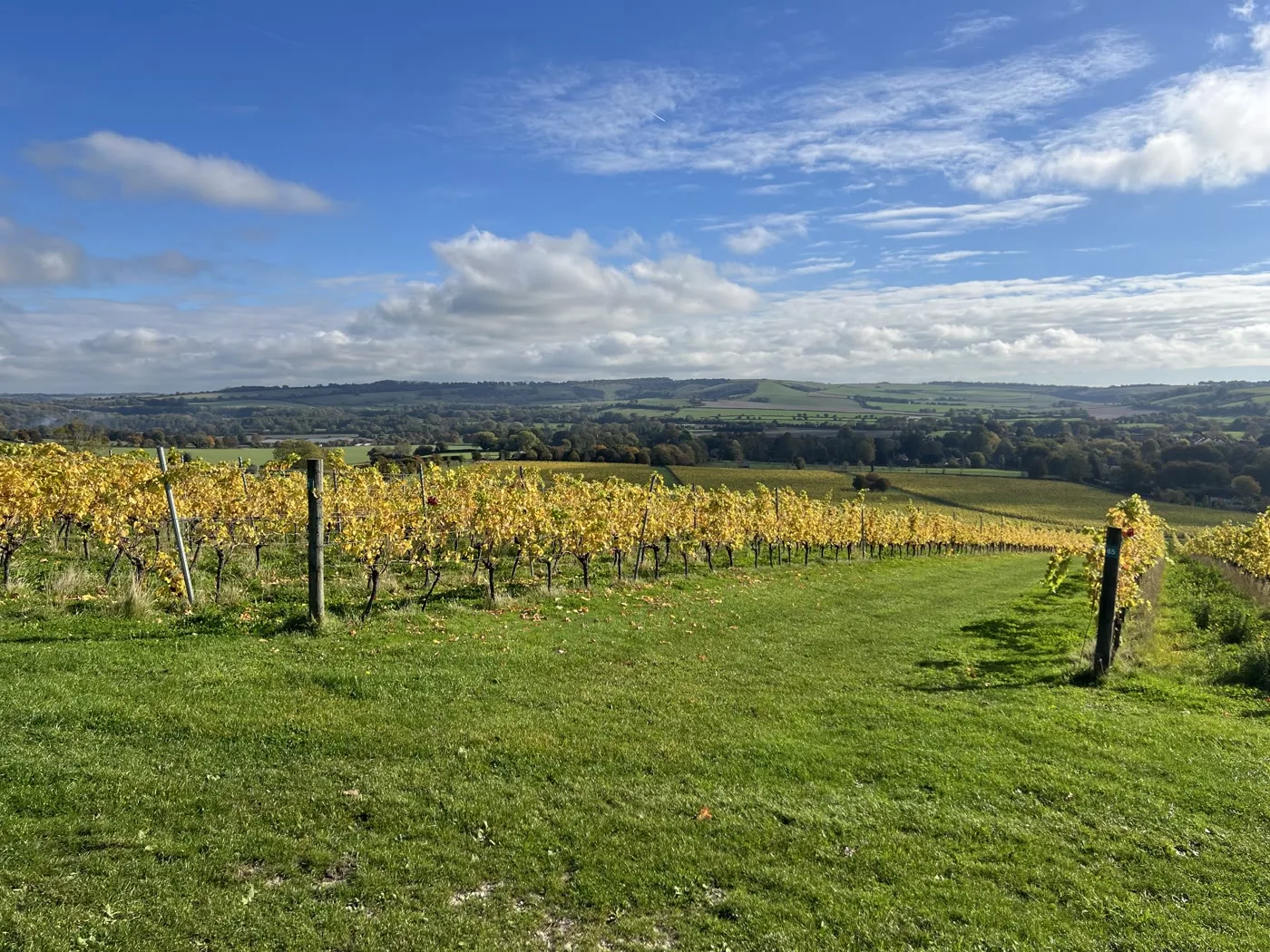
Fossebridge Vineyard sits behind a once-derelict 1950s house on the Cotswold escarpment near Cirencester, bought by Amber Mihna and Phil Robertson after they met in Mexico in February 2020, just as the world was locking down. Amber had spent years in Napa's wine trade; Phil was a senior executive at Amazon. They found the house advertised in Cotswold Life, fell for the location, and planted Chardonnay and Pinot Noir the following year, followed by more Chardonnay, Pinot Meunier, and Sauvignon Blanc in 2023.It's still very much a two-person operation, built around demanding day jobs rather than instead of them. The first harvest, delayed a year by a wet, mildew-heavy growing season, finally came in 2025. There's no cellar door yet, no shop, no booked tours: this is a vineyard still finding its feet, not a finished visitor attraction.
For the extra curious
Fossebridge sits high on the Cotswold escarpment, which makes for good drainage but leaves the vines exposed to frost. Rather than the paraffin bougies many English vineyards still light by hand on cold nights, Amber and Phil installed a remote-activated, water-based system, a small paradox of using ice to stop ice. When temperatures drop, it sprays the buds; the water freezing around them releases just enough heat to hold the bud at a survivable temperature until the cold passes.
The grape choice was deliberate too. Most vineyards nearby lean on frost- and mildew-resistant varieties like Seyval Blanc or Solaris, which cope better with Gloucestershire's wet, marginal climate. Fossebridge planted classic vinifera instead: Chardonnay, Pinot Noir, Pinot Meunier, and Sauvignon Blanc, the harder route, chosen on principle rather than convenience. The Sauvignon Blanc was a later addition, inspired by the success Woodchester Valley Vineyard has had with its own, a few miles away in the same county.
Once wines start being released, the plan is a non-vintage sparkling cuvée, a richer blanc de blancs given extra time on lees, and a single-varietal Pinot Meunier sparkling, alongside the Sauvignon Blanc as a still wine.
The grape choice was deliberate too. Most vineyards nearby lean on frost- and mildew-resistant varieties like Seyval Blanc or Solaris, which cope better with Gloucestershire's wet, marginal climate. Fossebridge planted classic vinifera instead: Chardonnay, Pinot Noir, Pinot Meunier, and Sauvignon Blanc, the harder route, chosen on principle rather than convenience. The Sauvignon Blanc was a later addition, inspired by the success Woodchester Valley Vineyard has had with its own, a few miles away in the same county.
Once wines start being released, the plan is a non-vintage sparkling cuvée, a richer blanc de blancs given extra time on lees, and a single-varietal Pinot Meunier sparkling, alongside the Sauvignon Blanc as a still wine.
Events at Fossebridge Vineyard

Vineyard events, new openings and the best deals — straight to your inbox.
No spam, unsubscribe anytime.
 Instagram
 TikTok