
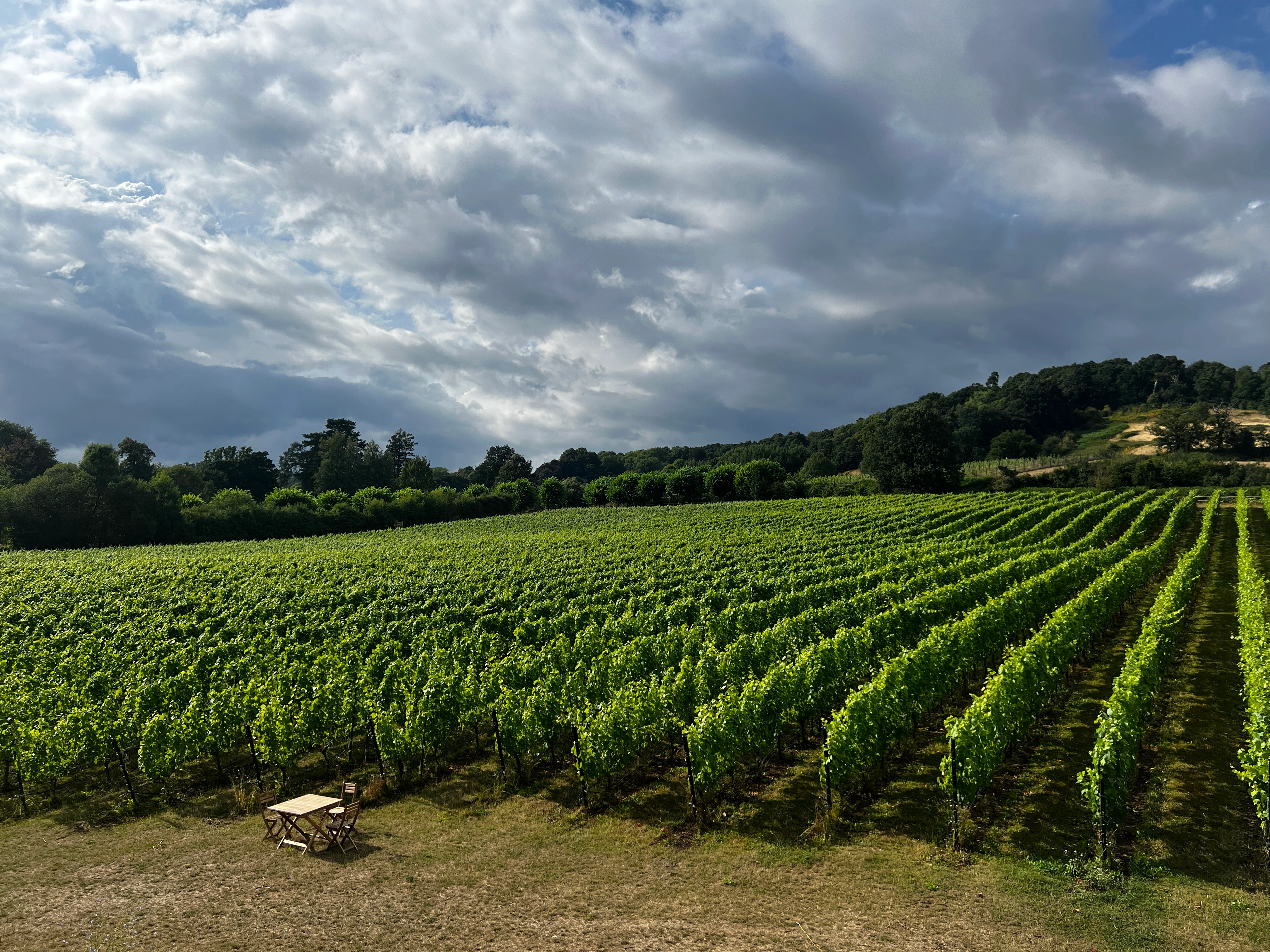
Visiting English Vineyards
This is a guide for international visitors who want to explore England's vineyards. People come to England for London, its castles and its countryside, and a day among the vines belongs on that list too, because the winemakers behind English sparkling wine are building a reputation that is worth seeing for yourself.
From larger estates that welcome walk-ins to hidden gems that reward booking ahead, English vineyards offer a visit for every kind of trip. Even if your time in the UK doesn't take you beyond the capital, you can reach many vineyards from London in under an hour by train, and the London vineyard finder shows which are easiest to reach from the mainline stations. A guided day trip from London is the other easy way in.
Want recommendations for your own trip? Email Vinebound and tell us when you're visiting, where you're staying and what you enjoy, and we'll suggest what to see and do.
What can you expect from a vineyard visit in England?
England and Wales have 1,104 vineyards and 238 wineries, and around 290 of the vineyards listed on Vinebound welcome visitors.
The industry is small next to the famous regions. England has 4,841 hectares under vine, about a seventh of Champagne's 34,200 and about a quarter of Napa Valley's. That scale shapes a visit: open vineyards are spread across the countryside rather than clustered together, so there is rarely another tasting room next door if the first is full. Plan your route and book ahead.
The scene is also new. Plantings have grown by 510% since 2005. Because the industry is young and England has fewer rules than long-established regions, winemakers from around the world have come to experiment with styles, and that freedom is part of the appeal.
What wine will you taste at an English vineyard?
English sparkling wine built the country's reputation, and it is the wine most vineyards are known for. Expect everything from standard cuvées to blanc de blancs (white grapes only), blanc de noirs (made from black grapes) and rosé.
Still wines are growing too. Chardonnay makes still wines as well as sparkling ones. Bacchus, England's fourth most planted grape, is often described as an alternative to Sauvignon Blanc. Pinot Noir also makes lighter, red-fruited still reds and rosé. Beyond these, vineyards grow international grapes such as Pinot Gris and Sauvignon Blanc, disease-resistant varieties such as Solaris, and German varieties such as Dornfelder and Regent.
English vineyard tours from London
Several operators run guided day trips from London, usually by minibus or coach, taking in two or three vineyards with a tasting at each. A guided tour means nobody has to drive, and the operator handles the bookings. Prices were checked in November 2026. Confirm the latest with the operator before you book.
- Sussex vineyard and winery bus tour on a vintage London bus: from £145 per person.
- Cellar Door Wine Tour from London, three vineyards with a seasonal picnic: from £150 per person.
- Full-day wine tour in Sussex and Kent: from £185 per person.
- Shuttle & Vine, minibus shuttle trips from Brighton: from £55 per person, with private vineyard trips from £90.
Our vineyard tours page lists the operators by area, and Book an experience lists tours you can book online.
Visiting English vineyards by train
Many vineyards are a short taxi ride from a station, and two or three in a day is a comfortable plan by train. This is how the journey works if you haven't used English trains before.
Book your tickets ahead on Trainline, which sells tickets for the different train companies in one place. Advance tickets are usually cheaper than buying on the day, but they are limited in number and sell out on popular trains, so book as soon as your dates are fixed. An advance ticket is valid only on the train you choose.
Plan the journey. Use the National Rail Enquiries site or an app such as Trainline. Look again the day before, because engineering works can change weekend services, and check the last train home before you leave.
Buy your ticket before you board. Tickets are valid for a particular date and time, and cheaper ones carry time restrictions. A mobile e-ticket works at the barriers. If your departure station has no ticket machine or office, you can buy from the conductor on the train, and National Rail's "Find a station" page shows what each station has. Travelling without a valid ticket can mean a penalty fare.
At the station. The platform is usually shown on the departure board a few minutes before the train leaves. Check the destination and the stops. Smaller stations near vineyards may have no staff and no barriers.
Keep your ticket until you leave. Inspectors and exit barriers can ask for it at the other end.
From the station to the vineyard. The London vineyard finder shows train plus taxi times from each London terminus, and assumes a Saturday journey. Book a taxi before you travel, as smaller stations may not have cabs waiting. Tell the vineyard when you expect to arrive and when you need to leave.
Driving yourself. You drive on the left in England, and many vineyards sit at the end of narrow, winding country lanes that can be unfamiliar even if you drive at home. If you plan to taste, a train and taxi or a guided tour is the better choice.
Booking, opening days and costs
Most English vineyards ask you to book a tasting or tour in advance, and opening days vary by season. Many open at weekends only, and some close in winter. A few producers make wine but don't take visitors at all, and the Vinebound listings say so.
A tour and tasting at a single vineyard can be as short as an hour and a half. Costs depend on what's included, from a simple tasting to a food pairing or a longer tour, and a day tour from London costs more than a single-vineyard visit. Our Book an experience page lists tours and tastings you can book online.
Etiquette and what to wear
Spitting is normal at a tasting, and the host will bring a bucket if you ask. Skip strong perfume, which gets in the way of other guests' wine. Hosts will welcome any questions you have.
Most of a visit is outdoors, and English weather changes quickly, so bring layers and a waterproof. Wear shoes you can walk in, as vine rows can be muddy. For families, see our child-friendly vineyard guide.
Best time to visit English vineyards
The vines are in leaf from late spring, and the harvest runs from late September into October, earlier in warm years. Summer is the busiest season for tours. Winter has its own appeal: vineyards are quieter, many hold Christmas events, and some have cosy tasting rooms. Some vineyards open fewer days or close in winter, so confirm before you go. Both the London vineyard finder and the main vineyard finder have filters for the day and month you're visiting, so you can find a vineyard that will be open.
Where to eat and stay
Many vineyards have a restaurant or café, and some offer rooms. Our guides to vineyard restaurants and vineyards with accommodation list them.
Famous English vineyards and trails
Well-known names include Chapel Down and Gusbourne in Kent, Rathfinny in East Sussex, and Denbies in Surrey. Arrangements for visitors differ at each, so check the vineyard's page for booking details. You can browse all vineyards too.
Taking English wine home
In your suitcase. Wrap bottles in clothes or a padded wine sleeve. Liquid rules in hand luggage differ by UK airport: some now allow containers up to 2 litres and others still apply the 100 ml limit. A connecting flight can mean different rules on each leg, so check with the airport before you fly.
How much you can bring home duty-free. Allowances were checked in November 2026. Confirm with your customs authority before you travel.
| Country | Duty-free allowance |
|---|---|
| United States | 1 litre of alcohol in total (one bottle) |
| Canada | 1.5 litres of wine (two bottles), if you have been away 48 hours or more |
| Australia | 2.25 litres of alcohol in total (three bottles) |
| Ireland | 4 litres of still wine (five bottles) or 2 litres of sparkling wine (two bottles) |
Wine above your allowance is taxed. In the US, unusual quantities can be treated as commercial, which needs a permit. Official pages: US Customs and Border Protection, Canada Border Services Agency, Australian Border Force and Irish Revenue.
Shipping it home. Many English vineyards deliver within the UK only, and sending wine abroad is a different matter. Before you buy, ask the vineyard:
- Do you ship to my country?
- Who handles the export paperwork?
- Are import duty and taxes included, or do I pay them on arrival?
- How is the wine packed, and is breakage covered?
A note on tax. The UK's tax-free shopping scheme for overseas visitors ended in January 2021, so wine you carry home is bought with VAT included. VAT isn't charged on goods a retailer sends directly to an address outside the UK, so ask whether the vineyard can ship to your overseas address. You will then need to check what import duty and taxes your own country charges on arrival.
FAQs
What is the difference between a vineyard and a winery?
A vineyard is where the grapes grow. A winery is where the wine is made. Many English estates are both.
Can you drive after a wine tasting tour?
The safest answer is no. In England you drive on the left, and many vineyards sit on narrow, winding country lanes that can be unfamiliar even to a sober driver. Even if you spit the wine out rather than swallow it, some alcohol still reaches your bloodstream, so not driving is safer. A guided tour or the train avoids the question. The legal limit in Scotland is lower than in England and Wales, and the government gives no amount that is safe to drink before driving.
What is the best time of year to visit an English vineyard?
Late summer to autumn, when the vines are full and the harvest begins. Some vineyards open fewer days in winter, so confirm before you travel.
Which English vineyard is best to visit from London?
It depends on how long you have. The London vineyard finder ranks vineyards by journey time from your London station.
What are the best wine tours in the UK?
Most visitors start with a guided day trip from London into Kent or Sussex. The vineyard tours page lists the operators by area.
Why is English wine expensive?
Vineyards are small, harvests vary from year to year, and UK alcohol duty adds to the price.
How do I buy train tickets in England?
Buy before you board, from National Rail Enquiries, a train company's app or a station ticket machine. If your departure station has no ticket facilities, you can buy from the conductor on the train. Keep the ticket until you leave your destination station.
Do I need to declare wine entering the US?
Yes. US customs requires you to declare everything you bring back. One litre of alcohol is duty-free for adults aged 21 or over, and anything above that is taxed. State limits can be stricter.
How much wine can you bring home duty-free?
It depends on where you live. For example, 1 litre of alcohol (one bottle) to the US, 1.5 litres of wine (two bottles) to Canada, 2.25 litres of alcohol (three bottles) to Australia, and 4 litres of still wine or 2 litres of sparkling wine to Ireland. The table above has the details.
Can you ship wine from England to the US?
Some vineyards may, but many deliver within the UK only. Alcohol imports into the US are regulated, and unusually large quantities can be treated as commercial, which needs a permit. Ask the vineyard whether they ship to your country and who handles the duty and paperwork.