
guide body length: 0

Natural & Low-Intervention Wine in the UK

hero_raw=/assets/images/vineyards/westwell-main.jpg | hero_src=/assets/images/vineyards/westwell-main.jpg

Natural and Low-Intervention Wine in the UK

h1_used=Natural and Low-Intervention Wine in the UK | guide.h1=Natural and Low-Intervention Wine in the UK | guide.H1=

Published 23/07/2026 · Updated 07/10/2026

Natural wine has gone from niche curiosity to one of the more talked-about corners of English and Welsh winemaking. Whether it is called natural, low-intervention or minimal-intervention, the idea is the same: farm the grapes with a light touch, then get out of the way in the winery as much as possible. No agreed rulebook governs any of these terms, which is part of why the subject causes so much debate. This guide explains what the terms actually mean, why the wines can taste so different from bottle to bottle, and which UK vineyards are leading the way.

See the vineyards

Overview

Natural wine has gone from niche curiosity to one of the more talked-about corners of English and Welsh winemaking. Whether it is called natural, low-intervention or minimal-intervention, the idea is the same: farm the grapes with a light touch, then get out of the way in the winery as much as possible. No agreed rulebook governs any of these terms, which is part of why the subject causes so much debate. This guide explains what the terms actually mean, why the wines can taste so different from bottle to bottle, and which UK vineyards are leading the way.

What Is Low-Intervention or Natural Wine?

There is no legal or universally agreed definition of "natural wine" or "low-intervention wine" in the UK. Unlike organic or biodynamic status, nobody certifies a wine as natural, so the term describes a spectrum of practice rather than a fixed style. A wine can sit anywhere along that spectrum, and two producers who both call themselves low-intervention can work in quite different ways.

That said, a few things come up again and again in wines described this way:

  • Wild or native yeast fermentation - using the yeast already present on the grapes and in the winery, rather than adding a cultured commercial strain
  • Minimal or no added sulphur - sulphur dioxide is the standard preservative in winemaking; low-intervention producers use as little as they can get away with, sometimes none at all
  • Unfiltered and unfined - the wine goes into the bottle without being clarified, which is why natural wines are often cloudy and can throw sediment
  • Organic or biodynamic farming - not a requirement, but a common starting point, since a light touch in the winery tends to go hand in hand with a light touch in the vineyard
  • Gravity-fed winemaking - moving the wine using gravity rather than pumps, which is gentler on the fruit
  • Skin contact - leaving grape skins in contact with the juice during fermentation, which is how orange wine is made
  • Pét-nat and col fondo - sparkling wines made by bottling before fermentation finishes, rather than adding sugar and yeast afterwards as traditional method does

One common mix-up is worth clearing up here: orange wine is not automatically low-intervention wine. Orange wine simply describes a white wine made with skin contact, a technique that can be applied by any winemaker, conventional or natural. Plenty of orange wine is made with cultured yeast, filtration and sulphur additions like any other commercial wine. Equally, plenty of low-intervention wine is not orange at all - it might be a wild-fermented Chardonnay or an unfiltered rosé. The two ideas overlap, but one does not imply the other.

What Does Natural Wine Taste Like?

This is the question that divides drinkers most, and it deserves an honest answer rather than a diplomatic one. Some low-intervention wines taste much like their conventionally made counterparts - clean, fruit-forward, easy to place. Others show the funky, cidery or savoury notes that come from wild yeast fermentation and going unfiltered: think bruised apple, a whisper of farmyard, a slight fizz on a still wine, or a texture that is more alive than polished. For people who love natural wine, these are not flaws to tolerate. They are the whole point - the taste of a wine that has been allowed to do its own thing, and no two bottles from the same producer necessarily taste identical.

The honest trade-off is this: low-intervention winemaking has a higher failure rate than conventional winemaking. Skipping sulphur and filtration removes some of the safety nets that stop a wine from developing genuine faults, such as excessive volatile acidity (a sharp, nail-varnish smell) or unwanted brettanomyces character (a barnyard or plasters smell that goes beyond pleasant funk). That means there is more outright unpleasant or faulty natural wine in circulation than there is faulty conventional wine. It is not false balance to say this - it is the actual trade-off drinkers are making when they choose a low-intervention bottle. A good producer, working carefully and with clean fruit, keeps that risk low. A careless one does not.

Common Natural Winemaking Techniques

If you start exploring low-intervention wine, a handful of terms come up repeatedly. Here is what they mean.

  • Wild or native yeast fermentation - fermenting with the yeast strains already present on the grape skins and in the winery air, rather than adding a commercial cultured strain. It is less predictable than cultured yeast, but gives a wine character specific to that place and vintage.
  • Minimal or no added sulphur - sulphur dioxide protects wine from oxidation and spoilage. Low-intervention producers use it sparingly, often only a small dose at bottling, or not at all.
  • No fining or filtering - conventional winemaking uses fining agents (sometimes animal-derived, like gelatine or isinglass) and filtration to clarify and stabilise wine. Skipping both leaves the wine cloudier and more textured, but also more vegan-friendly by default.
  • Skin contact - macerating white grapes with their skins, the way red wine is normally made, for anywhere from a few days to several months. This is what produces orange wine, with its deeper colour and tannic grip.
  • Pét-nat (méthode ancestrale) - short for pétillant naturel. The wine is bottled before its first fermentation finishes, trapping carbon dioxide to create bubbles naturally, without the second fermentation and dosage used in traditional method sparkling wine.
  • Col fondo - a style of pét-nat that is never disgorged, so the spent yeast (the lees) stays in the bottle. Expect sediment and a cloudier pour, and usually a gentle swirl before you drink it.
  • Amphora and qvevri fermentation - fermenting or ageing wine in large clay vessels, an ancient technique now used by a handful of UK producers for texture and a distinctive savoury edge.
  • Biodynamic and organic farming - not universal among low-intervention producers, but common. Biodynamic farming follows organic principles plus a calendar of additional practices; both are usually a strong indicator that a producer is thinking carefully about the winery as well as the vineyard.

Vineyards Pioneering Natural Wine in the UK

Plenty of English and Welsh vineyards make the odd pét-nat or orange wine as a side project. The vineyards below are different: natural or low-intervention winemaking is central to what they do, not an occasional experiment.

Huxbear Vineyard, in Devon's Teign Valley, farms off-grid on solar power and keeps sulphur additions to a minimum across its range of vegan, low-intervention still and sparkling wines, including its well-known Orange Bear.

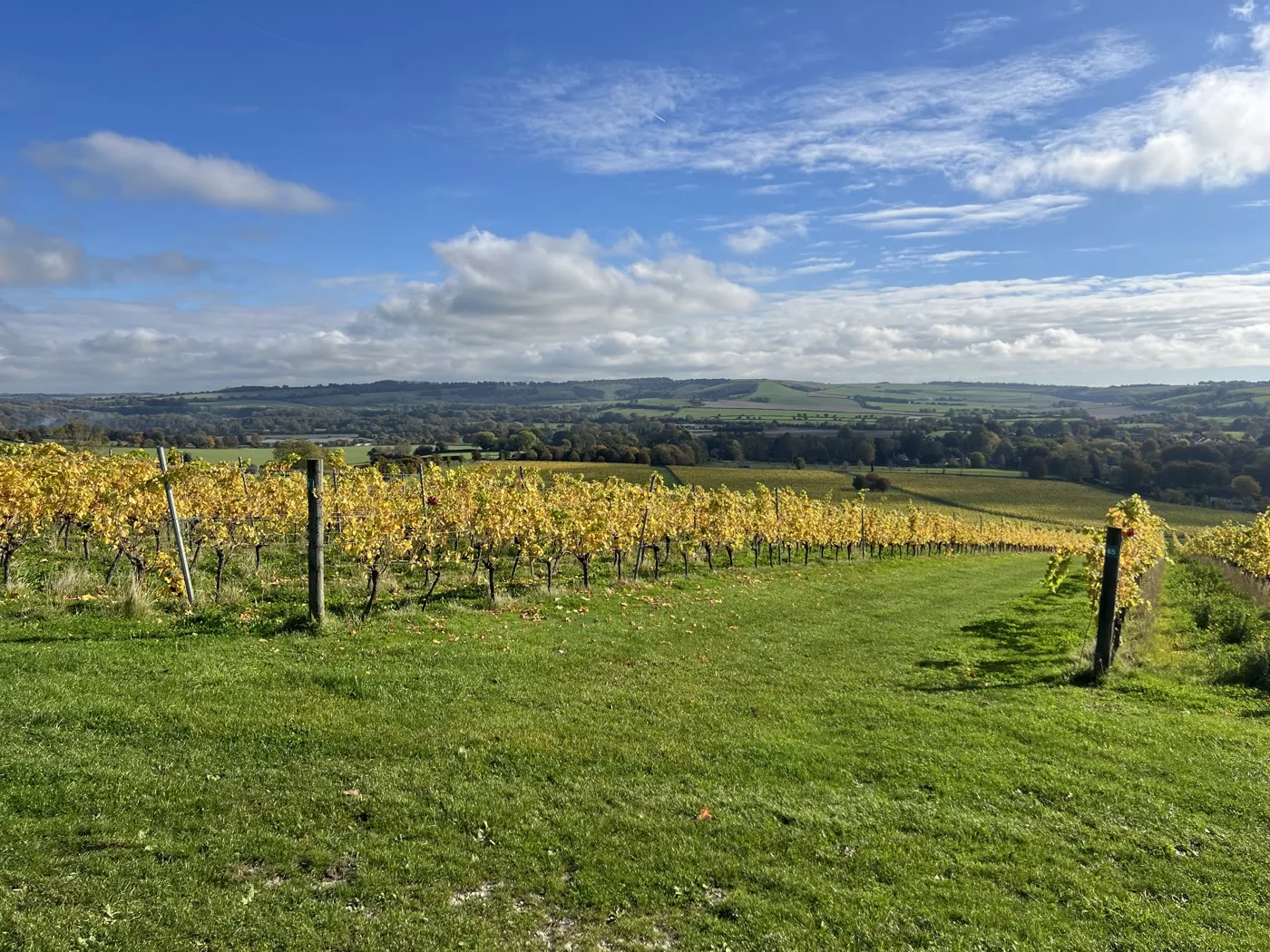
Westwell, on the North Downs in Kent, has built a cult following for wild-fermented pét-nats, skin-contact whites and amphora experiments. Minimal intervention is the guiding principle behind almost everything the estate bottles, under the philosophy of planting well, respecting the soil, and letting the fruit speak for itself.

Ham Street Wines, also in Kent, is biodynamic-certified, one of only a handful of UK vineyards to hold that certification. The winery works entirely off grid and by gravity, with no pumps and no pneumatic press, bottling unfiltered, barely-sulphured wines including a co-fermented Pét-Nat of Pinot Noir, Meunier and Bacchus.

Tillingham, near Rye in East Sussex, farms biodynamically and ferments with native yeasts across Georgian qvevri, foudres and steel tanks. Natural winemaking sits at the heart of the whole estate, which also includes a restaurant and rooms.

Limeburn Hill Biodynamic Vineyard, in Somerset's Chew Valley, is the only biodynamic vineyard in South West England. It ferments a range of pét-nats named after Celtic festivals - Beltain, Samhain, Lammas - alongside a skin-contact amber wine.

Sedlescombe Organic Vineyard, in East Sussex, is England's oldest organic vineyard, established in 1979. It made the country's first organic sparkling wine and first organic red wine, and became England's first Demeter-certified biodynamic wine producer in 2010.

Gwinllan Hebron Vineyard, tucked into the Preseli foothills in Carmarthenshire, was the UK's first Certified Regenerative vineyard. Its Natural Amphora range ferments in Spanish clay tinajas for up to a year, with no filtration and no added sulphur.

The Wharie Experience, in the New Forest, is a non-intervention producer working entirely with wild yeasts and disease-resistant PIWI grape varieties, best known for its skin-contact Bacchus orange wine.

schemaFeaturedCount=8 | schemaMoreCount=1 | schemaItemCount=9


More Natural & Low-Intervention Wine

FAQ

What's the difference between low-intervention and natural wine?
In practice, the two terms are used interchangeably. "Natural wine" is the more common, more marketed term, while producers often prefer "low-intervention" as the more accurate description, since neither term has a legal definition.
Is organic wine also low-intervention or natural?
Not necessarily. Organic and biodynamic certification is about how the grapes are farmed, not how the wine is made afterwards. A producer can farm organically and still filter, fine and add sulphur heavily in the winery. Equally, a low-intervention winemaker doesn't have to be certified organic, though many are.
Is low-intervention wine usually vegan?
Often, yes. Low-intervention winemaking typically skips the fining agents, such as gelatine or isinglass, that conventional winemaking sometimes uses to clarify wine. It isn't guaranteed though, so it's worth checking with the specific producer.
Can you get low-intervention sparkling wine?
Yes. Pét-nat and col fondo are both naturally sparkling styles made with minimal intervention, and several of the UK producers above make them.
Is orange wine low-intervention wine?
Not automatically. Orange wine just means a white wine made with skin contact, and that technique can be used by any winemaker, conventional or natural. The style has natural-wine roots, but plenty of orange wine today is made conventionally.
Does natural wine give you fewer headaches?
There's no strong scientific evidence either way. Lower sulphur levels may help people who are sulphite-sensitive, but headaches have many causes, including alcohol itself, so it's best not to oversell this one.
Is natural wine more expensive than other wines?
Often, yes. Low-intervention winemaking tends to be lower-yield, more hands-on and higher-risk than conventional methods, since more can go wrong in the process. Producers price accordingly.
What is wild yeast?
Wild yeast is the yeast naturally present on grape skins and in the winery environment, as opposed to a cultured commercial strain added by the winemaker. Fermenting with wild yeast is less predictable, but gives a wine more distinctive, site-specific character.