

Schönburger
Schönburger is one of the last grapes bred at Geisenheim before the wave that gave England Bacchus, Ortega and Phoenix. Released in 1979, it crosses Pinot Noir with a mix of Chasselas and Muscat Hamburg, giving it a rose-pink skin and a flavour often compared to Gewürztraminer. It's a minority grape almost everywhere it grows, but it's found a genuine home in England's cooler, maritime climate.
Schönburger at a glance
- Colour & skin
- Pink-skinned, with a notably strong, thick skin that resists botrytis well
- Appearance
- Medium, slightly oval, pink berries in medium bunches
- Ripens
- Early to middle; ready 10 to 14 days after Reichensteiner
- Susceptible to
- Very little: its strong skin and stems give real resistance to both botrytis and mildew
- Typical style
- Usually a single varietal, off-dry to fully sweet, sometimes made as a late-harvest style
What does Schönburger taste like?
Expect an intensely perfumed wine with lychee, blossom and ripe pear on the nose, moving into honeyed citrus and tropical fruit on the palate. It's usually made off-dry to fully sweet, sometimes as a late-harvest style with real depth of natural sugar, and its rose-pink skin can give a faint blush colour even in a white wine.
It suits rich, sweet food: a rhubarb and apple crumble, poached pears, or a mild, creamy dessert. Lightly chilled, it also works well as an aperitif on its own. Most is made to drink within a few years of the vintage.
Where is Schönburger grown?
Schönburger is one of the rarest grapes on this site, planted at just 25 vineyards, with real examples in Berkshire, Wiltshire, Kent and Norfolk. It's never been grown at any scale, but the handful of producers who do plant it tend to stick with it.
It was released in 1979 by the Geisenheim Institute for Grape Breeding in Germany, crossing Pinot Noir with a mix of Chasselas and Muscat Hamburg. Its rose-pink skin, early ripening and high natural sugar suit England's cool, maritime climate particularly well, one reason it has held on here even as it's remained a minority grape almost everywhere else.
Does Schönburger win awards?
Yes: Schönburger and Schönburger-blend wines have picked up 21 medals at the WineGB Awards since 2022.
8 of those came in 2026 alone, up from 1 the year before.
For scale: Siegerrebe, one of England's other well-established grapes, has picked up 36 medals over the same period, well ahead of Schönburger.
Vineyards that grow Schönburger
Biddenden Vineyards picked up WineGB silver in 2026 for a late-harvest Schönburger left on the vine for extra natural sugar, and Burn Valley Vineyard in Norfolk followed with WineGB bronze in 2024, proof the grape can hold its own outside Kent. Bow in the Cloud Vineyard in Wiltshire grows just an acre of it alongside Bacchus and Seyval Blanc.
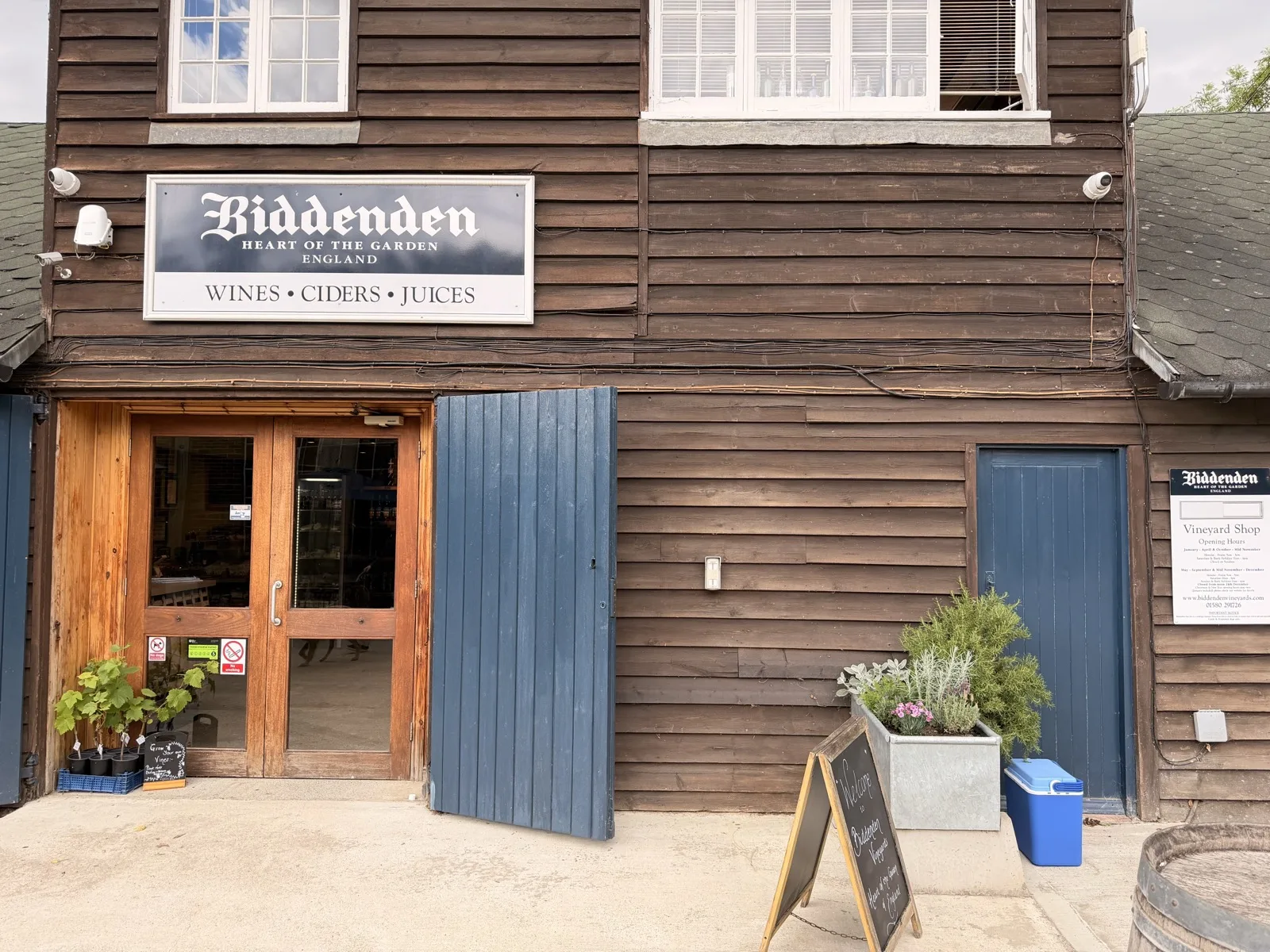
Biddenden Vineyards
🏆 Silver, WineGB 2026Late-harvest Schönburger left on the vine for extra natural sugar, with honey, lychee and elderflower character. Biddenden's own winemaker notes the grape grows particularly well in England's maritime climate.
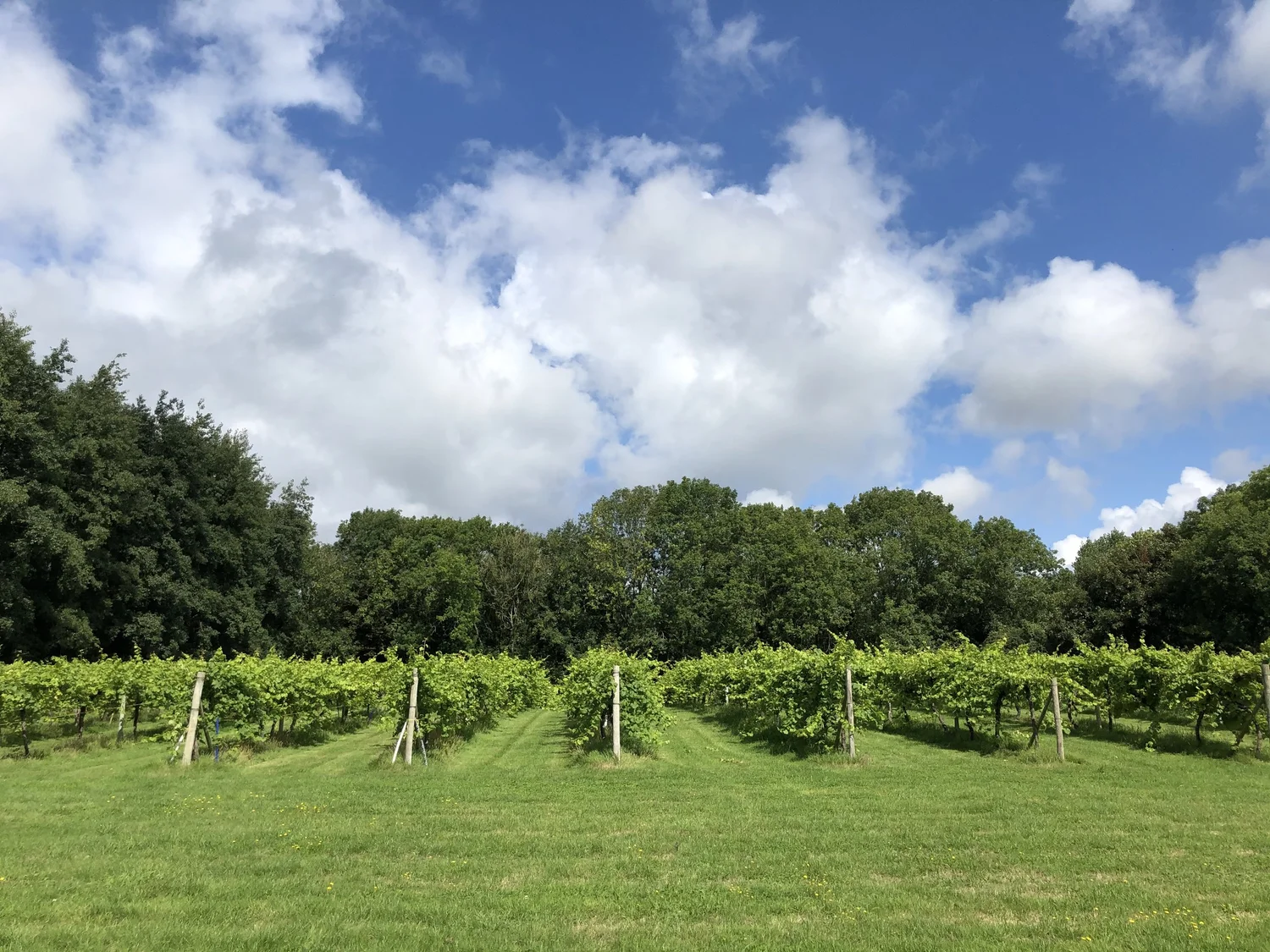
Bow in the Cloud Vineyard
A small Wiltshire vineyard growing just an acre each of Bacchus, Schönburger and Seyval Blanc, tucked into the hamlet of Noah's Ark near Malmesbury.
Burn Valley Vineyard
🏆 Bronze, WineGB 2024A Norfolk producer with a real bronze medal for their Schönburger, proof the grape can hold its own even from a small planting.
Other English grape varieties
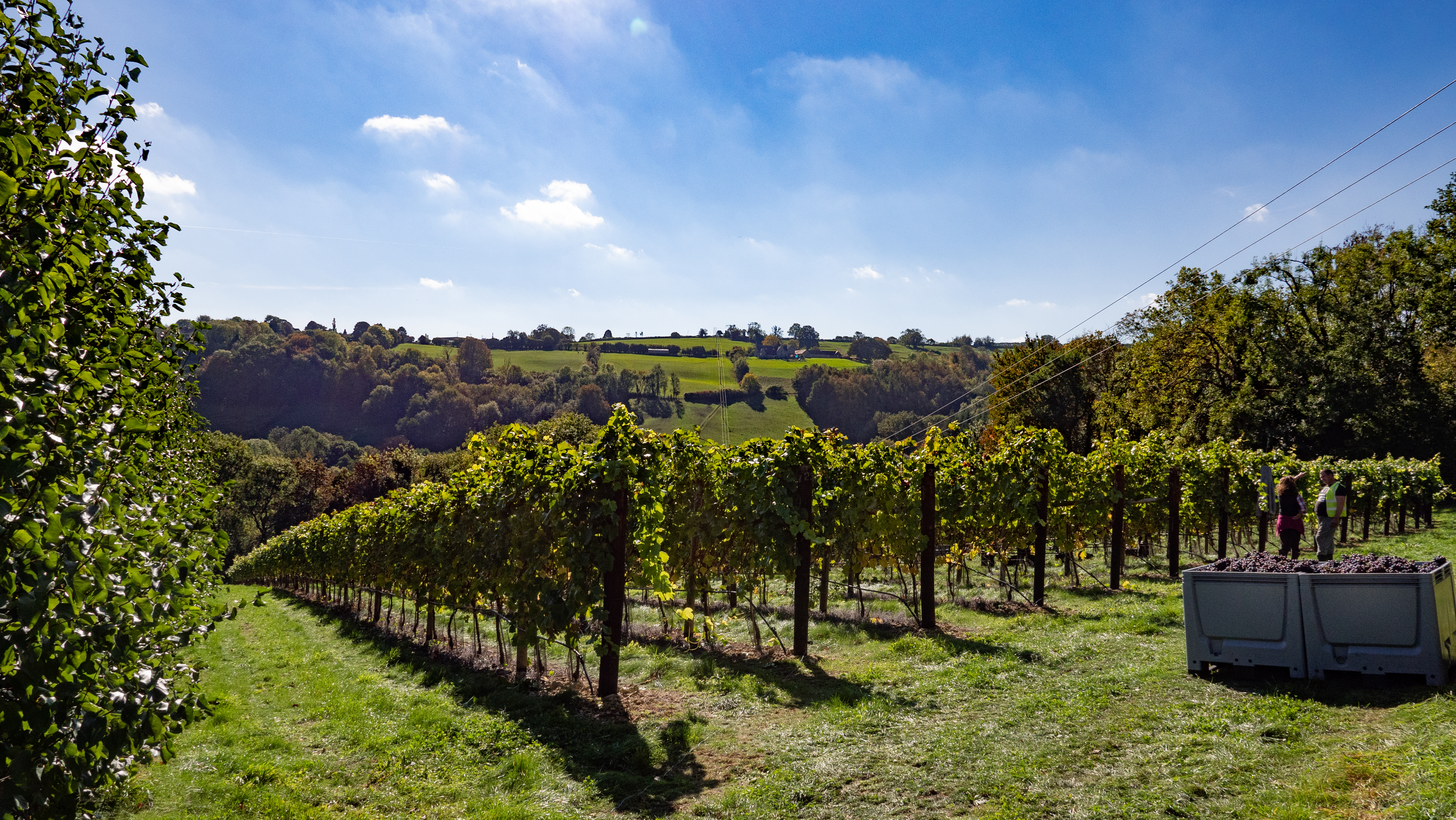
Siegerrebe
Bred in Germany in 1929, Siegerrebe is Ortega's own parent grape, an intensely perfumed, low-acid white now grown in some of England's coolest vineyard sites.
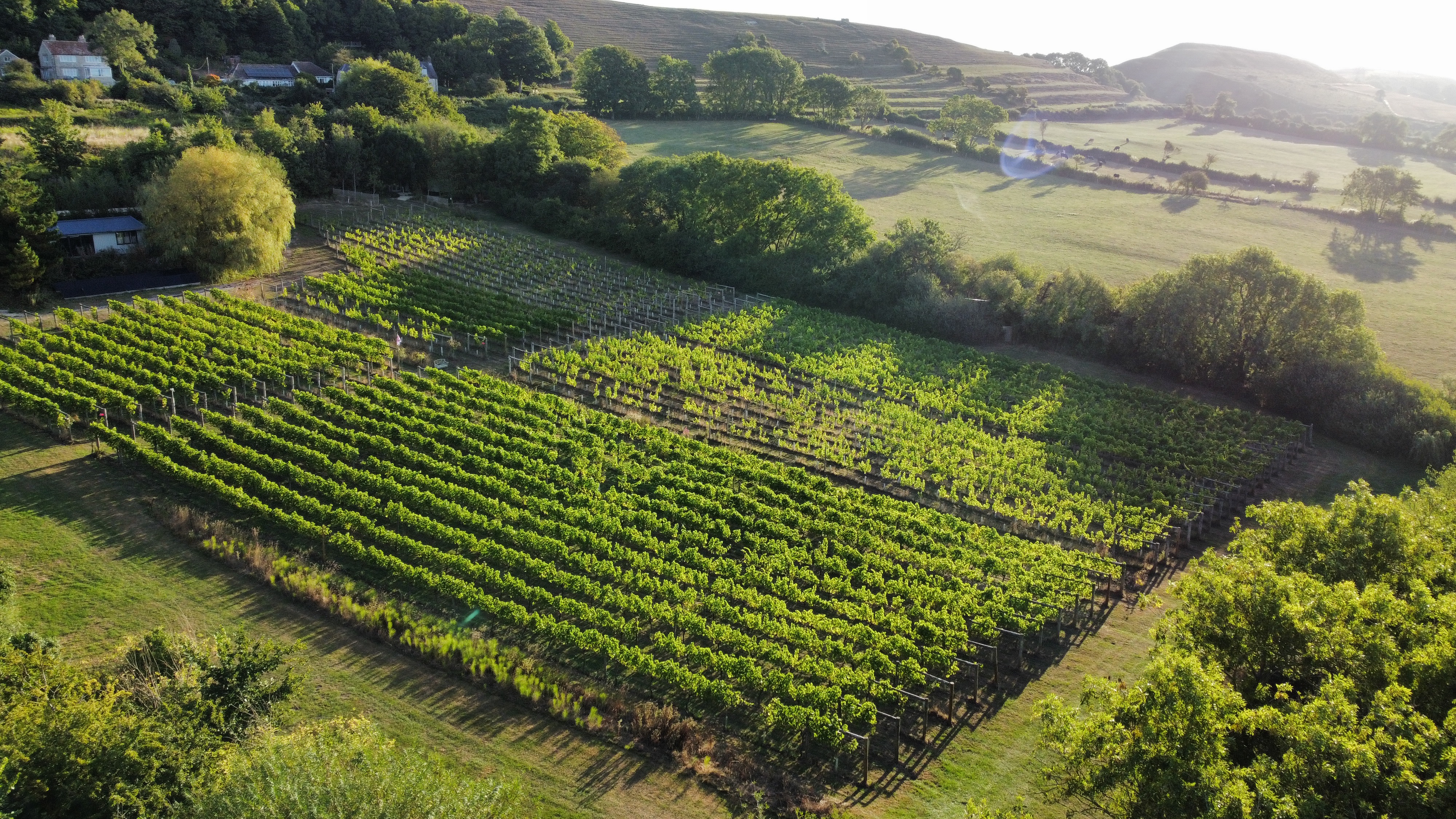
Regent
Germany's most widely planted hybrid red, Regent solves the same cool-climate problem as Rondo, and is grown at 66 vineyards across England and Wales.

Reichensteiner
Bred in Germany in 1939 for reliability rather than flair, Reichensteiner rounds out many of England's sparkling and still white blends without ever being the star.
Rondo
Bred specifically to survive a cold, unpredictable climate, Rondo has become one of England's most widely planted red grapes.
Schönburger FAQs
Which English Schönburger is the best?
Taste is personal, but competition results are a useful place to start. Biddenden Vineyards has picked up the most medals for Schönburger since 2022, four in all, including WineGB silver and Decanter silver in 2026 for its 2025 vintage. Chet Valley Vineyard has two. Biddenden's late-harvest Schönburger is also a Vinebound favourite, with real lychee character alongside honey and ripe pear.
What is Schönburger?
A pink-skinned hybrid grape released in 1979 by the Geisenheim Institute in Germany, crossing Pinot Noir with Chasselas and Muscat Hamburg.
Is Schönburger sweet or dry?
Usually off-dry to fully sweet, sometimes made in a late-harvest style with real depth of natural sugar. Its flavour is often compared to Gewürztraminer.
What does Schönburger taste like?
Intensely perfumed, with lychee, blossom and ripe pear on the nose, moving into honeyed citrus and tropical fruit on the palate.
What food goes well with Schönburger?
Rich, sweet food suits it well: a rhubarb and apple crumble, poached pears, or a mild, creamy dessert. It also works as a chilled aperitif on its own.
Where is Schönburger grown in England?
One of the rarest grapes on this site, with real examples in just a handful of counties: Berkshire, Wiltshire, Kent and Norfolk.
How much does English Schönburger cost?
Most bottles sit between roughly £14 and £17.