

Siegerrebe
Siegerrebe is Ortega's parent. Bred in Germany in 1929 by Georg Scheu, crossing Madeleine Angevine with Gewürztraminer, its name literally means “victory vine,” earned for its extraordinarily high natural sugar levels, a German record that still stands. It ripens earlier than almost any other wine grape, which is exactly why it turns up in some of England's coolest, most marginal vineyard sites.
Siegerrebe at a glance
- Also known as
- Az 7957, its breeding code
- Colour & skin
- Pink-skinned white grape
- Appearance
- Medium-to-large, round, red-pink-brown berries in loose bunches
- Ripens
- Extremely early at harvest, despite a middle-late bud burst and late flowering
- Susceptible to
- Coulure and millerandage in poor weather at flowering, since it flowers weakly
- Typical style
- Usually a single varietal, almost always off-dry to sweet
What does Siegerrebe taste like?
Expect an intensely perfumed wine, with Muscat and Gewürztraminer-like aromas of rose petal, orange blossom and ripe apple. Its very low acidity means it's almost always made off-dry to fully sweet, sometimes even as an amber or skin-contact style, since there's little tartness to lose from a bit of extra texture.
It suits delicate white fish, soft cheeses like Brie or Camembert, and honey-glazed ham, and its floral sweetness works well against Thai or Vietnamese food too. Most is made to drink young, within a year or two of the vintage.
Where is Siegerrebe grown?
Siegerrebe is a minority grape in England, planted at just 27 vineyards, mostly clustered in Gloucestershire and the West Country, with further examples in Staffordshire, Herefordshire, Worcestershire and Wales. Several producers bottle it entirely on its own, unusual for a grape more often blended elsewhere in Europe.
It was bred in Germany in 1929 by Georg Scheu at a grape breeding institute in Alzey, crossing Madeleine Angevine with Gewürztraminer, though it wasn't released for general planting until 1958. Its extreme early ripening and tolerance of temperatures down to around minus 26 degrees Celsius have made it a useful option in England's coolest, most marginal sites, alongside smaller plantings in Canada and the United States.
Does Siegerrebe win awards?
Yes: Siegerrebe and Siegerrebe-blend wines have picked up 36 medals at the WineGB Awards since 2022, 2 of them gold or better.
5 of those came in 2026 alone, down from 6 the year before.
For scale: Ortega, one of England's other well-established grapes, has picked up 60 medals over the same period, well ahead of Siegerrebe.
Vineyards that grow Siegerrebe
Three Choirs Vineyards, one of England's longest-established producers, makes a skin-contact Siegerrebe Amber Wine, while White Castle Vineyard, a Welsh producer, bottles it entirely on its own rather than folding it into a blend. Woodchester Valley Vineyard folds a little into their Culver Hill white blend instead. Other vineyards worth watching include Wythall Estate Vineyard and Road Green Vineyard.
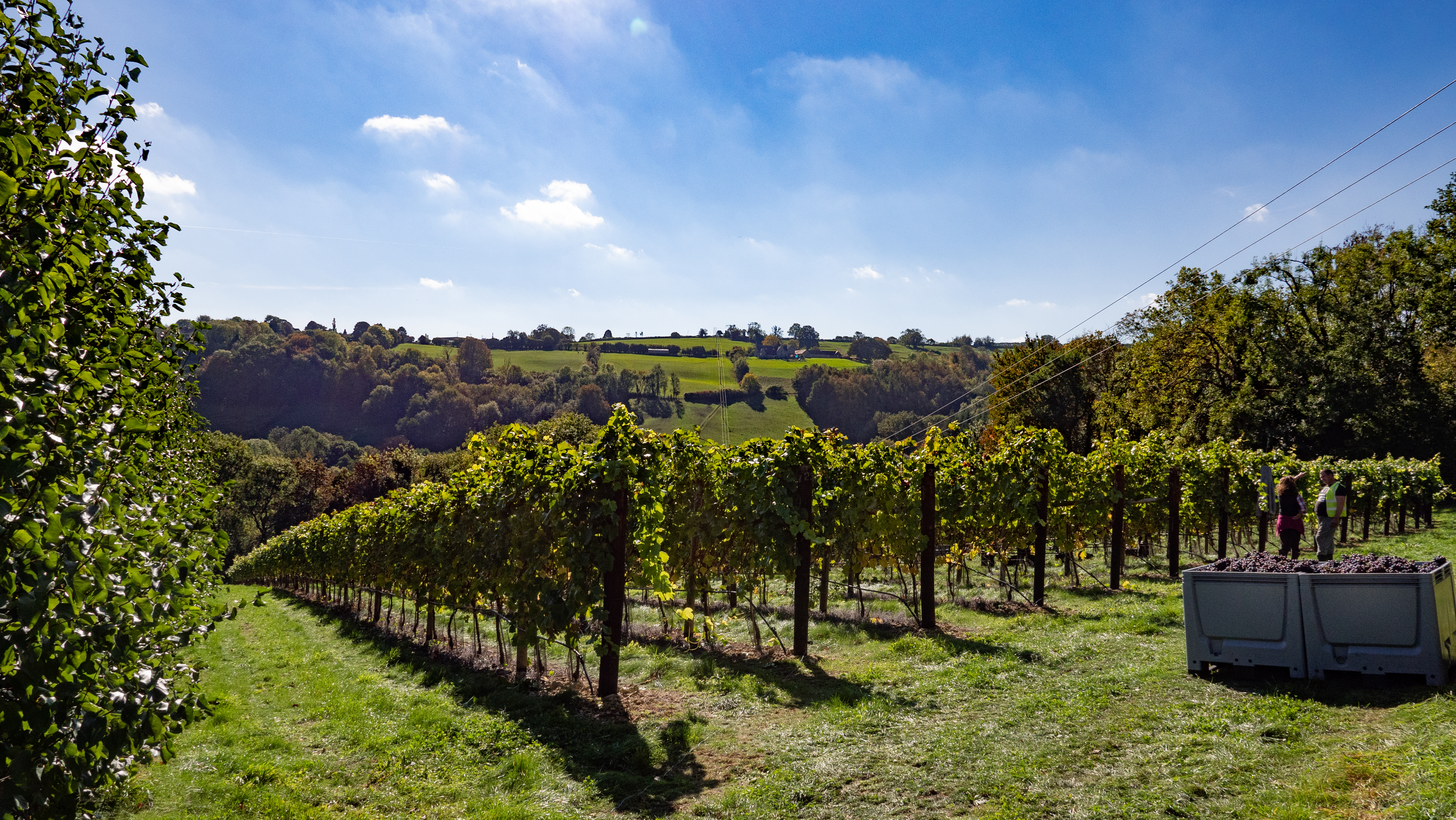
Woodchester Valley Vineyard
One of Woodchester Valley's less common plantings, going into their Culver Hill white blend alongside other aromatic varieties on this Gloucestershire hillside.
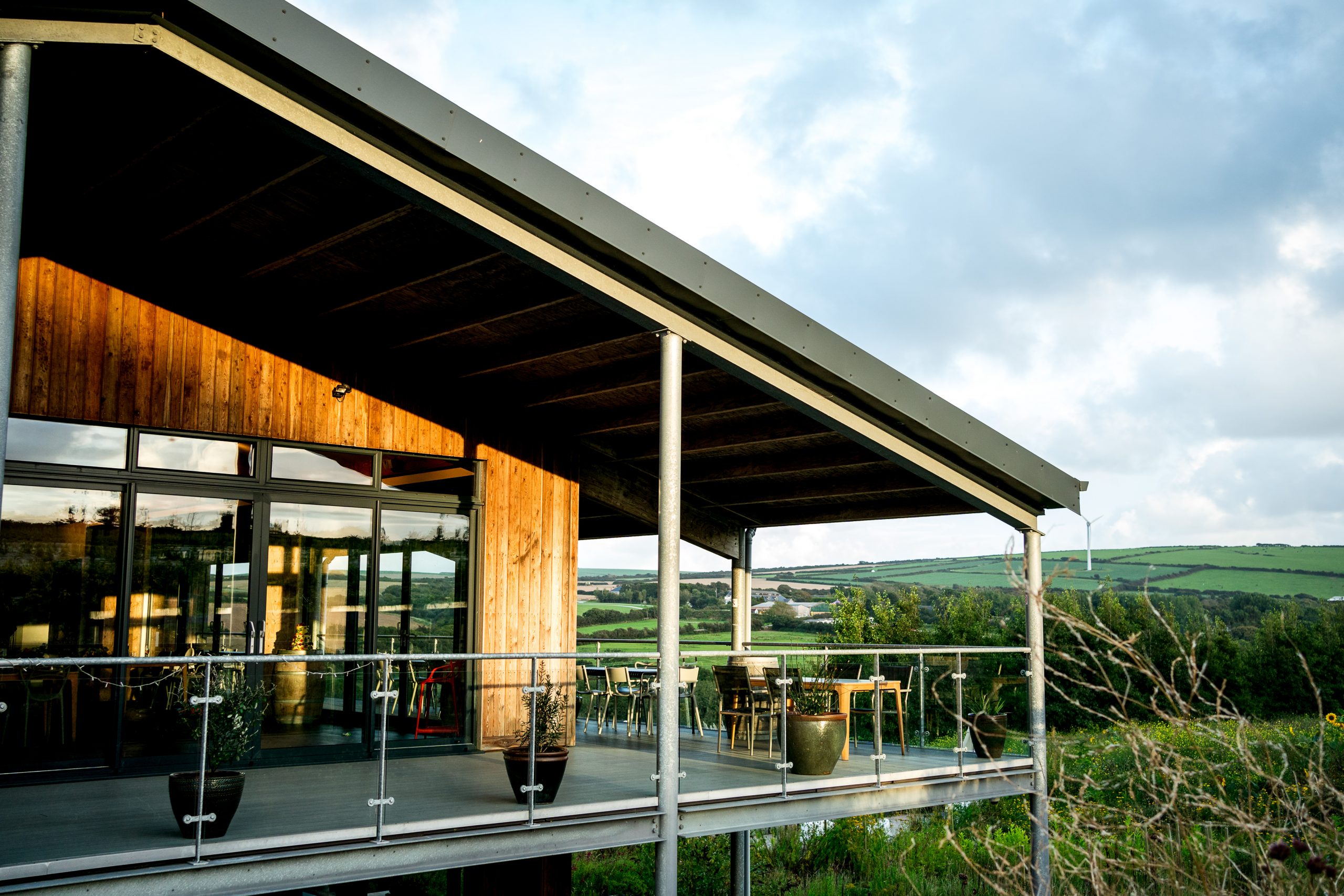
Three Choirs Vineyards
One of England's longest-established vineyards. Their skin-contact Siegerrebe Amber Wine won the Best Innovative Still Trophy at the WineGB Awards in 2022, the first time they'd made a wine in that style.
White Castle Vineyard
A Welsh producer that bottles Siegerrebe entirely on its own rather than folding it into a blend, a rare choice for a grape that's usually used to add aroma to something else.
Other English grape varieties

Ortega
Bred in Germany in 1948, Ortega was already growing in England by the early 1970s, prized for ripening early and shrugging off frost.
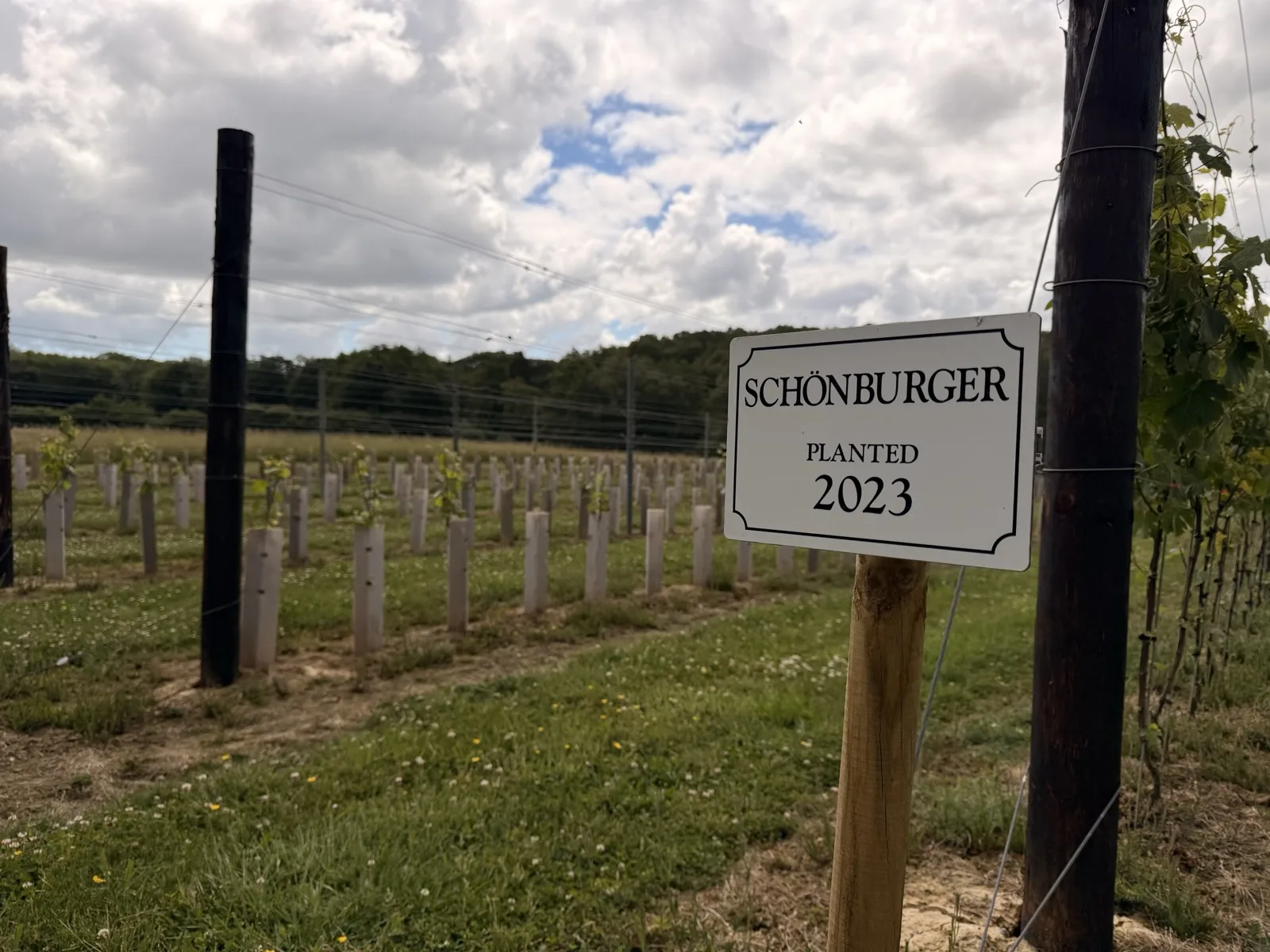
Schönburger
Released in 1979 from the same German institute that bred Bacchus and Ortega, Schönburger is one of England's rarest grapes, an intensely perfumed pink-skinned white suited to a maritime climate.
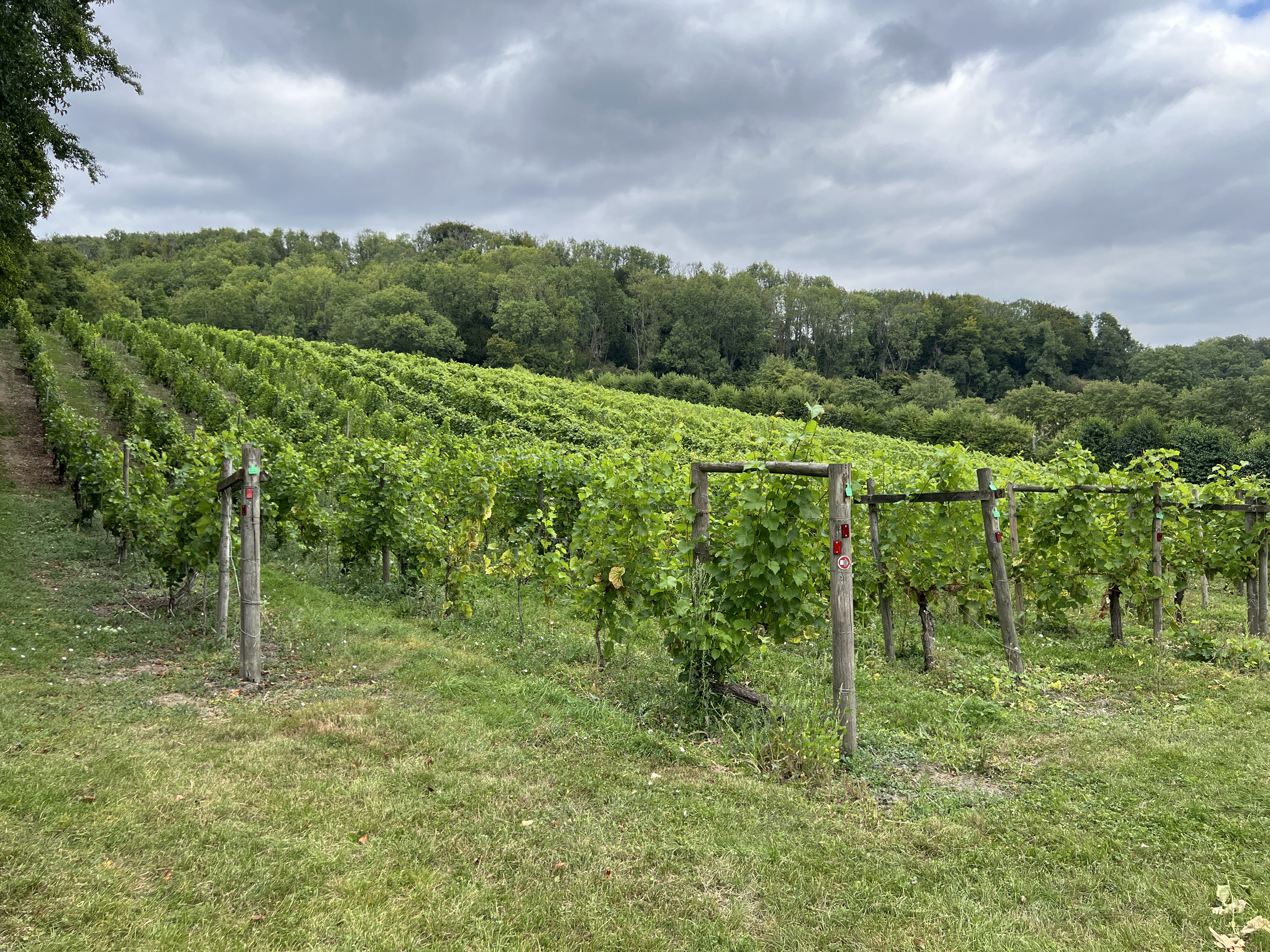
Seyval Blanc
Bred in France and shut out of EU quality wine for being a hybrid, Seyval Blanc was for decades England's most planted grape, and Breaky Bottom has taken gold with it since 1993.

Solaris
Bred in Germany in 1975 to survive cold winters, Solaris has become a reliable cool-climate specialist grown from Cornwall to North Yorkshire and across Wales.
Siegerrebe FAQs
Which English Siegerrebe is the best?
Taste is personal, but competition results are a useful place to start. Three Choirs Vineyards has picked up the most medals for Siegerrebe since 2022, 12 in all across WineGB, IEWA, IWC and Decanter, including IEWA silver in 2022. White Castle Vineyard has four, including WineGB silver in 2022. For Siegerrebe in a blend, Swanaford Vineyard's Estate White is a lovely example, leaning on the grape for a lychee and tropical lift.
What is Siegerrebe?
A hybrid white grape bred in Germany in 1929 by Georg Scheu, crossing Madeleine Angevine with Gewürztraminer. Its name means ‘victory vine’, a nod to its extraordinarily high natural sugar levels.
Is Siegerrebe the same grape as Ortega?
No, but it's one of Ortega's two parent grapes, alongside Müller-Thurgau. The two have very different personalities: Siegerrebe leans sweet and intensely perfumed, Ortega is fuller and usually off-dry rather than fully sweet.
Is Siegerrebe sweet or dry?
Almost always off-dry to fully sweet. Its natural acidity is very low, so there's little reason to make it bone dry.
What food goes well with Siegerrebe?
Delicate white fish, soft cheeses like Brie or Camembert, and honey-glazed ham all work well, and its floral sweetness suits Thai or Vietnamese food too.
Where is Siegerrebe grown in England?
A minority grape, mostly found in Gloucestershire and the West Country, with smaller plantings in Staffordshire, Herefordshire, Worcestershire and Wales.
How much does English Siegerrebe cost?
Most bottles sit between roughly £13 and £27.