

Solaris
Solaris was built for cold. Bred in Germany in 1975 by the grape breeder Norbert Becker, it can survive temperatures as low as minus 20 degrees Celsius and ripens early enough to dodge a damp English autumn almost every year. That reliability has turned it into something like an insurance policy for vineyards across northern Europe, planted everywhere from Belgium to Norway, not just England.
Solaris at a glance
- Also known as
- Fr. 240-75, its breeding code
- Colour & skin
- White grape, gold-skinned when ripe
- Appearance
- Small to medium berries in loose to medium bunches
- Ripens
- Very early, among the first grapes harvested each year, and reliably reaches high sugar levels
- Susceptible to
- Botrytis near harvest if left too long, though otherwise strongly resistant to both mildews
- Typical style
- Usually a single varietal, most often off-dry, sometimes made as a late-harvest dessert or skin-contact orange wine
What does Solaris taste like?
Expect ripe pear, peach and melon on the nose, with elderflower and a floral lift, then citrus and honeyed apple on the palate, gently off-dry more often than not. Its naturally high sugar levels also make it a genuine option for dessert wine when picked late, and for skin-contact “orange” styles that trade fruit for texture and savoury depth.
The everyday dry and off-dry styles pair well with shellfish, white fish and roast chicken, or fresh goat's cheese and a green salad, and are best drunk young. The orange-style versions lean the other way, suited to grilled or smoky food and a mezze-style spread rather than anything delicate.
Where is Solaris grown?
Solaris is grown right across England and Wales, without the strong South East concentration you see with Bacchus or Ortega: real examples turn up from Cornwall and Devon in the south to North Yorkshire in the north, and a good number of Welsh vineyards grow it too, in Conwy, Denbighshire, Carmarthenshire and beyond. It's planted at 82 English and Welsh vineyards today.
That spread comes down to the same cold-hardiness it was bred for. Solaris was developed in Germany in 1975 by grape breeder Norbert Becker at a research institute in Freiburg, and now grows across the cooler reaches of northern Europe, Belgium, the Netherlands, Denmark, Sweden and Norway, as well as England and Wales, wherever a more delicate grape would struggle to ripen reliably.
Does Solaris win awards?
Yes: Solaris and Solaris-blend wines have picked up 89 medals at the WineGB Awards since 2022, 2 of them gold or better.
21 of those came in 2026 alone, up from 15 the year before.
For scale: Ortega, one of England's other well-established grapes, has picked up 60 medals over the same period, well behind Solaris.
Vineyards that grow Solaris
Denbies Wine Estate, England's largest single-estate vineyard, picked up WineGB gold in 2024 for an ultra-limited orange Solaris, and Dunesforde Vineyard, one of the country's most northerly commercial vineyards, followed with WineGB silver in 2025. Gwinllan Conwy in North Wales leans into the grape's natural sugar with a genuine dessert wine. Other vineyards worth watching include Yorkshire Heart Vineyard and Radlow Hundred.
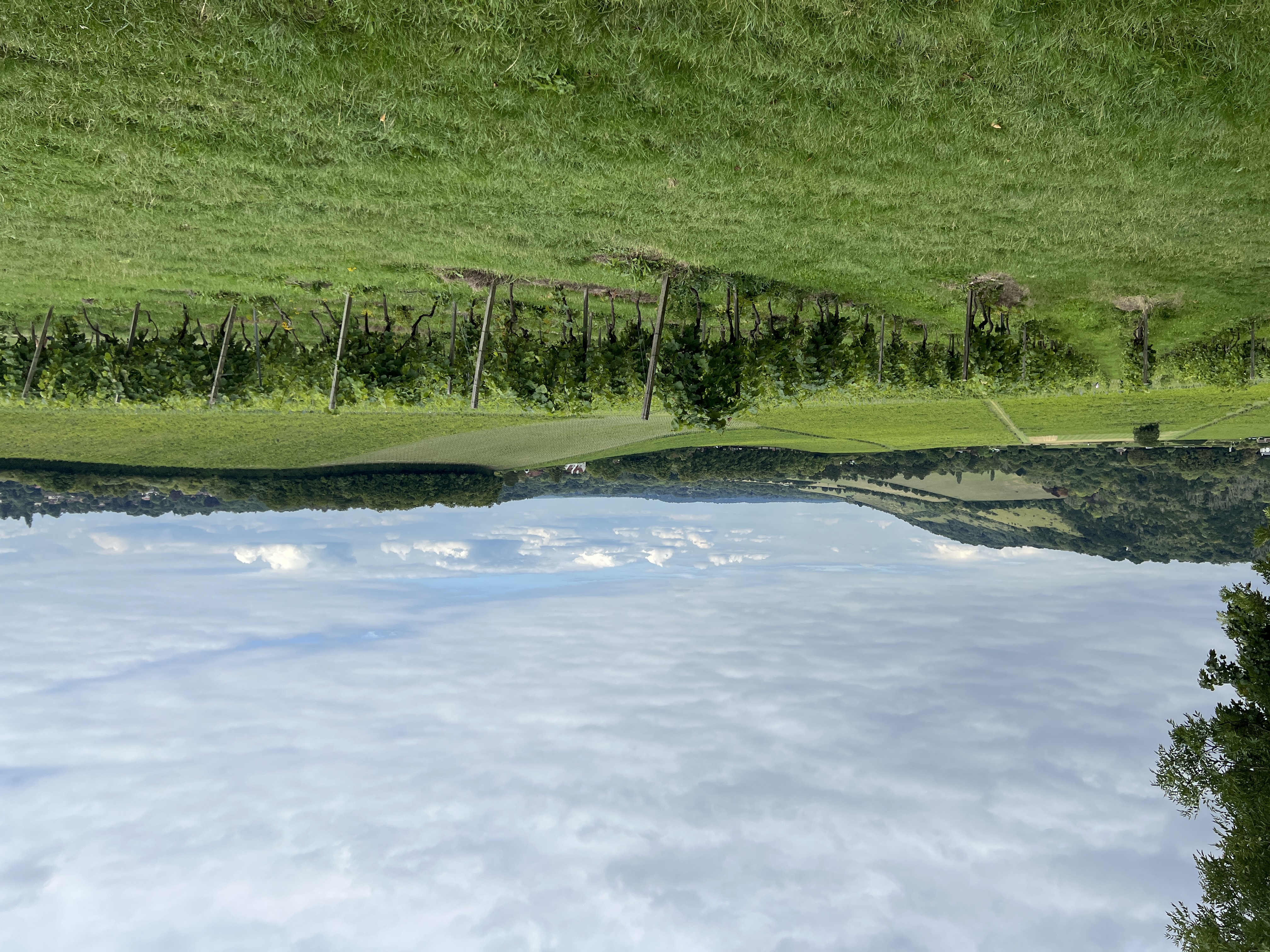
Denbies Wine Estate
🏆 Gold, WineGB 2024England's largest single-estate vineyard makes an ultra-limited orange Solaris: wild-fermented and left on its skins for almost ten months, unfiltered with no additions, not even sulphur. Under 500 bottles are made each vintage.
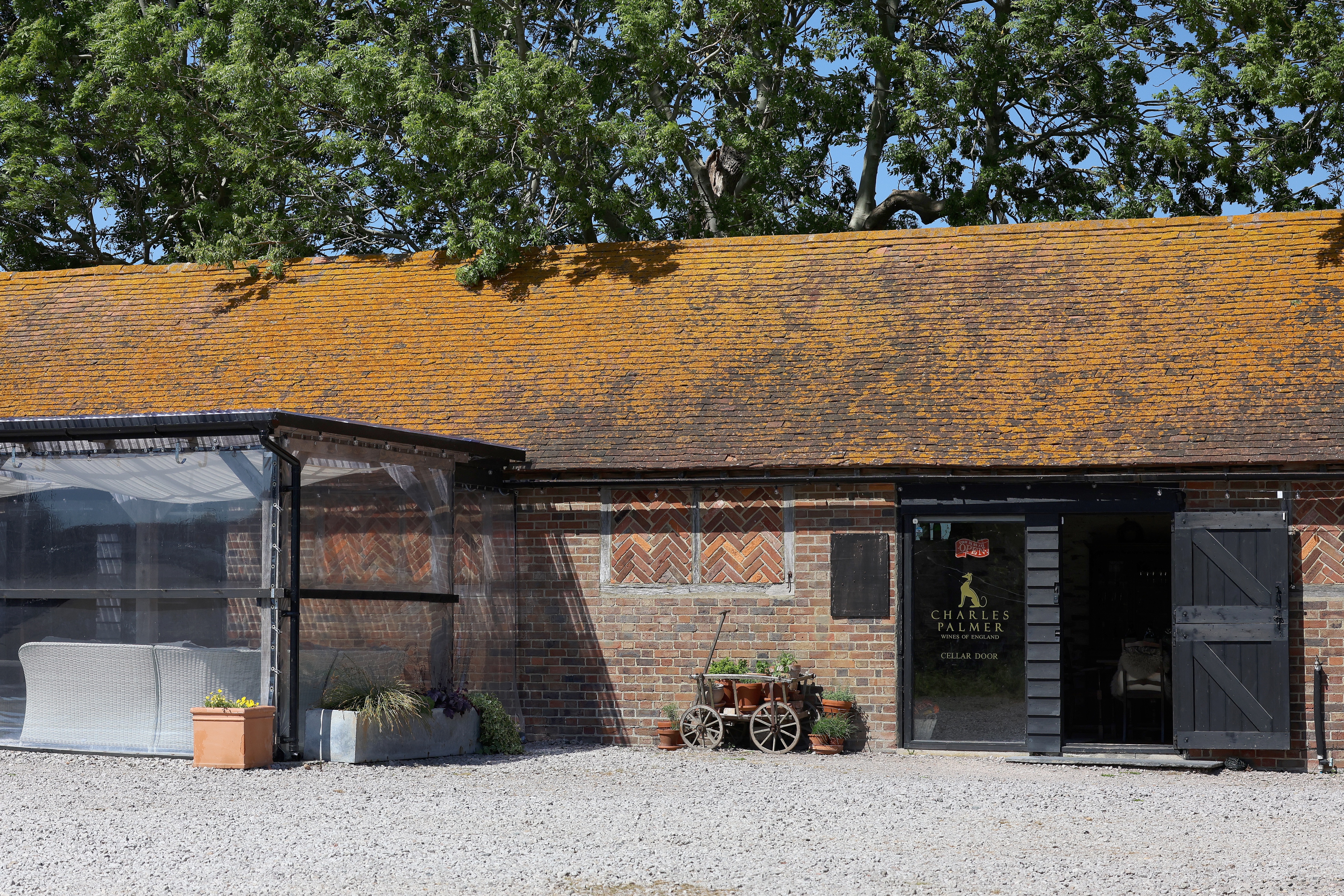
Dunesforde Vineyard
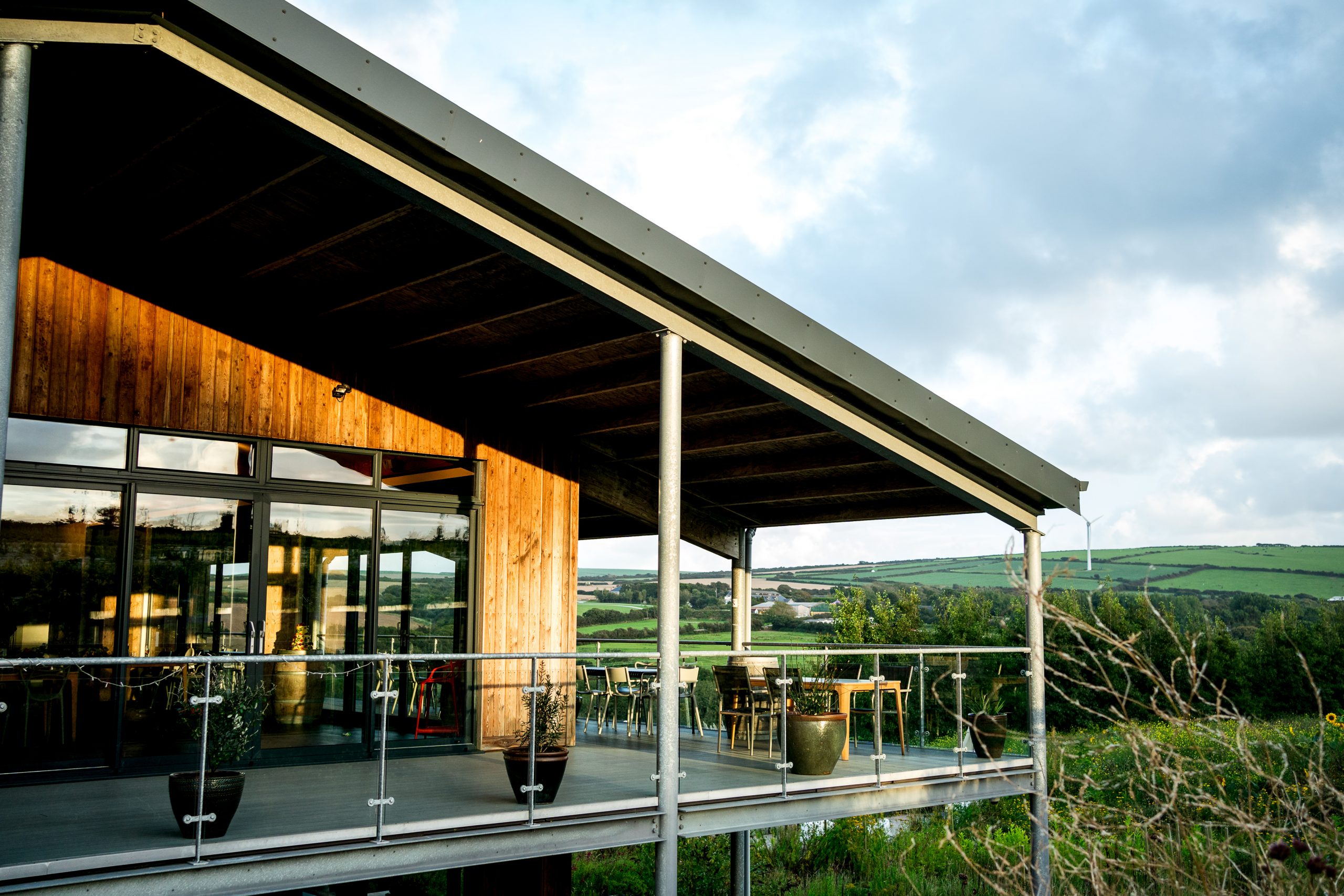
🏆 Silver, WineGB 2025One of just four grapes grown at this North Yorkshire vineyard, one of England's most northerly. Dunesforde has called it their “happiest varietal in the vineyard.”
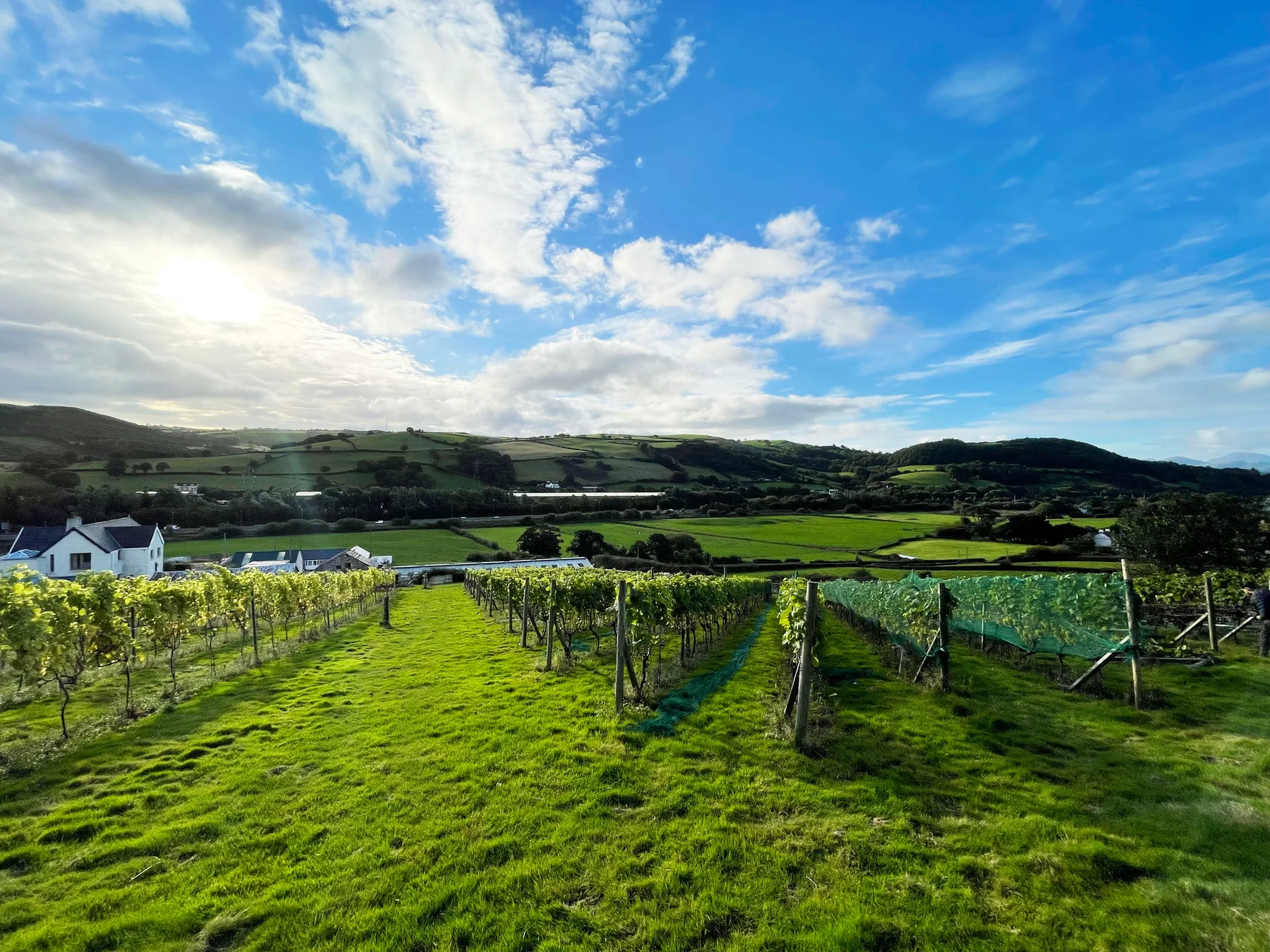
Gwinllan Conwy
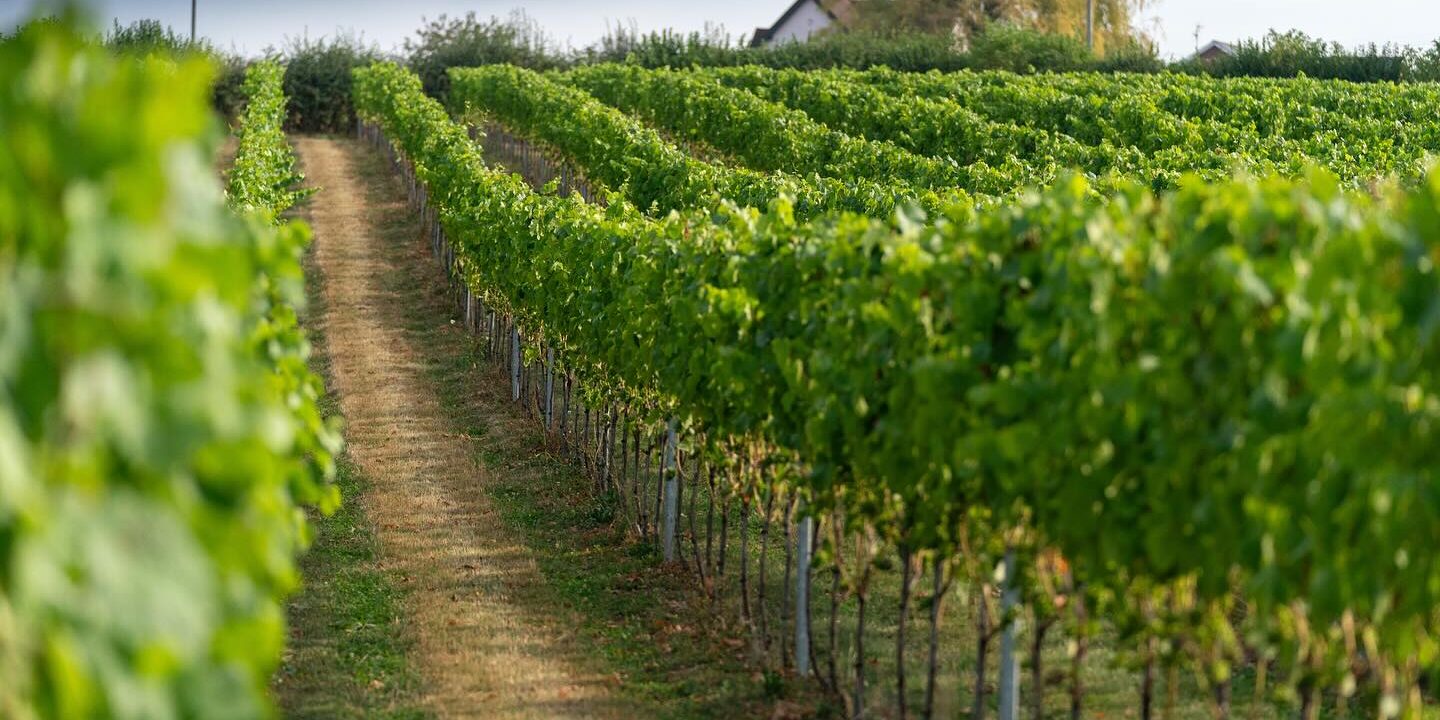
Gwinllan Conwy leans into Solaris's naturally high sugar with a genuine dessert wine, Gwin Pwdin, alongside a dry white version, a rare chance to try the grape at both ends of the sweetness scale from the same Welsh vineyard.
Other English grape varieties

Ortega
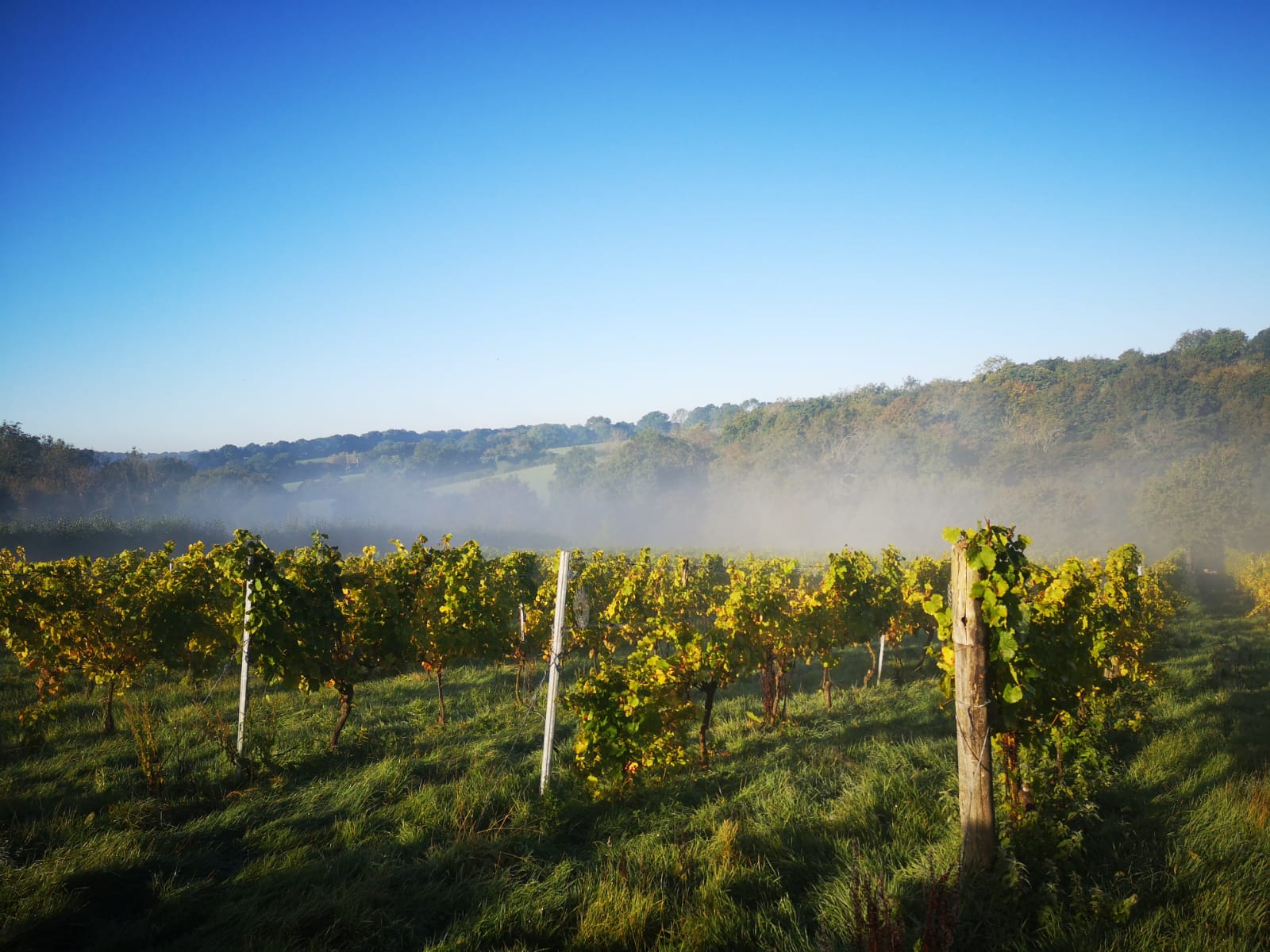
Bred in Germany in 1948, Ortega was already growing in England by the early 1970s, prized for ripening early and shrugging off frost.
Chardonnay
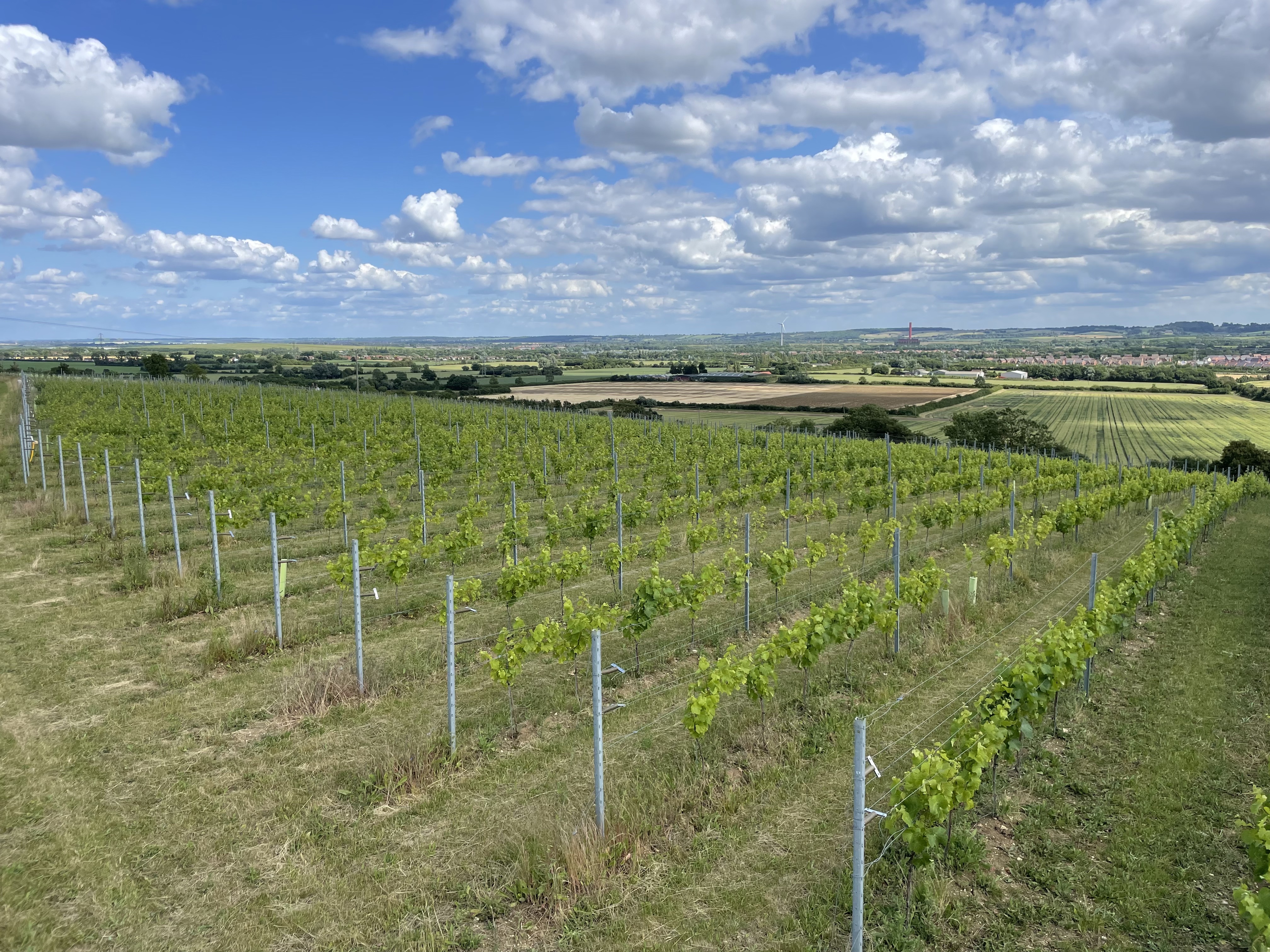
England's most widely planted grape by far, Chardonnay underpins most English sparkling wine and is increasingly made as a serious still wine too, in a Chablis-like style.
Dornfelder
Nicknamed “the bank manager's grape” for its famously heavy yields, Dornfelder is Germany's bold, dark-skinned red, usually blended into England's cool-climate reds and rosés.
Phoenix
Bred in Germany from Bacchus itself, Phoenix is a lighter, more herbal cousin, aromatic and disease-resistant, grown in smaller pockets across England and Wales.
Solaris FAQs
Which English Solaris is the best?
It depends on the style you like, but competition results give a useful steer. Denbies Wine Estate has picked up the most medals for Solaris since 2022, ten in all, every one for its Orange Solaris, including IWC silver and Decanter silver in 2025. Kingsthorne follows with seven for its straight Solaris. For us, Burn Valley Vineyard's late-harvest Solaris is one of the most exceptional dessert wines made from the grape.
What is Solaris?
A hybrid white grape bred in Germany in 1975, created specifically for cold-climate reliability: it ripens early and resists frost and fungal disease better than most other wine grapes.
Is Solaris a sweet or dry wine?
Both. Most English Solaris is made gently off-dry, though its naturally high sugar levels also make it a genuine option for a dessert wine, and some producers make it fully dry too.
What is orange Solaris?
A skin-contact style where the juice ferments with the grape skins still in, the same technique used for red wine, giving a deeper colour, more texture and a savoury edge than a standard Solaris. Denbies and Trevibban Mill both make one.
Where is Solaris grown in England?
Widely, and without one dominant region: real examples turn up from Cornwall and Devon to North Yorkshire, plus a strong presence in Wales.
What food goes well with Solaris?
The everyday dry and off-dry styles pair well with shellfish, white fish, roast chicken or a green salad with goat's cheese. Orange-style Solaris wants richer, smokier food instead: think grilled meats or a mezze spread.
How much does English Solaris cost?
Most bottles sit between roughly £14 and £25, with the orange-style, skin-contact versions running higher, up to around £35.