

Reichensteiner
Reichensteiner is the grape most English wine drinkers have tasted without ever knowing its name. Bred in Germany in 1939 by H. Birk at the Geisenheim Grape Breeding Institute, it ripens reliably and shrugs off botrytis rot, but its neutral flavour means it rarely gets to be the star. Instead it does the quiet, essential work of rounding out sparkling and still blends across England, and remains one of the country's most widely planted grape varieties.
Reichensteiner at a glance
- Colour & skin
- White grape, yellow-green ripening to yellow-brown
- Appearance
- Large, long bunches of medium-to-large round berries
- Ripens
- Mid-season, with a fairly early to middle bud burst
- Susceptible to
- Powdery mildew and severe winter frost, though naturally resistant to botrytis
- Typical style
- Almost always blended into sparkling or still whites rather than bottled alone; dry to off-dry and light-bodied
What does Reichensteiner taste like?
On its own, Reichensteiner is gentle and light, with subtle citrus and floral notes and a faint smokiness some producers pick up in the glass. It rarely reaches for complexity by itself, which is exactly the point: it's most often blended into a sparkling or still white to add body and reliable ripeness, standing alongside grapes like Seyval Blanc and Pinot Noir in some of England's best-known sparkling blends.
A standalone bottling pairs well with simple fish dishes or a traditional syllabub, and works just as well on its own as an aperitif. It's usually made to drink young rather than cellared.
Where is Reichensteiner grown?
Reichensteiner is planted at 60 vineyards across England today, without a strong regional bias: real examples turn up from Kent and Surrey in the South East to Herefordshire, Staffordshire, Suffolk and the West Country. It rarely makes headlines on its own, but it turns up in vineyards up and down the country all the same.
It was bred in 1939 by H. Birk at the Geisenheim Grape Breeding Institute in Germany, crossing Müller-Thurgau with an existing cross of Madeleine Angevine and Weißer Calabreser. Its natural resistance to botrytis, the fungal rot that can devastate a vineyard late in the season, made it valuable enough to spread well beyond Germany, into England and even New Zealand.
Does Reichensteiner win awards?
Yes: Reichensteiner and Reichensteiner-blend wines have picked up 56 medals at the WineGB Awards since 2022, 1 of them gold or better.
8 of those came in 2026 alone, up from 7 the year before.
For scale: Seyval Blanc, one of England's other well-established grapes, has picked up 146 medals over the same period, well ahead of Reichensteiner.
Vineyards that grow Reichensteiner
Denbies Wine Estate picked up WineGB gold in 2024 for a Reichensteiner blend, and Biddenden Vineyards, growing the grape since the estate began in 1969, followed with WineGB bronze in 2023. Frome Valley Vineyard is one of the few producers bottling Reichensteiner entirely on its own rather than folding it into a blend. Other vineyards worth watching include Lily Farm Vineyard and Trevibban Mill.

Denbies Wine Estate
🏆 Gold, WineGB 2024England's largest single-estate vineyard blends Reichensteiner with Seyval Blanc and Pinot Noir for their Whitedowns sparkling, fresh citrus and brioche notes with a persistent, creamy finish.
Biddenden Vineyards
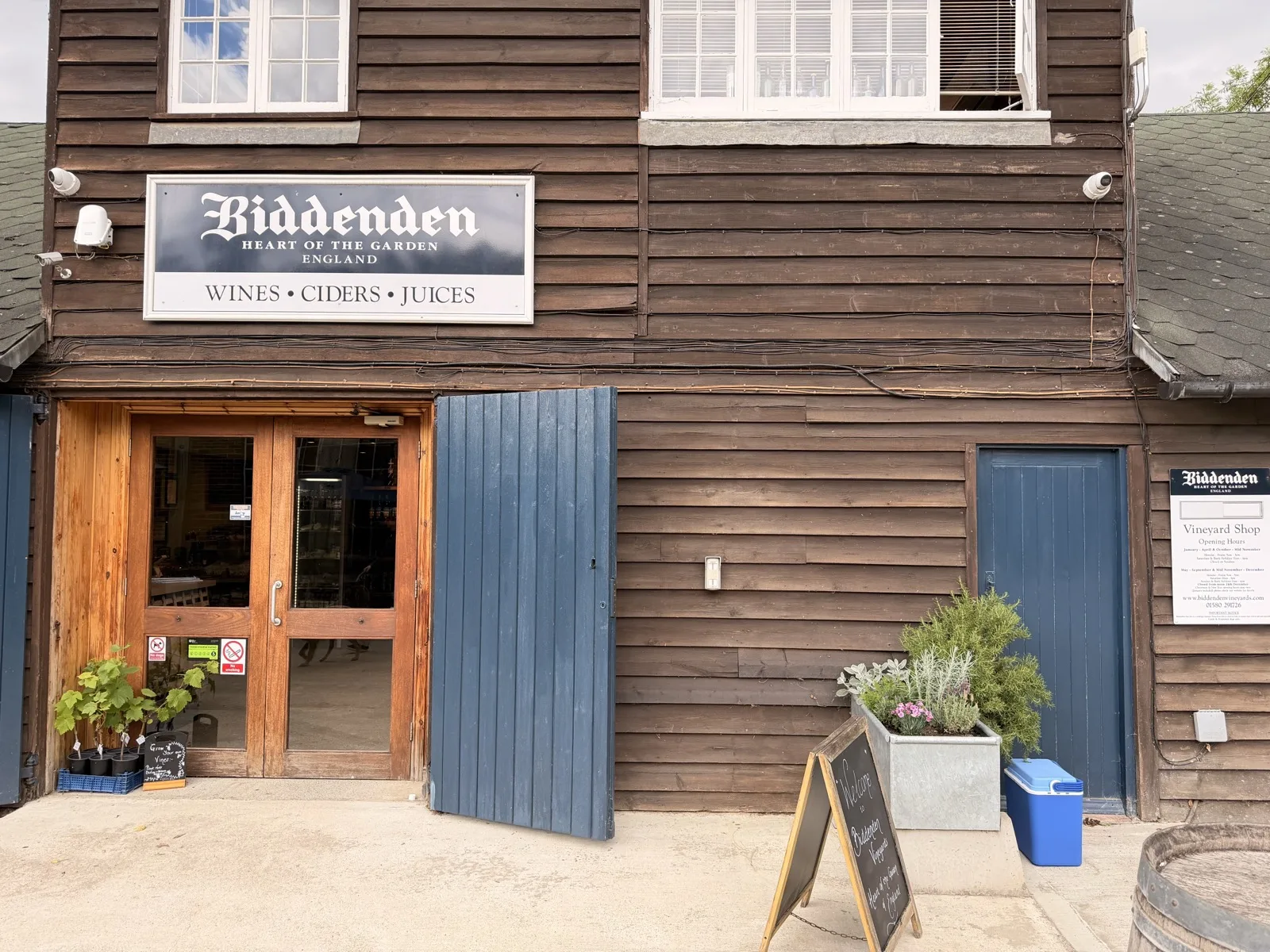
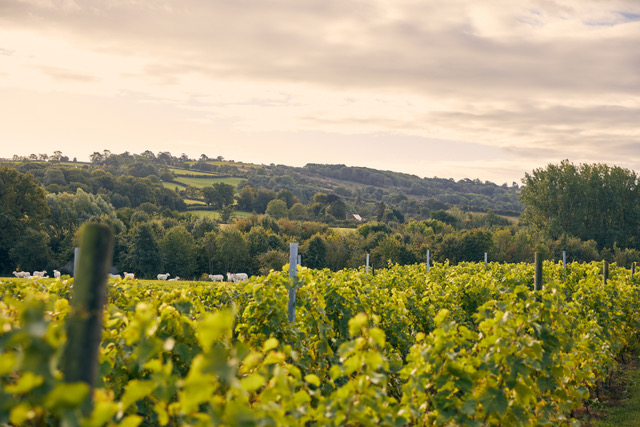
🏆 Bronze, WineGB 2023One of the original German varieties planted when Biddenden began in 1969, alongside Ortega and Huxelrebe. It still goes into their Gribble Bridge sparkling and rosé blends today.
Frome Valley Vineyard
One of the few producers to bottle Reichensteiner on its own rather than folding it into a blend. Frome Valley's version is gentle and light, with a faint smokiness, traditionally paired with fish or a syllabub.

Other English grape varieties
Seyval Blanc
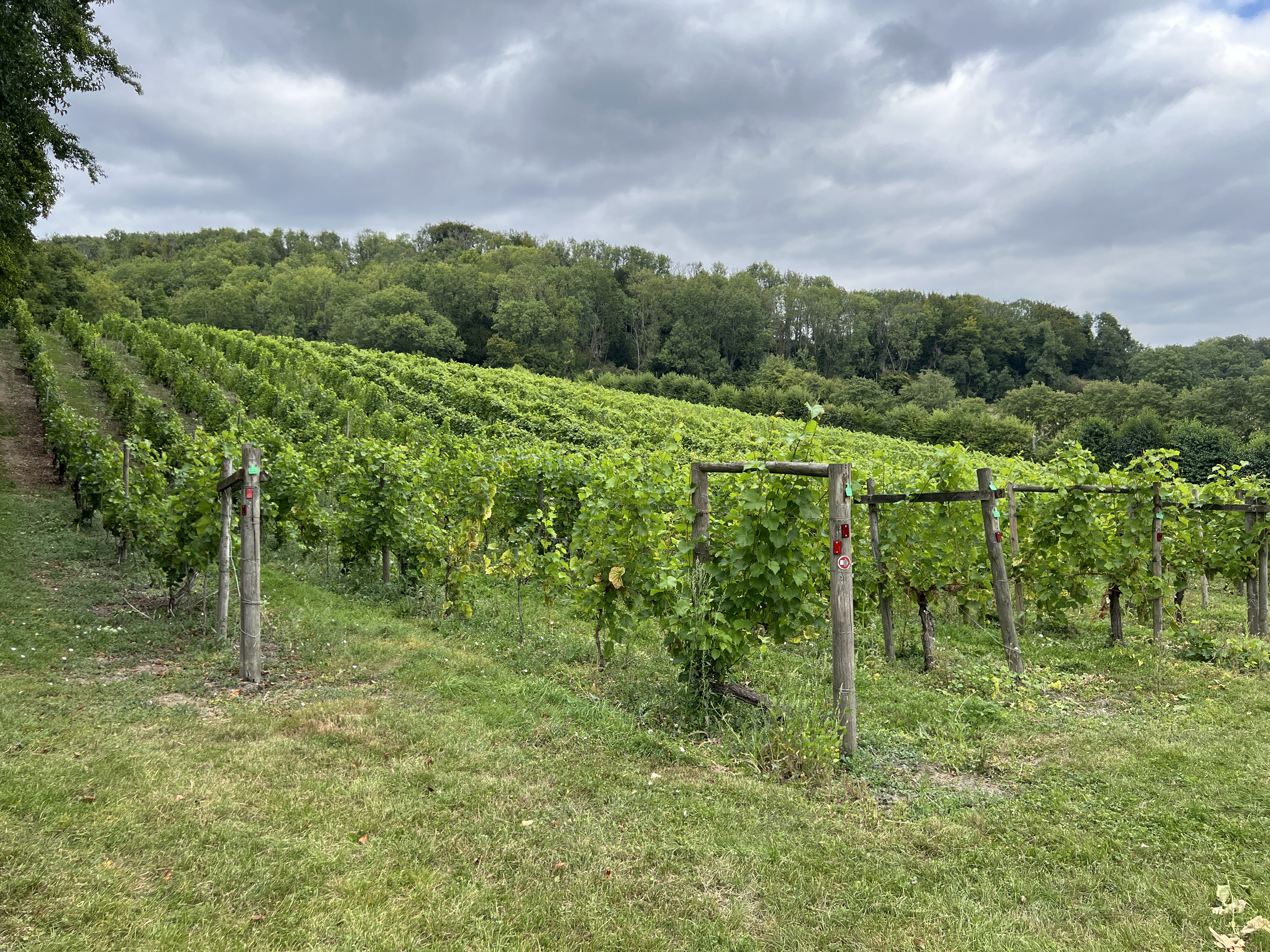
Bred in France and shut out of EU quality wine for being a hybrid, Seyval Blanc was for decades England's most planted grape, and Breaky Bottom has taken gold with it since 1993.
Pinot Meunier
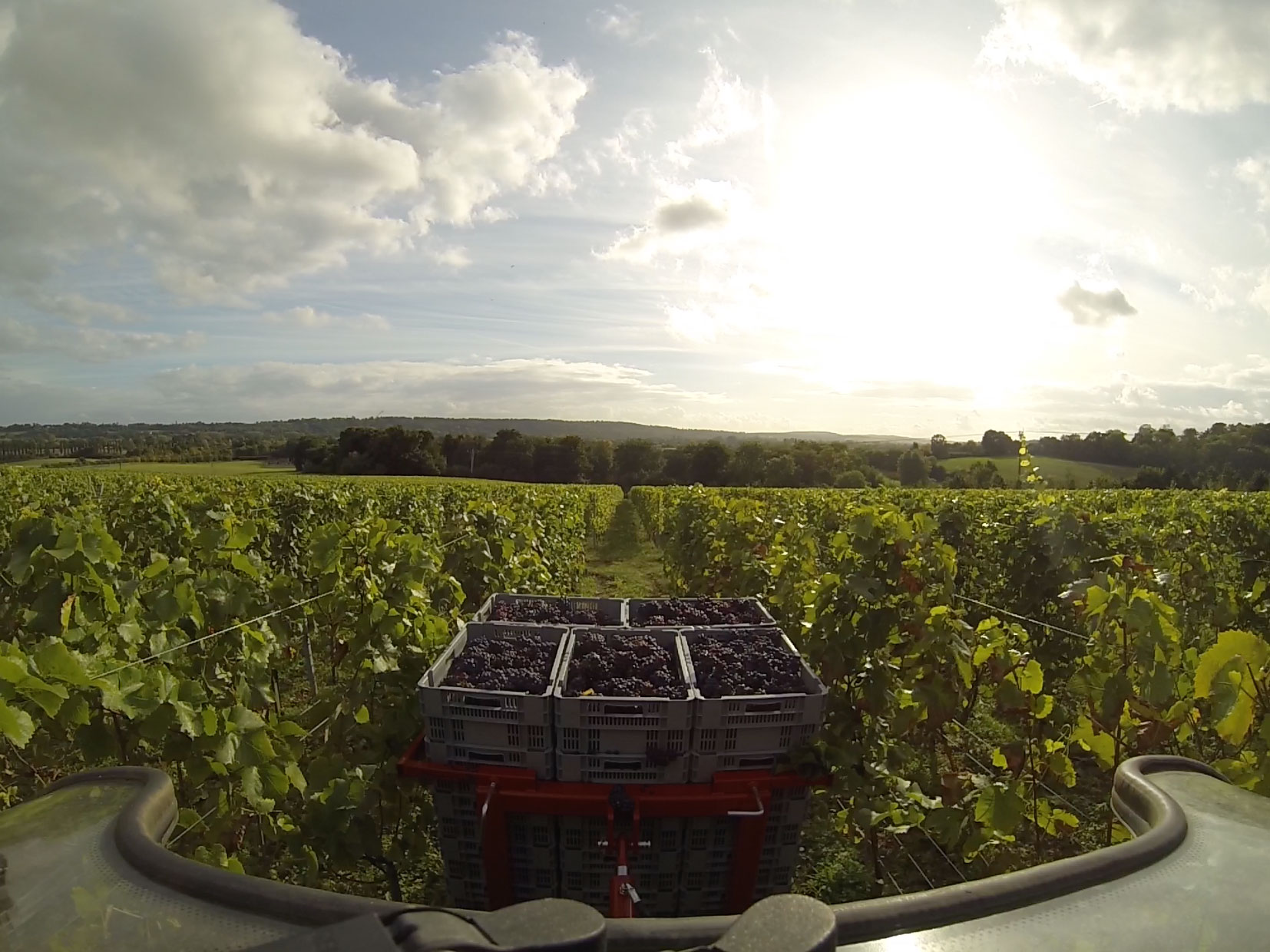
The third grape of Champagne, rarely bottled alone in England, but when it is, it's a soft, red-fruited surprise.

Pinot Noir
England's second most planted grape, Pinot Noir is the backbone of most English sparkling rosé, and increasingly a serious still red in its own right.
Pinot Noir Précoce
A naturally occurring mutation of Pinot Noir that ripens three weeks earlier, now one of England's most widely planted and most awarded red grapes.
Reichensteiner FAQs
Which English Reichensteiner is the best?
Taste is personal, but competition results are a useful place to start. Reichensteiner is usually a blending grape, so medals for it on its own are thin on the ground. Meopham Valley Vineyard picked up IEWA silver in 2022 for its 2019 Reichensteiner, and Giffords Hall Vineyard took two IEWA bronzes in 2026, for its 2024 and 2025 vintages.
What is Reichensteiner?
A hybrid white grape bred in Germany in 1939, valued for its reliable ripening and resistance to botrytis rot rather than for a distinctive flavour of its own.
Is Reichensteiner a good wine on its own, or just for blending?
Both happen, but blending is its main job: on its own it's a gentle, light wine, but it's most often used to add body and ripeness to English sparkling and still blends.
Is Reichensteiner sweet or dry?
Usually dry to off-dry. It doesn't carry much natural sweetness on its own, which is one more reason it's often blended with more aromatic grapes.
What food goes well with Reichensteiner?
Simple fish dishes suit it well, and it works nicely as an aperitif on its own. Traditionally it's also been paired with syllabub, an old English dessert.
Where is Reichensteiner grown in England?
Across the country without a strong regional bias, more often as a supporting grape in a blend than a standalone planting: real examples turn up from Kent and Surrey to Herefordshire and the West Country.
How much does English Reichensteiner cost?
Most bottles, usually a blend rather than a single varietal, sit between roughly £12 and £20.