

Pinot Meunier
Pinot Meunier is the third grape of Champagne, working alongside Chardonnay and Pinot Noir in almost every English classic-method sparkling wine without ever getting top billing. It buds later than its two better-known partners, which helps it dodge the spring frosts that catch out more exposed vineyards, and it ripens into soft, red-fruited wine with a gentle, easy-going character.
Most English Meunier still ends up folded into a blend, but a small number of producers now bottle it alone, as a still red, a bone-dry sparkling Blanc de Noirs or a fruity rosé, giving a grape usually valued for what it adds to others a chance to speak for itself.
Pinot Meunier at a glance
- Also known as
- Schwarzriesling in Germany, or simply Meunier
- Colour & skin
- Black grape, thin-skinned
- Appearance
- Small, round berries in small, tight bunches; its leaves carry a distinctive white, floury down on the underside
- Ripens
- Buds later than Pinot Noir and Chardonnay, which helps it dodge spring frost, and ripens early once it gets going
- Susceptible to
- Grape moths and grey rot, though naturally resistant to both powdery and downy mildew
- Typical style
- Mostly blended into sparkling wine; where bottled alone, usually a still red, Blanc de Noirs or rosé, always dry
What does Pinot Meunier taste like?
Expect soft, gentle fruit rather than power. On the nose there is ripe strawberry, red cherry and cranberry, often with a floral, rose-petal lift and a dusty, mineral note underneath. The palate is round and approachable, with lower acidity than Pinot Noir or Chardonnay, which is exactly why it works so well folded into a blend: it takes the edge off wines that might otherwise feel austere in England's cooler vintages.
Where it is bottled alone, the style depends on how it is made. As a sparkling Blanc de Noirs it comes out bone dry and mineral, with the red fruit character still showing through the bubbles. As a rare still red, it is light-bodied and juicy, closer to a cool-climate Pinot Noir than to anything more robust. As a rosé, expect crisp red berries and a floral lift, built for early drinking rather than the cellar.
The sparkling styles are natural partners for the food Champagne itself is built around: soft cheeses, charcuterie, fried or battered fish and roast chicken, where the wine's soft fruit does not get lost. The still red, being lighter and less tannic than most English reds, suits salmon, mushroom dishes or a simple lighter roast better than anything heavy.
Where is Pinot Meunier grown?
England's Pinot Meunier is spread across nearly every sparkling wine region rather than concentrated in one place. Kent and both Sussexes hold the largest plantings, with meaningful blocks also in Hampshire, Surrey, Essex, Dorset and Wiltshire, and smaller pockets as far afield as Norfolk, Gloucestershire and Buckinghamshire. Altogether it is planted at 147 vineyards across roughly 305 hectares, almost always as one part of a wider classic-variety planting rather than a block of its own.
The grape itself is a mutation of Pinot, first recorded in the sixteenth century and named for the fine, flour-like white down that coats the underside of its young leaves (Meunier is French for miller). It buds later than Pinot Noir and Chardonnay, which spares it from some of the spring frosts that catch out England's more exposed vineyards, and that hardiness is a large part of why growers here lean on it. Most of it goes into blends alongside Chardonnay and Pinot Noir, the same trio used in Champagne, but a handful of estates now bottle it on its own to show what the grape can do without the other two propping it up.
Does Pinot Meunier win awards?
Yes: Pinot Meunier and Pinot Meunier-blend wines have picked up 723 medals at the WineGB Awards since 2022, 125 of them gold or better.
147 of those came in 2026 alone, up from 128 the year before.
For scale: Pinot Noir, one of England's other well-established grapes, has picked up 1216 medals over the same period, well ahead of Pinot Meunier.
Vineyards that grow Pinot Meunier
Harrow & Hope's Pinot Meunier 2019 was the Buckinghamshire estate's first all-Meunier release, and Gusbourne's Mill Hill East bottling is one of the very few still red wines made from the grape in England. Oxney Organic Estate, the UK's largest organic vineyard, makes a 100% Meunier sparkling wine instead. Other vineyards worth watching include Wiston Estate and Hattingley Valley Wines.
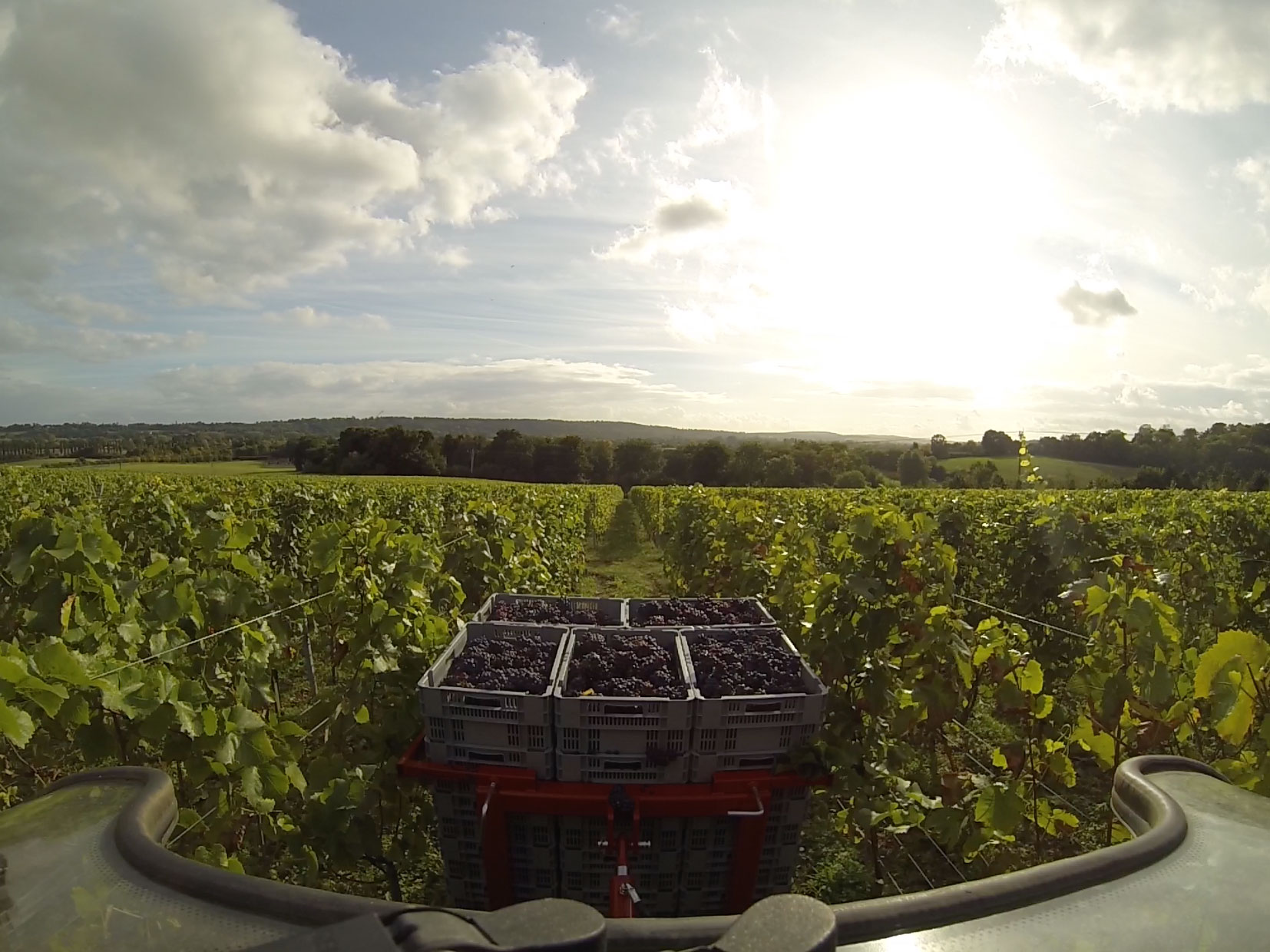
Harrow & Hope
The Buckinghamshire estate's first all-Meunier release, fermented mostly in tank with a portion in oak foudres for extra length, then aged for years before disgorgement. Soft and elegant, with a subtle floral lift and a savoury, saline edge underneath the fruit, from the estate named UK Winery of the Year in 2019.

Gusbourne
One of the very few still red wines made from Pinot Meunier in England, hand-harvested from two hectares within Gusbourne's Mill Hill East vineyard in Kent and aged for ten months in French oak. Pale in colour, with crunchy red cherry and cranberry fruit and a soft, supple mouthfeel rather than any real grip.

Oxney Organic Estate
A 100% Meunier sparkling wine from the UK's largest organic vineyard, made without malolactic fermentation to preserve the fruit and bottled Brut Nature with zero dosage after eighteen months on lees. Bone dry, with redcurrant and red apple fruit alongside roasted nuts, spice and a touch of salinity.

Other English grape varieties

Pinot Noir
England's second most planted grape, Pinot Noir is the backbone of most English sparkling rosé, and increasingly a serious still red in its own right.

Reichensteiner
Bred in Germany in 1939 for reliability rather than flair, Reichensteiner rounds out many of England's sparkling and still white blends without ever being the star.
Rondo
Bred specifically to survive a cold, unpredictable climate, Rondo has become one of England's most widely planted red grapes.
Schönburger
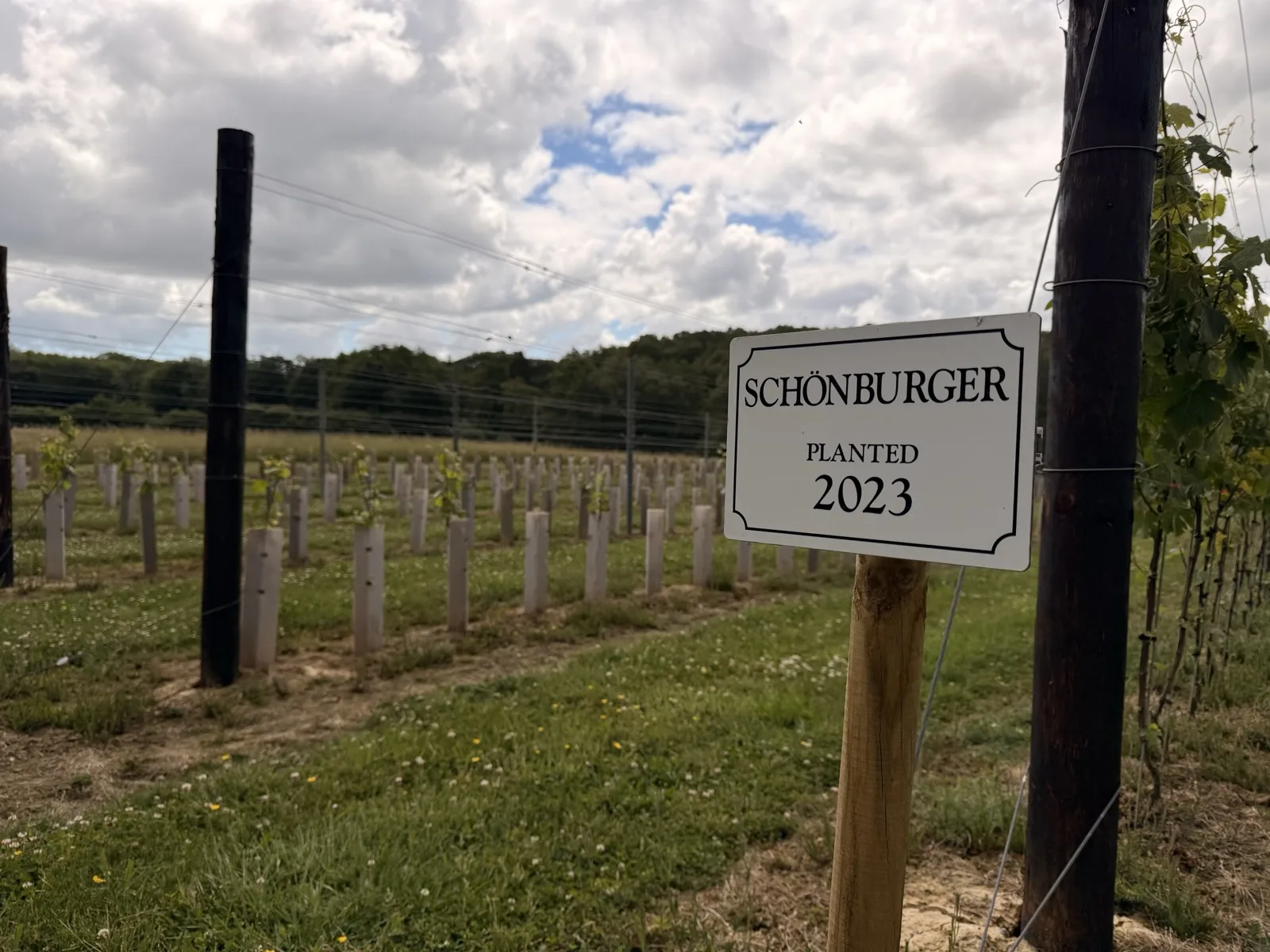
Released in 1979 from the same German institute that bred Bacchus and Ortega, Schönburger is one of England's rarest grapes, an intensely perfumed pink-skinned white suited to a maritime climate.
Pinot Meunier FAQs
Which English Pinot Meunier is the best?
Taste is personal, but competition results are a useful place to start. Gusbourne has picked up the most medals for Pinot Meunier since 2022, eight in all, including IWC silver and WineGB silver in 2024 for its Mill Hill East 2022. Harrow & Hope took IWC gold in 2024 for its Pinot Meunier 2019, and The Grange has two IWC golds for its White from Black.
Is Pinot Meunier a red or white grape?
It is a black, red-skinned grape, but like Pinot Noir it is usually pressed gently and fermented away from its skins, so most Pinot Meunier ends up as a white or pale rosé sparkling wine rather than anything deeply coloured. A handful of English producers, Gusbourne among them, now make a genuine still red from it too.
Where does the name Pinot Meunier come from?
Meunier is French for miller. The name refers to the fine, flour-like white down that coats the underside of the grape's young leaves, a feature noted as far back as the sixteenth century.
How is Pinot Meunier different from Pinot Noir?
The two are closely related, but Meunier buds later, which gives it better frost resistance, and it tends to carry lower acidity and softer, more upfront red fruit than Pinot Noir. In a Champagne-style blend, Meunier usually supplies early fruitiness while Pinot Noir brings more structure and ageing potential.
Can you buy single-varietal Pinot Meunier in England?
Yes, though it is rare. Most English Meunier goes into blends, but a small number of estates, including Harrow & Hope, Gusbourne and Oxney Organic Estate, bottle it alone as a still red, a sparkling Blanc de Noirs or a rosé.
What does Pinot Meunier taste like?
Soft, red-fruited and approachable. Expect strawberry, red cherry and cranberry, often with a floral, rose-petal note and a dusty minerality underneath, carried by gentler acidity than Pinot Noir or Chardonnay.
What food goes well with Pinot Meunier?
The sparkling styles suit soft cheeses, charcuterie, fried or battered fish and roast chicken. The rare still red versions, being lighter and less tannic than most English reds, work well with salmon, mushroom dishes or a simple lighter roast.
How much does English Pinot Meunier cost?
Most bottles that give Meunier the lead role sit between roughly £20 and £50, in line with other English sparkling and still wines, though a few rarer or older releases go beyond that.